THE SENTENCE THAT ENDED MY MARRIAGE
Three days before my fifth wedding anniversary, I came home early carrying a watch for my husband.
Twenty minutes later, I was sitting in my car at the end of our street, shaking so badly I could barely get the key into the ignition.
The watch was still in its little black box on the passenger seat.
And the man I had loved almost my entire life had no idea I had heard him say:
“She walked right into my trap.”
My name is Claire Bennett, and until that afternoon, I would have told you I was one of the luckiest women alive.
I married my best friend.
Not someone I met at a bar.
Not someone introduced to me by a coworker.
Not someone I had known for six months and convinced myself was “the one.”
Matthew Carter had been part of my life for as long as I could remember.
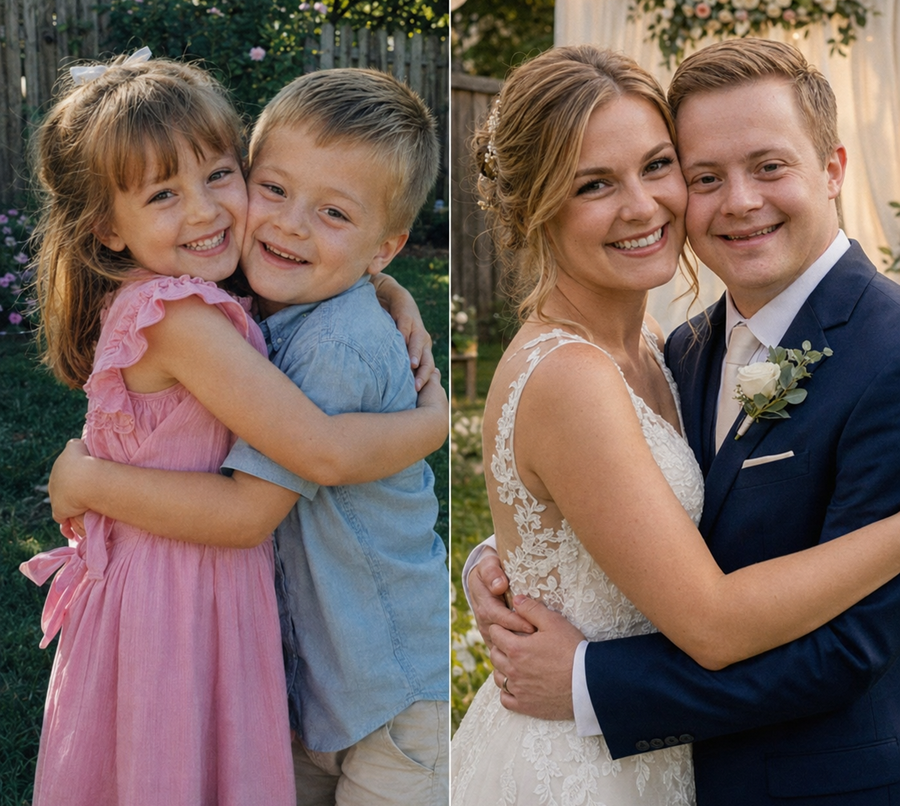
Our families lived next door to each other in a quiet Ohio neighborhood where summer evenings smelled like cut grass and backyard barbecue smoke.
There was a narrow wooden gate between our yards.
Matthew and I probably opened that gate a thousand times before we were ten.
We went to the same kindergarten.
We sat beside each other on the school bus.
We built forts out of cardboard boxes, rode our bikes until the streetlights came on, and argued over which one of us got the last orange popsicle.
When a boy teased me about my braces in seventh grade, Matthew stepped between us and said, “Find somebody else to bother.”
When Matthew nearly failed chemistry sophomore year, I spent two weeks drilling him with flash cards at my kitchen table.
When my grandmother died, he sat beside me on the back steps of her farmhouse for almost two hours without trying to tell me everything would be okay.
He simply stayed.
That was Matthew.
At least, that was who I thought he was.
By senior year, everybody assumed we were dating before we actually were.
At prom, Matthew showed up at my door wearing a dark suit and holding a ridiculous bouquet with about three times too many roses.
My dad grinned at him.
My mother cried.
And when Matthew and I danced that night, he leaned down and whispered, “You know everyone thinks we’re getting married someday.”
I laughed.
“Everyone needs a hobby.”
“What if they’re right?”
I looked up at him.
“Ask me again in ten years.”
It didn’t take ten.
By graduation, we were officially together.
After college, we moved back to our hometown.
Matthew took a job with a commercial real-estate company. I became an elementary school reading specialist.
Three years later, he took me to my grandmother’s old apple orchard.
We had spent half our childhood there.
The orchard had passed to me through a family trust, though I wouldn’t receive full control of the property until I turned thirty.
Matthew led me to the oldest apple tree on the hill.
There was a blanket underneath it.
Dinner.
Candles in glass jars.
And one small velvet box.
He got down on one knee.
“Claire Bennett,” he said, his voice trembling, “I’ve spent almost my whole life walking beside you. I don’t want to imagine the rest of it without you. Will you marry me?”
I cried before he finished.
“Of course I will.”
We were married the following spring.
For nearly five years, I believed I had gotten the ending people spend their whole lives hoping to find.
I didn’t know someone else had been writing that ending long before I ever saw the script.
And I definitely didn’t know what Matthew planned to do once we reached the final page.
“SHE DOESN’T SUSPECT A THING”
Our fifth anniversary fell on a Saturday.
I wanted to give Matthew something meaningful.
He had been wearing the same scratched silver watch since college, so I saved quietly for months and ordered him one he had admired in a store downtown.
It cost more than I normally would have spent.
But five years felt important.
Five years married.
More than twenty-five years as friends.
I wanted to watch his face when he opened it.
On Wednesday morning, I kissed him goodbye and told him I was heading to work.
Instead, I’d taken a personal day.
I picked up the watch around noon and stopped for coffee on my way home.
Matthew wasn’t supposed to be there.
His car wasn’t in the driveway, so I assumed he’d gone to work as usual.
Later, I learned he’d parked around the corner because a contractor was supposed to stop by and needed access to the garage.
I unlocked the front door quietly.
Before I could call his name, I heard his voice coming from the kitchen.
He was on the phone.
I smiled.
For one stupid second, I thought fate had handed me the perfect opportunity.
I could sneak upstairs, hide the gift, and surprise him later.
Then I heard my name.
“Claire has no clue.”
I stopped.
Matthew laughed.
“I’m serious. She walked right into my trap.”
My smile disappeared.
I stayed behind the wall separating the entryway from the kitchen.
Maybe he was talking about my anniversary gift.
Maybe he’d figured out I was planning something and had planned a bigger surprise.
That explanation lasted about five seconds.
“Don’t worry,” Matthew continued. “My plan is about to work. I’ve been planning this since we were teenagers.”
I couldn’t breathe.
He lowered his voice.
I moved closer.
“Everything will be perfect. You’ll see.”
There was a pause.
Then Matthew said the words that ripped open my entire life.
“Once Claire signs those papers Friday, the orchard doesn’t belong only to her anymore. The LLC controls it.”
Another pause.
I covered my mouth.
Matthew chuckled.
“No. She doesn’t suspect anything. She thinks it’s estate planning.”
My knees almost gave out.
The orchard.
My grandmother’s orchard.
Forty-two acres that had been in my mother’s family for generations.
A property Matthew had recently encouraged me to place into a new company we’d supposedly own together.
He had told me it would simplify taxes and protect us from liability.
I had trusted him.
Of course I had.
This was Matthew.
The boy who carried my backpack when I sprained my wrist.
The teenager who drove across town at midnight when my car battery died.
My husband.
My best friend.
Then he said something worse.
“Dad, relax. You’ve waited this long.”
Dad.
He was talking to his father.
Richard Carter.
Matthew continued.
“You told me about the land when we were in high school. You were right. Staying close to Claire was the only way she’d ever trust us enough.”
My vision blurred.
I held the wall for support.
Then came the sentence I still heard in my dreams months later.
“After she signs, Bennett Orchard finally comes back to our family. Just like we planned.”
A quiet laugh.
Then:
“And the developer already agreed to our number.”
The gift box slipped from my fingers.
It hit the rug with a soft thump.
I froze.
Matthew stopped talking.
“Hold on.”
I grabbed the box, opened the front door as quietly as I could, and ran.
I didn’t stop until I reached my car.
I drove away before Matthew reached the hallway.
I made it four streets before I had to pull over.
Then I cried harder than I had cried at any point in my adult life.
Not because of the land.
Not even because of the money.
I cried because suddenly every memory had a question attached to it.
Had Matthew defended me because he loved me?
Had he taken me to prom because he wanted me?
Had he proposed beneath my grandmother’s apple tree because it meant something to us?
Or had I spent years mistaking strategy for love?

THE LAND EVERYONE WANTED
I drove to the orchard.
I don’t remember deciding to go there.
I simply found myself turning onto the narrow road leading toward the old farmhouse.
My grandmother, Evelyn, had lived there until she died.
She wasn’t wealthy in the way people imagine wealth.
She drove an old Buick.
She clipped grocery coupons.
She reused Christmas bows.
But her land had become valuable.
Very valuable.
When my great-grandfather bought those acres in the 1940s, the area was almost entirely farmland.
Then the city began creeping outward.
New subdivisions appeared.
Shopping centers followed.
By the time I was in college, developers had started making offers.
Grandma rejected every one.
“Land only looks empty to people who don’t know what happened on it,” she once told me.
When she died, the property went into a trust.
I was the primary beneficiary, but Grandma had structured it carefully.
I received income from the small farming lease, but full ownership wouldn’t transfer to me until my thirtieth birthday.
I turned thirty two months before our fifth anniversary.
Almost immediately, Matthew began talking about “protecting our future.”
He never pressured me.
That was the clever part.
He was patient.
He’d mention taxes over breakfast.
He’d casually leave articles about liability protection on the kitchen counter.
One evening he said, “You know, if we created a family LLC, it could make things easier someday if we have kids.”
Kids.
He knew exactly which word would soften me.
We had talked about starting a family the following year.
I imagined children running through the same orchard where Matthew and I had once played.
So when he arranged an appointment with an attorney recommended by his company, I agreed.
The final paperwork was scheduled for Friday.
Two days away.
I had planned to sign almost everything without reading more than the first few pages.
Because Matthew had already reviewed it.
Sitting in my grandmother’s kitchen that afternoon, I finally understood why he’d been so careful.
He didn’t need to steal the property.
He needed me to hand him control willingly.
My phone buzzed.
Matthew calling.
I stared at the screen.
I couldn’t answer.
It stopped.
Seconds later, a message appeared.
Where are you? Thought I heard someone come in.
Then another.
Everything okay?
Then:
Claire?
Seeing my name on his screen made me feel sick.
I almost typed:
I heard you.
Instead, I turned off my phone.
For the first time in my life, I needed help from someone who wasn’t Matthew.
So I called a woman named Monica Reed.
Monica had been my grandmother’s attorney for nearly twenty years.
She had handled the original trust.
Grandma trusted her.
And more importantly, Matthew had never liked her.
He always called her “overly cautious.”
Suddenly, that sounded like an excellent quality.
THE PAPERS I ALMOST SIGNED
Monica agreed to meet me that evening.
I brought every document Matthew had given me.
She read for nearly forty minutes while I sat across from her desk twisting my wedding ring.
Finally, she removed her glasses.
“Claire, have you signed any of this?”
“No.”
“Anything similar?”
“No.”
She exhaled.
“Good.”
One word.
But the relief in her voice frightened me.
“What is it?”
Monica turned the papers toward me.
The company Matthew had formed was called BCR Holdings.
He had told me it stood for Bennett-Carter Resources.
It didn’t.
The official registration listed Matthew and his father as the managing members.
I was not a managing member.
I would have an ownership interest, Monica explained, but the operating agreement gave enormous decision-making authority to Matthew.
Worse, the transfer documents would move the orchard into the company.
Once that happened, certain provisions allowed a majority of the managers to negotiate long-term leases and development agreements.
My signature would not automatically sell the orchard.
But it would dramatically weaken my control over what happened next.
“Could they sell it without me?”
“Not tomorrow,” Monica said carefully. “But they could put you in a position where stopping them becomes difficult and extremely expensive.”
I felt cold.
“There’s already a developer.”
Monica looked up.
“What?”
“I heard Matthew say the developer agreed to their number.”
Her face changed.
“Then you sign nothing.”
I laughed, but there was no humor in it.
“I wasn’t planning to.”
Monica reached across the desk.
“Claire, listen to me. Don’t confront him until you understand exactly what you’re dealing with.”
“But he’s my husband.”
“That doesn’t mean you stop protecting yourself.”
That sentence hurt more than I expected.
Because until that day, marriage had meant exactly the opposite to me.
It meant not needing protection from the person sitting across your dinner table.
Monica spent the next hour going through the trust.
Then she found something Matthew apparently had not anticipated.
My grandmother had included a clause requiring written approval from the trust’s original legal representative for certain transfers occurring within the first year after final distribution.
That representative was Monica.
Matthew’s paperwork had tried to characterize the transfer as routine estate restructuring.
Monica didn’t agree.
“I wouldn’t have approved this without speaking privately with you,” she said.
I stared at her.
“So Grandma protected me.”
“She tried to.”
I looked through the office window.
For the first time all day, I smiled.
It lasted maybe two seconds.
Then the reality returned.
My grandmother had protected the orchard.
Nobody could protect my marriage.
That part was already gone.
I WENT HOME AND PRETENDED I KNEW NOTHING
I did something that surprised even me.
I went home.
Matthew was in the kitchen when I arrived.
The second he saw me, relief crossed his face.
“There you are.”
He walked over and kissed my forehead.
I nearly flinched.
“Where’d you go?”
“Long day.”
“I thought you took the day off.”
My heart stopped.
Then he grinned.
“Your school secretary called about some form. I didn’t tell her you’d been pretending to work.”
He laughed.
I forced myself to smile.
“You caught me.”
“Planning my anniversary surprise?”
“Maybe.”
He wrapped his arms around me.
I stood completely still.
There are strange moments when your body remembers love even after your mind discovers betrayal.
Matthew smelled exactly the same.
Laundry detergent.
Coffee.
The cedar soap I bought him every Christmas.
I had rested my head against that chest thousands of times.
That night, it felt like standing beside a stranger wearing my husband’s skin.
At dinner, Matthew talked about ordinary things.
A project at work.
His mother’s birthday.
A leaking sprinkler head.
Then, casually, he said:
“Oh, don’t forget. Friday at three. We need to sign the LLC papers.”
I looked at him.
“Right.”
“You still feel good about it?”
He asked so gently that for one insane moment I wanted to believe I had misunderstood everything.
Maybe there was an explanation.
Maybe “trap” meant something else.
Maybe he’d said “developer” but wasn’t planning to sell.
Maybe his father had misunderstood.
Then Matthew added:
“It’ll be good to have the orchard in both our hands instead of just yours. We’re a team.”
A team.
I swallowed.
“Always.”
He smiled.
That smile broke something inside me.
Because I realized how easily he could lie while looking directly into my eyes.
I slept in our bed that night.
Matthew reached for my hand beneath the blanket.
I pretended to be asleep.
And in the darkness, I replayed our entire relationship.
High school.
College.
Our engagement.
Our wedding.
Five Christmas mornings.
Five anniversaries.
Hundreds of ordinary Tuesdays.
I kept searching for the exact moment Matthew’s love had become a transaction.
The worst possibility was that it had always been both.

THE TRUTH ABOUT HIGH SCHOOL
The next morning, Monica called.
“I found something.”
A development company had filed preliminary plans for a large residential project bordering the orchard.
The project needed additional road access.
Without part of my land, building the proposed entrance would be difficult.
With my land?
The project could be worth tens of millions.
And Matthew’s company had been advising the developer.
Suddenly, the puzzle snapped together.
Richard Carter had once owned twelve acres beside my grandmother’s property.
He lost them during a failed business venture when Matthew and I were teenagers.
My grandmother later purchased several of those acres when the bank auctioned them.
I’d heard the story.
I just never knew Richard had resented her for it.
That afternoon, I called Matthew’s older sister, Natalie.
I didn’t tell her everything.
I simply asked, “Did your dad ever talk about Grandma’s orchard when we were kids?”
Silence.
Too long.
“Natalie?”
She sighed.
“Claire… why are you asking?”
“Please.”
Another silence.
Then she told me.
When Matthew and I were seventeen, Richard had discovered a development firm was quietly buying land in our area.
He became obsessed with the idea that Bennett Orchard would eventually be worth a fortune.
One night, after too much whiskey at a family cookout, Richard joked to Matthew:
“Maybe you should marry Claire. That’s the only way a Carter will ever get that land back.”
Everyone laughed.
Everyone except Matthew.
According to Natalie, Matthew later asked questions.
How was Grandma’s trust structured?
Who would inherit?
Would a spouse have rights?
Natalie had assumed it was teenage curiosity.
“Claire,” she whispered, “what happened?”
My throat tightened.
“I heard him talking to your dad.”
Another silence.
Then Natalie said something I will never forget.
“Oh, God.”
Not:
You misunderstood.
Not:
Matthew would never.
Just:
Oh, God.
And in those two words, I finally knew.
OUR ANNIVERSARY DINNER
Friday came.
The day I was supposed to sign.
At noon, I texted Matthew.
Can we move the appointment? I want to celebrate our anniversary first. Dinner tonight? Your parents’ house?
He responded immediately.
Sure. Mom will love that. Papers can wait until Monday.
He added a heart.
I stared at it for a long time.
That evening, I dressed carefully.
Not because I wanted to look beautiful for Matthew.
Because I needed to feel like myself.
I wore the navy dress my grandmother had once told me made me look “like a woman who knows where she’s going.”
Matthew smiled when he saw me.
“Wow.”
I thanked him.
His parents were already waiting when we arrived.
Natalie was there too.
She looked pale.
Richard opened wine.
Matthew’s mother, Diane, served roast chicken and mashed potatoes.
For half an hour, everyone pretended we were celebrating a marriage.
Finally, Diane lifted her glass.
“To Claire and Matthew. Five wonderful years.”
“Almost,” I said.
Everyone looked at me.
I placed my glass down.
“Actually, I brought Matthew a present.”
His face lit up.
“You did?”
I reached into my bag.
The black watch box was still there.
But I didn’t take it out.
Instead, I removed a folder.
Matthew’s smile disappeared.
I placed it on the table.
“What is that?” Richard asked.
I looked at Matthew.
“Your plan.”
Silence.
Matthew went completely still.
I continued.
“I came home Wednesday.”
His face drained of color.
“I heard your phone call.”
Diane frowned.
“What phone call?”
Nobody answered.
I looked at Richard.
“The one where your husband told Matthew not to worry because I’d walked into their trap.”
Diane turned toward him.
“Richard?”
Matthew pushed his chair back.
“Claire, let me explain.”
“No. I’ve listened to you explain things for five years.”
“It’s not what you think.”
I almost laughed.
“Then tell me what I think.”
He stared at me.
“Tell me, Matthew. Tell everyone.”
Richard spoke first.
“This is a private business matter.”
“No,” I said. “It’s my land.”
Diane’s face changed.
“My mother’s land,” I continued. “The land Matthew planned to put into a company controlled by him and Richard so they could negotiate with a developer.”
Diane looked at her husband as though she’d never seen him before.
“You said the LLC was for tax planning.”
“So did Matthew,” I replied.
Matthew stood.
“Claire, please. Yes, there was interest from a developer. But nothing was finalized.”
“You said you’d been planning it since high school.”
His eyes closed.
And there it was.
No denial.
I whispered, “Was I ever your friend, or was I an investment?”
He looked genuinely wounded.
“Don’t say that.”
“Then answer me.”
“You were my best friend.”
“And when did the plan start?”
He looked at his father.
Richard stared at the table.
Matthew’s voice dropped.
“Senior year.”
I felt as though someone had punched me.
Prom.
Senior year.
The year we’d fallen in love.
I nodded slowly.
“Was asking me to prom part of it?”
“No.”
“Dating me?”
“No. Not at first.”
“Not at first?”
Matthew dragged a hand through his hair.
“My dad kept talking about the orchard. He said one day you’d inherit it and I’d be an idiot not to think about our future.”
“Our future?”
“I was seventeen, Claire!”
“And twenty-three when you proposed.”
He said nothing.
“Twenty-four when you married me.”
Silence.
“Twenty-nine when you formed BCR Holdings.”
His face crumpled.
“I love you.”
I had imagined those words saving me so many times.
That night, they meant nothing.
“You can love someone and still betray them,” I said. “Apparently, you’re proof.”
Richard suddenly said, “This is ridiculous. That land is sitting there doing nothing. You could walk away with millions.”
I turned toward him.
“And that’s what this was about?”
He shrugged.
“It’s business.”
Diane stood so quickly her chair scraped the floor.
“Your son’s marriage is not business.”
Richard looked away.
Matthew stepped toward me.
“Claire, listen. Yes, the idea started because of Dad. And yes, I knew what the land might be worth. But somewhere along the way, none of that mattered anymore.”
“Then why were you still doing it?”
He had no answer.
That was the moment my marriage ended.
Not when I overheard the phone call.
Not when Monica showed me the papers.
Not even when Matthew admitted the plan began when we were teenagers.
It ended in that silence.
Because if the plan truly no longer mattered, he would have stopped.
He didn’t.
“I WAS GOING TO TELL YOU”
Matthew followed me outside.
“Claire!”
I kept walking.
He caught up beside my car.
“I was going to tell you.”
I turned around.
“When?”
He hesitated.
“After we had an offer.”
I laughed through my tears.
“So after I transferred control.”
“I wouldn’t have let Dad hurt you.”
“You were helping him.”
“I thought we could sell part of the property, take the money, build a life—”
“We already had a life!”
My voice echoed down the quiet street.
“We had a home. We had jobs. We had each other. I didn’t need millions.”
“I wanted more for us.”
“No. You wanted something from me.”
He shook his head.
“That’s not fair.”
I looked at the man I’d loved since childhood.
“You know what isn’t fair? Making someone wonder which memories were real.”
His eyes filled with tears.
“Claire…”
“Was the proposal real?”
“Yes.”
“The wedding?”
“Yes!”
“The LLC?”
He stopped.
I nodded.
“That’s what I thought.”
I removed my wedding ring.
Matthew stared at it.
I couldn’t bring myself to hand it to him.
So I closed my fist around it.
“I’m going to the orchard.”
“Please come home.”
“I don’t know where home is right now.”
Then I got into my car.
Matthew stood in the driveway as I drove away.
For once, he didn’t follow.
THE LIFE AFTER THE LIE
The next few months were ugly in quiet ways.
There was no screaming courtroom battle.
No dramatic police scene.
No revenge.
Just paperwork.
Lawyers.
Separate bank accounts.
Boxes.
Friends who didn’t know whose side to take.
Neighbors who suddenly found reasons to inspect their mailboxes whenever I walked past.
Matthew moved in with Natalie for a while.
His mother separated from Richard.
The development company withdrew its proposal for the orchard once Monica formally notified them that I had no intention of transferring control.
Matthew eventually left his job.
I don’t know whether he was fired or resigned.
I never asked.
He wrote to me several times.
I read only one letter.
It said:
I loved you before Dad ever mentioned the orchard, and I loved you after. That’s what makes what I did worse, not better. I kept telling myself the business plan was separate from us. I see now that there was no way to separate them because every step depended on your trust. I’m sorry I used something sacred as leverage.
He didn’t ask me to forgive him.
He didn’t ask me to come back.
For that, at least, I was grateful.
Our divorce became final eleven months after the phone call.
The orchard stayed mine.
But something changed there.
For years, I’d thought of the property as an inheritance I was obligated to protect.
After everything happened, I began thinking about what Grandma had actually wanted.
She hadn’t preserved forty-two acres so I could stare at them nervously for the rest of my life.
She wanted the land to matter.
So I did something Matthew never predicted.
I created a nonprofit partnership with local schools.
We restored the old barn.
We planted a new section of apple trees.
Children began coming for field trips.
Teenagers volunteered on weekends.
A section of the farmhouse became a reading room.
On the wall, I hung one photograph of Grandma standing beneath the oldest tree.
Under it was a sentence she’d written in a birthday card years earlier:
Never let anyone convince you that keeping something safe means keeping it small.
The first fall festival drew nearly eight hundred people.
I stood near the barn watching children run between hay bales while parents drank cider beneath strings of lights.
For the first time since my marriage ended, I realized I wasn’t thinking about Matthew.
Not even a little.
Natalie came.
So did Diane.
We hugged.
Nothing needed explaining.
Before they left, Diane touched my arm.
“I’m sorry.”
“You didn’t do it.”
“I should have seen Richard’s obsession for what it was.”
I shook my head.
“We all trusted people we loved.”
Maybe that was the hardest lesson.
Trust doesn’t make you foolish.
Trust is what makes relationships possible.
The failure belongs to the person who chooses to misuse it.

THE WATCH
A year after our divorce, I was cleaning out a closet at the farmhouse when I found the anniversary watch.
Still in its box.
Still wrapped.
For several minutes, I sat on the floor holding it.
I remembered the woman who had bought it.
She had been so excited.
She’d imagined Matthew opening the box.
She’d imagined dinner.
Maybe champagne.
Maybe talking about babies.
Maybe laughing about how everyone at prom had predicted they’d end up together.
I used to feel embarrassed for that version of myself.
Eventually, I stopped.
She wasn’t stupid.
She loved someone.
She trusted her oldest friend.
There is nothing shameful about that.
I donated the watch to the orchard foundation’s annual charity auction.
It raised $2,600 for the children’s reading program.
When Monica heard, she laughed.
“That’s one way to turn a bad anniversary present into something useful.”
I smiled.
“Grandma would’ve approved.”
“She definitely would have outbid everyone.”
I laughed until my eyes watered.
And maybe that was when I finally understood something.
Matthew’s plan hadn’t stolen my childhood.
It hadn’t erased every summer afternoon or school dance or inside joke.
Some memories were real because I had been real in them.
My loyalty was real.
My love was real.
My intentions were real.
His deception couldn’t rewrite my side of the story.
It could only change what happened next.
And what happened next belonged to me.
WHAT I WOULD SAY TO HIM NOW
People sometimes ask whether I believe Matthew ever loved me.
For a long time, I hated that question.
I wanted a simple answer.
Either our whole relationship had been fake, which would make him a monster.
Or he’d truly loved me, which somehow made his betrayal even harder to understand.
Eventually, I stopped needing to choose.
I believe Matthew loved me.
I also believe he betrayed me.
Both can be true.
Love isn’t proven by what someone feels.
It’s proven by what they refuse to do to you.
Matthew had hundreds of chances to abandon his father’s plan.
When we started dating.
When he proposed.
When we exchanged vows.
When I trusted him with my grandmother’s documents.
When I turned thirty.
When he formed the LLC.
When he scheduled the signing.
Every time, he chose to continue.
Maybe he kept telling himself he’d confess tomorrow.
Maybe he convinced himself we’d both become rich and I’d eventually forgive him.
Maybe he believed loving me gave him permission to decide what was best for me.
It didn’t.
The last time I saw him was at a coffee shop almost two years after our divorce.
It wasn’t planned.
He looked older.
So did I, probably.
For a moment, we simply stared at each other.
Then he smiled sadly.
“Hi, Claire.”
“Hi, Matthew.”
He asked about the orchard.
I told him the reading program had expanded to three school districts.
His face lit up.
“That sounds like you.”
I almost laughed.
It sounded like the boy I’d once known too.
The Matthew who helped me study.
The Matthew who defended me.
The Matthew who sat beside me after Grandma died.
Maybe pieces of him had always been good.
Maybe that’s why it hurt so much.
Before we walked away, he said, “For what it’s worth, I’m sorry every day.”
I looked at him.
“I know.”
“Do you hate me?”
I thought about it.
“No.”
He seemed surprised.
I smiled faintly.
“I just don’t trust you anymore.”
Somehow, that hurt him more.
But it was the truth.
And truth was something I had spent too many years without.
We said goodbye.
This time, neither of us looked back.
FIVE YEARS LATER
Last month, Bennett Orchard celebrated the fifth anniversary of its children’s program.
Funny how life gives certain numbers new meanings.
Five years once represented my marriage.
Now it represented hundreds of children learning to plant seeds, pick apples, read beneath trees, and understand that land isn’t valuable only because someone can build houses on it.
At sunset, after everyone left, I walked up the hill alone.
The old apple tree was still there.
The tree where Matthew proposed.
For years, I avoided it.
Now I sat beneath it.
The orchard stretched below me, glowing gold in the evening light.
I thought about the seventeen-year-old girl who danced with her best friend at prom and believed the future would be simple.
I wanted to reach back through time and tell her something.
Not to avoid Matthew.
Not to distrust everyone.
Not to harden her heart.
I’d simply tell her:
Pay attention when someone asks for your trust, but never surrender your voice along with it.
I lost a marriage.
I lost the person I thought would grow old beside me.
I lost a version of my childhood that once felt perfectly safe.
But I didn’t lose myself.
And Richard Carter had been wrong about one important thing.
His plan never worked.
Matthew told him I’d walked right into their trap.
Maybe I almost did.
But I walked out before they could close it.
I walked out crying.
I walked out confused.
I walked out carrying a watch meant for a man I no longer recognized.
But I walked out.
And sometimes the most important part of a story isn’t realizing someone lied to you.
It’s realizing that their lie doesn’t get to decide how your story ends.
Mine didn’t end in that hallway.
It didn’t end with the divorce papers.
It didn’t even end beneath the tree where Matthew once promised me forever.
My real life began the moment I finally understood something my grandmother had been trying to teach me all along:
Some things are worth protecting.
Your home.
Your history.
Your future.
But most of all—
your right to decide what happens to your own life.
Note: This story is a work of fiction inspired by real events. Names, characters, and details have been altered. Any resemblance is coincidental. The author and publisher disclaim accuracy, liability, and responsibility for interpretations or reliance. All images are for illustration purposes only.