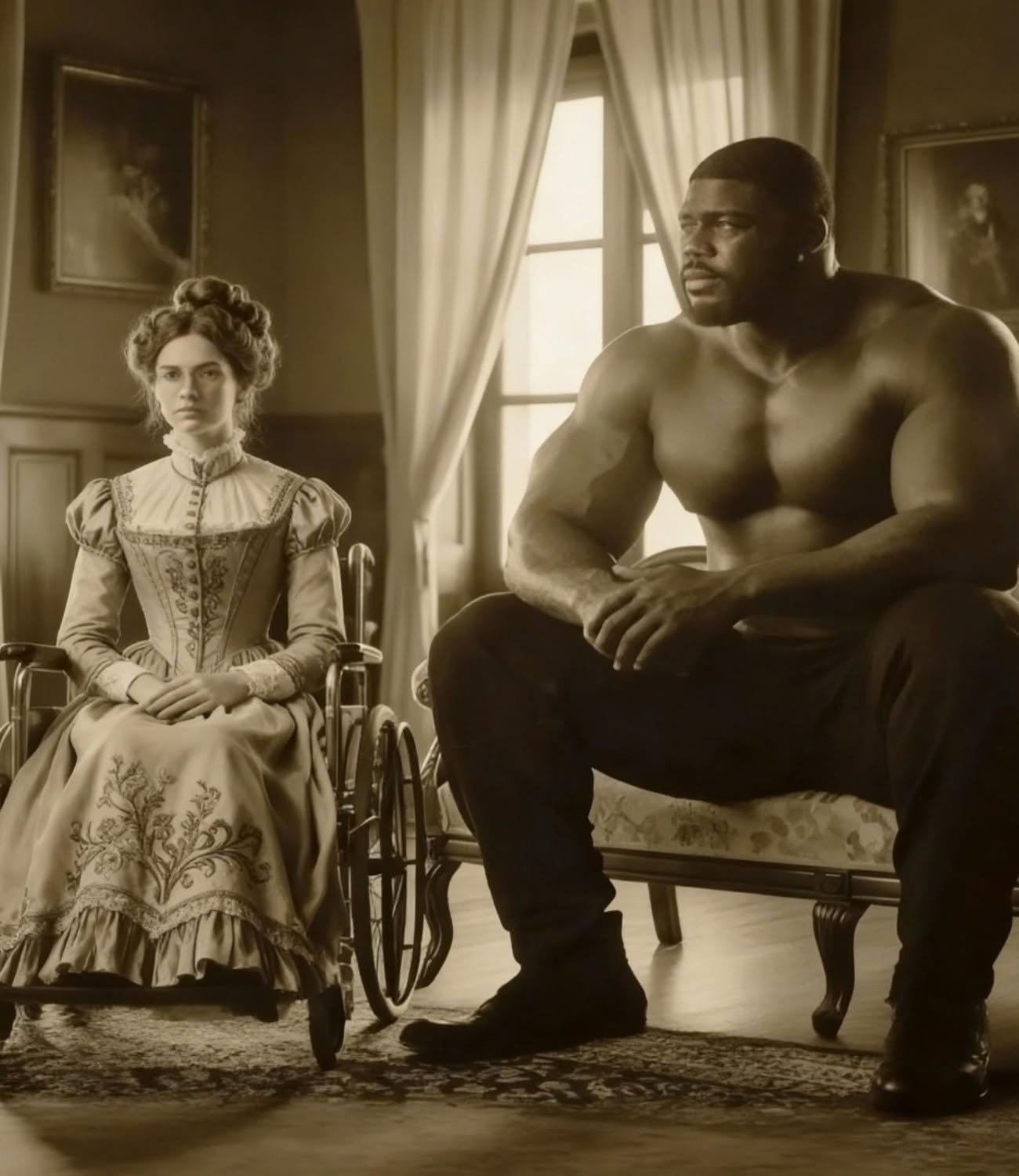
A Woman Treated Like a Burden, A Man Treated Like Property
In the summer of 1847, the vast sugar fields of Veracruz stretched beneath the unforgiving sun.
The San Jerónimo hacienda was more than a farm.
It was a world of its own.
A place where one man’s word determined the fate of everyone around him.
Don Rodrigo Velásquez owned the land, the crops, the workers, and the reputation of a powerful family name that had ruled the region for generations.
To outsiders, he represented success.
Wealth.
Influence.
But behind the walls of his grand estate was another story.
A story about cruelty.
A story about how easily powerful people could decide another person’s worth.
And a story about two people who were both considered disposable by the same man.
One was his own daughter.
The other was the enslaved worker he believed had no voice.
Neither was supposed to have power.
Neither was supposed to change anything.
But together, they would prove that dignity cannot always be taken away by those who believe they own everything.
The Daughter Don Rodrigo Wanted to Forget
Sofía Velásquez had once been a lively child.
She was curious.
Intelligent.
Loved by those who truly knew her.
But at twelve years old, a riding accident changed the course of her life.
The injury left her unable to walk.
For Sofía, the accident was devastating.
Not only because of the physical pain.
But because of how people treated her afterward.
A loving family might have helped her adapt.
They might have encouraged her.
They might have reminded her that her value was not measured by her ability to walk.
But Don Rodrigo saw only what had been lost.
Not what remained.
A Society That Measured Women by Their Usefulness
In nineteenth-century society, women were often judged by strict expectations.
Marriage.
Children.
Household responsibilities.
Family alliances.
A woman who did not fit those expectations was often treated unfairly.
For Sofía, her disability became something others used to define her entire identity.
Her father no longer saw his daughter.
He saw an inconvenience.
A financial responsibility.
A problem he wanted removed.
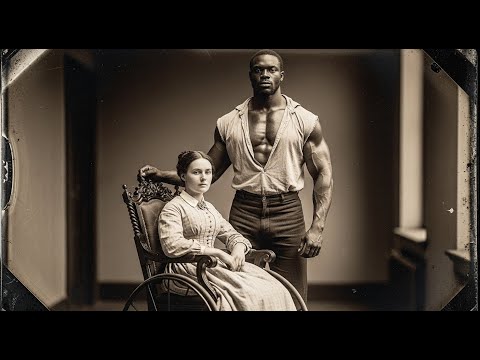
The Cruel Words Behind Closed Doors
The walls of San Jerónimo were beautiful.
But inside them, Sofía heard words that wounded more deeply than any physical injury.
Her father spoke about her as though she was not a person.
He complained about the cost of caring for her.
He questioned her future.
He suggested she had no purpose.
The cruelest part was not only what he said.
It was that he believed it.
Don Rodrigo had convinced himself that power gave him the right to decide another person’s value.
Life Behind the Window
After the accident, Sofía’s world became smaller.
Her room overlooked the sugarcane fields.
Every day she watched workers moving through the land.
She saw the seasons change.
She saw the same paths traveled again and again.
But she remained separated from the world outside.
Her wheelchair became a symbol of the way others viewed her.
To some, it represented limitation.
To Sofía, it represented survival.
She had lost the ability to walk.
She had not lost her mind.
She had not lost her heart.
She had not lost her desire to live.
The Only Person Who Still Saw Her
Among all the people in the hacienda, one person continued treating Sofía like a human being.
Jacinta.
Her childhood nursemaid.
Jacinta remembered the girl Sofía had been before the accident.
She brought her food.
She listened to her fears.
She reminded her that she still mattered.
But kindness could only do so much against a world built around cruelty.
Sofía needed more than comfort.
She needed someone who could help her escape the life others had decided for her.

The Arrival of Damian
Five years before the events that changed everything, Damian arrived at San Jerónimo.
He was a man known mostly through rumors.
He was strong.
Quiet.
Different.
Other workers spoke about his incredible physical ability.
He could lift heavier loads than almost anyone else.
He endured exhausting labor without complaint.
But what people noticed most was his silence.
Damian rarely spoke.
Some assumed he was unable.
Others assumed he had learned that speaking only brought punishment.
In a world where enslaved people were often denied the right to control their own lives, silence could become a form of protection.
The Man Everyone Underestimated
Don Rodrigo valued Damian for only one reason:
His strength.
To him, Damian was not a person with dreams, fears, or feelings.
He was an asset.
A tool.
Something useful.
That was the way powerful people often viewed those beneath them.
They saw what someone could provide.
Not who they were.
But Don Rodrigo made one mistake:
He assumed silence meant weakness.
He assumed obedience meant submission.
He assumed a person without power had no influence.
The Public Humiliation
One evening, Don Rodrigo gathered the workers in the courtyard.
Everyone knew something unusual was happening.
The workers stood quietly as their employer announced his decision.
Then he brought out Sofía’s name.
The crowd immediately became uncomfortable.
Because everyone understood what was happening.
Don Rodrigo was not arranging a marriage.
He was disposing of his daughter.

The Decision That Shocked Everyone
Don Rodrigo declared that Sofía would be given to Damian.
Not out of kindness.
Not out of respect.
But because he wanted to remove what he considered a problem.
He believed he was solving two issues at once.
A daughter he considered useless.
And a worker he considered property.
The announcement created a silence unlike anything the workers had experienced.
Many looked away.
Some felt shame.
Others felt anger.
Because even in a society where cruelty had become normal, there were still moments when people recognized something had gone too far.
Two People Society Had Rejected
What Don Rodrigo did not understand was that Sofía and Damian shared something important.
Both had been reduced to labels.
Sofía was reduced to her disability.
Damian was reduced to his status.
Both had been denied the freedom to define themselves.
But people who are underestimated sometimes develop something powerful:
A deeper understanding of humanity.
They know what it feels like to be ignored.
They know what it feels like to be treated as less than a person.
The Man Who Refused to Become Like His Master
The greatest surprise was not that Damian accepted responsibility.
The greatest surprise was what he chose to do with the trust that had been forced upon him.
According to the story, Damian did not treat Sofía as a possession.
He treated her as a person.
He did not see a burden.
He saw a woman.
A woman who had spent years being told she was worthless.
A woman who needed compassion more than pity.

A Different Kind of Strength
Everyone at San Jerónimo knew Damian was physically strong.
But they had misunderstood what made him powerful.
Strength was not only carrying heavy loads.
Strength was restraint.
Compassion.
The ability to remain human in a world that constantly tried to remove your humanity.
Don Rodrigo believed power came from ownership.
Damian showed that true strength came from character.
The Beginning of an Unexpected Bond
For Sofía, the relationship changed everything.
For the first time in years, someone looked at her without seeing only her disability.
Someone listened.
Someone respected her.
Someone treated her thoughts and feelings as important.
And for Damian, perhaps for the first time, someone saw beyond his silence.
Someone saw the person behind the scars.
The Legacy of Two People Who Were Never Supposed to Matter
Stories like this endure because they challenge the assumptions of their time.
A wealthy man believed he controlled everyone’s destiny.
He believed money and status gave him the right to decide who mattered.
But history repeatedly shows that the people considered powerless often become the ones who reveal the greatest truths.
Sofía and Damian’s story is not remembered because of wealth.
Or status.
Or social position.
It is remembered because two people who were treated as less than human found a way to recognize each other’s humanity.

The Greatest Revenge Was Becoming More Than They Expected
Don Rodrigo believed he was giving away a problem.
He believed Sofía had no future.
He believed Damian had no power.
He was wrong.
Because human worth is not determined by appearance.
It is not determined by wealth.
It is not determined by the labels society places on people.
Sometimes the people who are ignored, rejected, or underestimated carry the greatest strength.
The landowner saw a daughter he wanted to discard.
He saw a worker he believed he owned.
But what he failed to see was two human beings who still possessed something he could never take:
Their dignity.
And that was worth more than everything contained inside the walls of San Jerónimo.