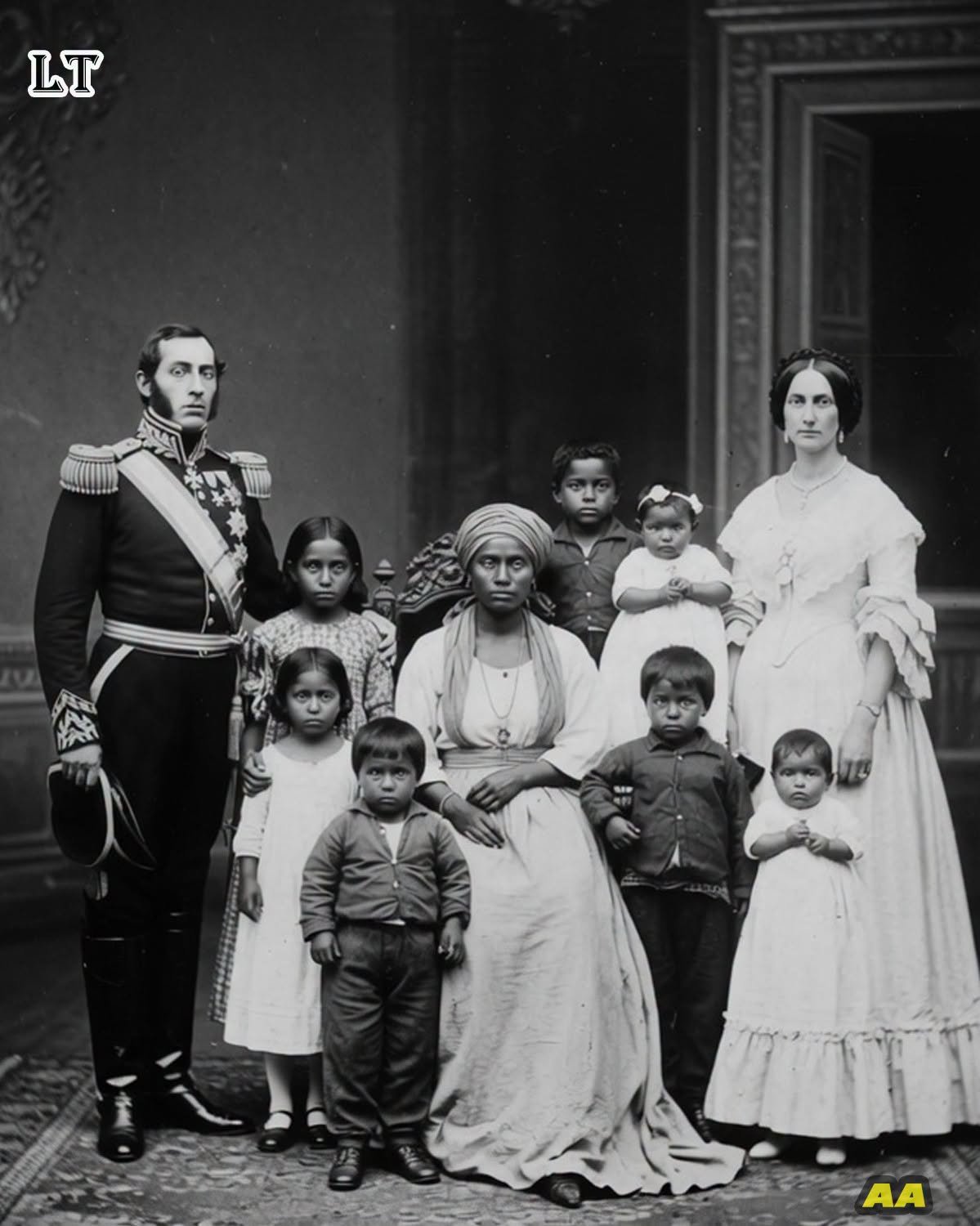
The summer of 1782 in Veracruz was unforgiving.
The sun hung over the colonial city like a burning torch, turning stone roads into shimmering waves of heat and forcing workers in the fields and kitchens to endure endless hours beneath a merciless sky.
From the outside, the great haciendas of New Spain represented wealth, power, and tradition.
Their enormous gates stood as symbols of status.
Their grand halls displayed portraits of ancestors, military honors, and family names carefully protected for generations.
Inside those walls lived governors, officers, merchants, and landowners who enjoyed privileges that ordinary people could only imagine.
But behind those same walls existed another world.
A world hidden from guests.
A world where servants worked without recognition, where enslaved people had no voice, and where those in power often believed their position placed them above accountability.
It was in this world that a young woman named Itzel lived.
She was known only by the role forced upon her.
A worker in the kitchens.
A possession in the eyes of the society around her.
A woman whose silence was misunderstood by those who benefited from her suffering.
But history, whether written in official documents or preserved through stories passed from generation to generation, has always carried one powerful truth:
Silence does not mean acceptance.
And the absence of a voice does not mean the absence of strength.
The Man Behind the Uniform
Lieutenant Ignacio Valverde appeared to have everything.
He was respected among colonial officials.
He wore a military uniform decorated with medals.
He owned land, servants, and a magnificent estate.
Visitors described him as disciplined, confident, and proud.
At formal gatherings, he spoke about honor, loyalty, and family reputation.
But behind the image he carefully presented to society was a darker reality.
Power without accountability often becomes dangerous.
Ignacio believed his position protected him from consequences.
He believed wealth could erase questions.
He believed those beneath him had no ability to challenge him.
For years, the walls of the hacienda protected his secrets.
The people who worked there knew what was happening, but fear kept them silent.
In a society built on hierarchy and inequality, speaking against a powerful man could destroy a person’s life.
And so the truth remained hidden.
Not because nobody knew.
But because nobody believed they could do anything.

A Woman Trapped by Silence
Itzel’s life had already been shaped by hardship long before the events inside the hacienda.
Born into the Mixtec community, she carried traditions, memories, and a connection to a culture far older than the colonial system that controlled her life.
Her inability to speak made her even more vulnerable.
Many people mistakenly saw her silence as weakness.
They did not understand that a person can communicate through their eyes, their hands, their actions, and their determination.
Itzel learned to observe.
She learned to survive.
She learned that sometimes staying alive required patience.
Every day inside the hacienda demanded strength.
Every night carried memories she could not escape.
But even in the darkest circumstances, something remained untouched:
Her humanity.
The Children No One Wanted to See
Over the years, children were born.
Seven children whose existence revealed a truth the powerful family desperately wanted hidden.
They carried the unmistakable features of their father.
The same eyes.
The same expressions.
The same family resemblance that appeared in the portraits hanging proudly in the mansion.
Yet they were denied the identity they were born with.
They lived in the shadows of the estate.
They were treated as invisible.
To the outside world, they were simply workers’ children.
But inside them was a story that could no longer remain buried forever.
They were children caught between two worlds.
They carried the blood of privilege but lived the reality of oppression.
They inherited a name they were forbidden to claim.
The Wife Who Discovered the Truth
Beatriz de Mendoza had spent years living as Ignacio’s wife.
To society, she was a respected woman of the upper class.
She attended gatherings.
Maintained appearances.
Represented the family name.
But behind closed doors, her marriage was filled with unanswered questions.
She had noticed changes.
The unexplained disappearances.
The secretive behavior.
The way Ignacio reacted whenever the servants were mentioned.
At first, she ignored her suspicions.
Like many women of her time, she understood the importance society placed on preserving reputation.
But eventually, curiosity became impossible to silence.
One morning, she entered an area of the hacienda where she rarely went.
And there she discovered the truth.
Seven children.
Seven faces.
Seven reminders of everything her husband had hidden.
The discovery changed her forever.
Many expected anger.
Many expected revenge.
But Beatriz chose something more dangerous.
She chose patience.
The Power of Preparation
Beatriz understood that emotional reactions would not defeat a powerful man.
Anger alone could be dismissed.
Accusations alone could be denied.
She needed proof.
So she began quietly collecting evidence.
She documented events.
She preserved records.
She searched for financial irregularities connected to her husband’s activities.
She gathered information that could not simply disappear.
Most importantly, she began caring for the children in a way nobody had expected.
She educated them.
She taught them reading, writing, history, and the importance of knowing their own worth.
For years, they had been treated as if they did not matter.
Beatriz wanted them to understand something different:
Their lives had value.
Their voices mattered.
Their story deserved to be heard.
The Night Everything Changed
In September 1791, Veracruz society gathered for an elegant dinner.
The guest list included influential figures.
Military leaders.
Government officials.
Religious representatives.
Important families.
The room was filled with conversation, music, and carefully maintained appearances.
Ignacio stood among them as he always had.
Confident.
Respected.
Untouchable.
Until the doors opened.
The room slowly fell silent.
Seven young people entered.
They walked with dignity.
They carried themselves differently from the servants everyone expected to see.
Behind them stood Beatriz.
Calm.
Focused.
No longer the quiet wife who protected a family image.
She was a woman who had decided the truth mattered more than reputation.
The guests looked from the children to Ignacio.
And immediately, they understood.
The resemblance could not be ignored.
The Moment the Secret Became Public
Beatriz stepped forward.
Her voice was steady.
She did not scream.
She did not beg.
She simply told the truth.
She revealed who the children were.
She revealed what had been hidden.
She placed documents before the guests.
Records.
Evidence.
Proof of the deception that had lasted for years.
The room that had once celebrated Ignacio’s reputation became the place where that reputation collapsed.
For the first time, the man who believed himself untouchable faced something he could not control:
The truth.
When Power Meets Accountability
The consequences were not immediate or simple.
History has shown that powerful people often have allies who protect them.
Institutions can be slow to change.
Justice does not always arrive quickly.
But something important had already happened.
The silence was broken.
The children were seen.
Their existence could no longer be erased.
The story had escaped the walls of the hacienda.
And once the truth is known, it becomes much harder to bury.
The Legacy of the Seven Children
Years later, the children’s lives took different paths.
They carried the scars of their childhood, but they also carried something else.
Education.
Strength.
A sense of identity.
They were no longer only victims of someone else’s actions.
They became people who shaped their own futures.
Their story became a reminder that people who are denied a voice can still change history.
Because injustice often depends on one thing:
The belief that nobody will ever speak.
But eventually, someone does.
A Story About Courage Beyond Time
Whether told through historical records, family memories, or fictional storytelling, stories like this reveal something deeply human.
They remind us that power is temporary.
Titles disappear.
Fortunes fade.
Names once considered untouchable can eventually be questioned.
But courage leaves a different kind of legacy.
It lives in the person who refuses to accept injustice.
It lives in the person who protects the vulnerable.
It lives in the person who chooses truth even when silence would be easier.
The story of the seven children hidden behind the hacienda walls is ultimately not only about cruelty.
It is about resistance.
It is about a woman who refused to let suffering become invisible.
It is about children who deserved to be recognized.
And it is about the enduring human desire for dignity.
Because even behind the strongest walls, truth has a way of finding a door.
And when that door finally opens, even the most powerful people must face what they tried to hide.