The town of Red Crossing smelled like hot iron and old grudges. Sunlight bounced off cracked windows and rotten boards, and the wind carried the sour stink of spilled whiskey and lies that had dried hard as bone. Grant Mercer meant to stay in that mess only long enough to buy coffee, flour, and a new file for his fence posts. He tied his horse, dusted his pants, and told himself the same thing he always did: “Keep your eyes on your own boots.” Then he heard the laughter behind the saloon—sharp, hungry, the kind that hunts for pain.
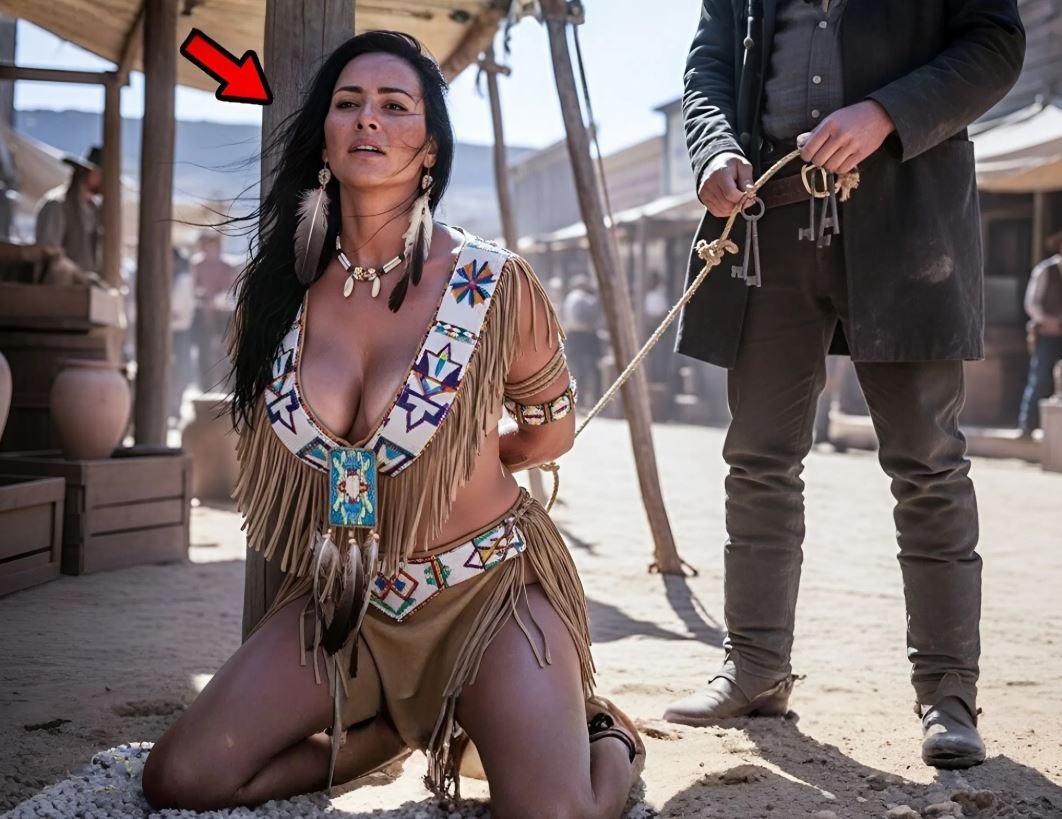
He walked toward the sound the way a man walks into bad weather, shoulders braced, already knowing he’ll get wet. Behind the building a half-circle of men sweated and grinned, bottles swinging like extra limbs. In the middle of them a young Apache woman stood chained to a post. Rust ate at the cuffs on her wrists, and her arms were stretched so high her fingers had gone purple. Her dress hung in shreds, showing bruises shaped like boot heels and a long cut on her thigh that someone had let bleed too long. Still, her eyes moved quick and bright, counting every face, looking for the smallest gap.
A drunk poked her chin with his boot and joked about price. Another reached to pinch her hip like she was bread on a shelf. That was when she saw Grant—calm face, quiet mouth, the only man not smiling. She lifted her chin, dragged air through cracked lips, and spoke the only shield left to her. “Buy me,” she said. “Call me your wife. Please.” The word wife hit the men like a joke, but Grant heard a weapon scraped down to its last sharp edge. He also heard his own heart answer before he could stop it.
He stepped forward, boots thudding soft in the dirt. “What’s the damage?” he asked. The leader laughed, then named a number meant to shame them both—more than a saddle, less than a milk cow. Grant pulled out the coins he had saved for a new plow. He dropped them into the man’s palm without haggling, the way you drop a hot pan you have no wish to hold. The circle went quiet; fun dies quick when money changes hands without sport. Grant drew his knife, not in threat but in promise, and cut the leather tie. The woman’s arms fell like broken wings. He caught her before the ground did.
She weighed more than he expected—muscle under the damage, pride under the pain. Her breath came hot against his neck while he lifted her onto his horse. “Name?” he asked. “Sora,” she whispered. “Means sky.” He told her his own, swung up behind her, and turned toward the open desert. No one followed. The town had already spent its interest; another show would start soon.
They rode for hours. Sora dozed against him, jerking awake whenever the horse stumbled, then sinking back when she felt his arm stay steady. His ranch sat in a fold of land where the horizon kept its distance. The cabin was small: one bed, one table, one chair, and silence that had belonged only to him until now. He carried her across the threshold like a bride, but his first gift was distance—he laid her on the bed and stepped back so she could count the space between them.
He heated water, found clean cloth, and asked permission before every touch. When the cloth slipped near the torn neck of her dress, he kept his eyes on the cut, not the skin. She watched him work and saw something she had almost forgotten: a man who could choose cruelty and still decide against it. Sleep took her hard. Grant spread a blanket on the floor, listened to her breathe, and wondered how much of his own life he had just torn open.
Morning brought new rules. She wanted to sweep, to carry wood, to prove she was more than rescued weight. He set a broom in her hand but made her sit when her knees shook. They moved around each other like strange dogs: careful circles, sudden stillness, small offers of trust. He told her the soldiers might come looking; she asked what he would do. He said only, “They’ll walk through me first.” The words were plain, but they landed like a vow she could finally believe.
Days stretched into weeks. Sora’s bruises turned yellow, then faded. She fixed the tear in her dress with thread the color of sunrise. Grant fixed the fence he had meant to mend the day he rode to town. They shared chores without chatter, saving words for when they mattered. Some nights she woke screaming; he sat on the porch until she slept again. Some nights he stared at the dark like it owed him an answer; she brewed coffee and let the smell pull him back.
One evening coyotes yipped close to the corral. Sora stepped outside carrying his old rifle like she had always known its weight. Together they walked the fence line, shoulders brushing, listening for hoofbeats that never came. Under the big white moon he said, “You can leave any dawn you choose. No chains here.” She studied the open land, then studied him. “I know,” she answered. “That’s why I stay.”
Grant never called her wife, and she never asked him to. The paper the town mocked is locked in a drawer, but the promise lives in daily things: two plates on the table, two horses in the barn, two names spoken soft at dusk. Some mornings he still tells himself he should have bought the plow instead. Then he sees her laughing at a new calf or humming while she mends his shirt, and he remembers that freedom given is never wasted. The ranch is small, the world is large, and trouble may ride up any day, but the gate now swings both ways, and the woman who once begged for a word finally owns the sky that word contains.