Caleb Brick guided his tired horse down the last slope as the sky turned the color of cold steel. The wind cut through his coat like a blade, reminding every joint how many winters he had ridden alone. His cabin crouched ahead, a dark shape against darker pines, and he felt the usual hollow tug: another night of chewing silence instead of supper. He did not kick the mare to go faster. There was no one waiting, no lamp lit, no reason to hurry home except habit.
Yet a thin thread of smoke rose from the chimney he had left dead that morning. The sight stopped his breath harder than the frost. Six years earlier fever had emptied the cabin of laughter, and he had kept the stove alive only to keep himself from freezing, not from caring. Now someone else had stirred the coals. He swung down, boots creaking on frozen mud, and slid the Colt from its holster the way another man might shake hands. The door whined open on hinges that needed grease and habits that needed healing.
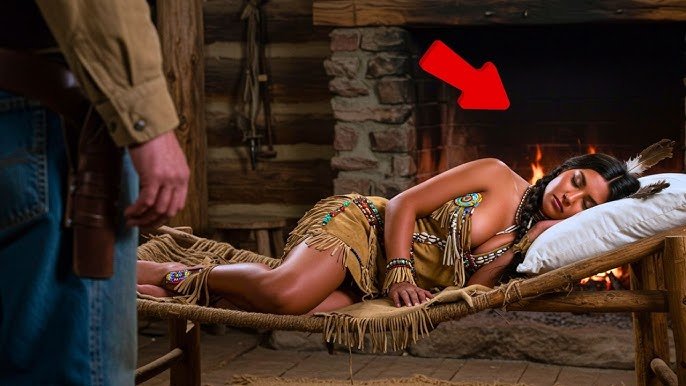
Inside, firelight danced across the rough boards and settled on a woman curled against the wall like a question mark. Black hair tangled with burrs, dress ripped at the shoulder, wrists ringed purple where rope had bitten deep. She was young, Apache, and far from any friendly camp. Caleb knew the county’s opinion before it spoke: a white man’s roof over an Indian woman’s head was a match to dry grass. He could almost hear the hoofbeats of men who enjoyed excuses to ride with rifles. For a moment he weighed the risk of keeping her against the ease of pointing her back into the night. Then her fingers trembled, and the small motion jerked him back to the memory of other helpless hands slipping out of his own. He set the bread on the table, nudged it toward her, and said the only word that felt safe. “Stay.”
She ate like a wild thing that had learned food could be stolen back, small bites, eyes never leaving him. When the crust was gone she folded her hands, waiting for the price. Caleb had no price to name, only chores that still needed doing. He brought water, split wood, and tried not to stare while she swept the floor with a broom missing half its bristles. Each time she bent, a quick breath hissed through her teeth, telling of ribs still learning how to hold together. He mended the roof outside; she mended his coat inside, stitches wandering like lost ants. The cabin began to smell of pine soap and simmering beans instead of old grief. At night he sat with the rifle across his knees, listening to the wind argue with the shutters and to her breathing settle into something close to trust.
Morning brought riders. Three shadows jogged along the fence line, coats open to show revolvers. Their leader had a rope coiled at his hip and a smile sharp enough to skin a deer. He called the woman camp property, using the same tone men once used to count Caleb’s cattle before they rustled them. Caleb felt the old anger rise, the kind that had nowhere to go after Mary’s grave was filled. He stepped off the porch, boots planting wide, and explained that his land did not trade in human flesh. The scarred man laughed, measured the distance, and reached.
The shot that answered came from a throat dry of mercy but steady with practice. When the echo died, only Caleb stood upright, smoke curling from the barrel like a final sigh. Behind him the doorway framed a slim figure wrapped in his own coat, eyes wide, hope flickering where fear had been. He realized the cabin would never again feel hollow, because someone had chosen to stay and he had chosen to fight for that right. The long ride of loneliness had ended at
the threshold where blood met frost and mercy met memory, and both decided the next trail would be walked together.