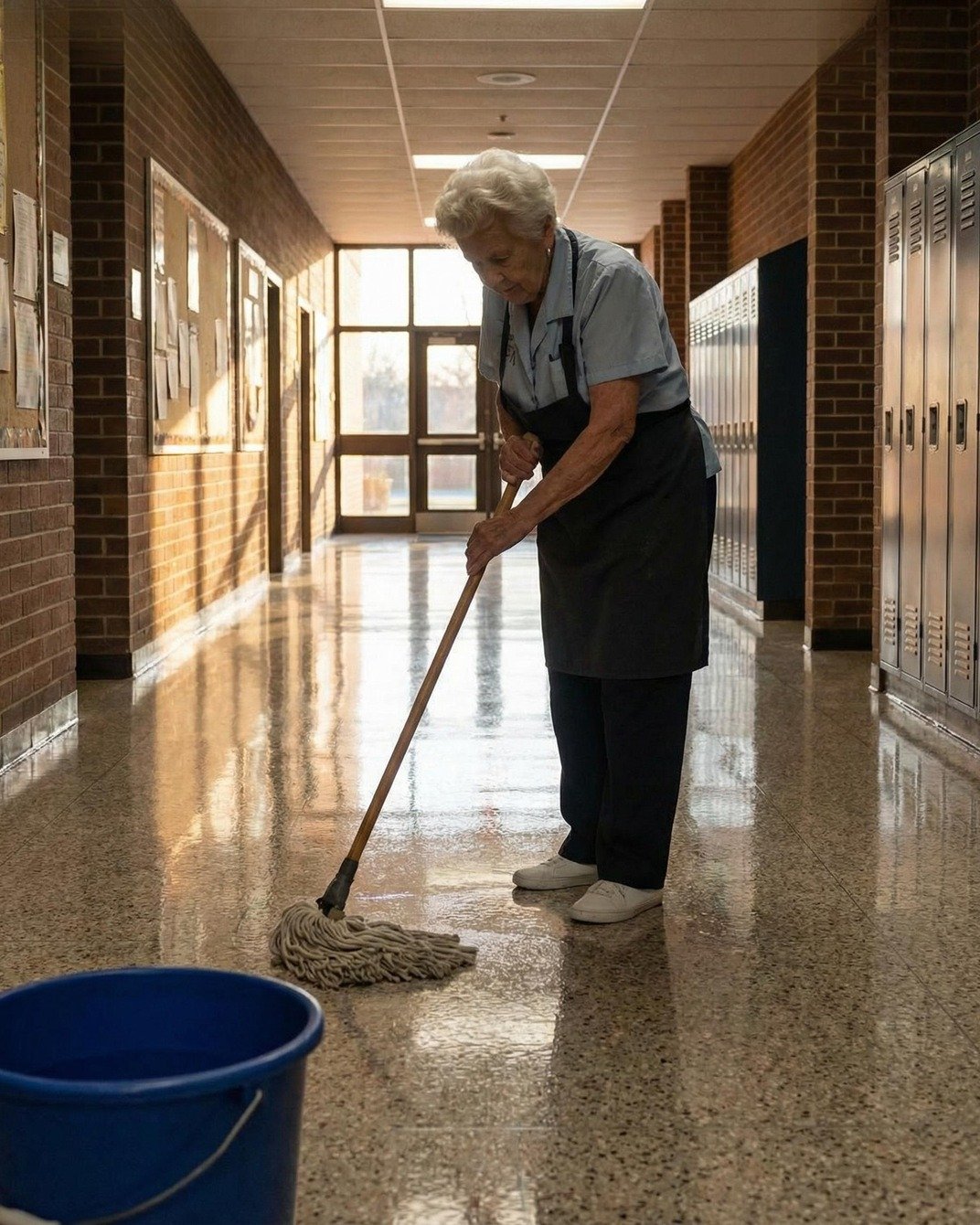
I was finishing my nightly rounds at the school when a sound stopped me cold—soft crying coming from the girls’ restroom long after the last bell. I didn’t rush in or demand answers. I simply let her know someone was there. A teenage girl slowly opened a stall door, eyes swollen from tears, insisting she was “fine” even though everything about her said otherwise. I sat down on the cool tile floor, my mop leaned against the wall, and told her she didn’t owe me an explanation. After a long silence, the words finally came. She talked about feeling judged, laughed at, and unseen, as if she didn’t matter at all. I listened. I didn’t interrupt. I reminded her—quietly and sincerely—that her value wasn’t decided by the people who failed to understand her. When she left, she whispered a thank-you so small it almost disappeared, but it stayed with me all night.
I couldn’t shake the feeling that one conversation wasn’t enough. Kindness, I believed, worked best when it was consistent. The next morning, I slipped a short note and a few simple treats into her locker. Nothing flashy—just a reminder that someone cared. “For the days that feel heavy,” the note read. “You are not alone.” I repeated the gesture over the next week, leaving small items and encouraging words without signing my name. I wasn’t looking for recognition. I just wanted her to feel supported in a place that had felt so lonely. In the hallways, I noticed subtle changes. She still kept to herself, but her shoulders weren’t quite as tense. She walked a little taller.
One afternoon, as I opened her locker to leave another note, an envelope slipped out and landed at my feet. My name was written on it. Inside was a handwritten letter thanking me for sitting on the restroom floor with her and for every quiet surprise that followed. She wrote that she had been thinking about leaving school altogether, but after our talk, she chose to stay and reach out to a counselor. Tucked inside was a small bill—not as payment, but as gratitude. I stood there for a long moment, holding the letter, realizing how far a simple act could reach. Over the following days, I saw her smiling more, talking to classmates, even laughing once near the water fountain. The change was real.
A week later, during a school assembly, the principal unexpectedly called me to the stage. He spoke about compassion, about how unnoticed acts of care can shift an entire environment, and announced new programs focused on student support. As the room filled with applause, I spotted her in the bleachers, smiling and quietly mouthing, “Thank you.” I nodded and returned to my work afterward, pushing my mop bucket down the same halls as always. Nothing about my routine had changed—but everything about how I saw it had. Sometimes the most powerful impact comes from simply showing up, listening, and reminding someone that they matter more than they know.