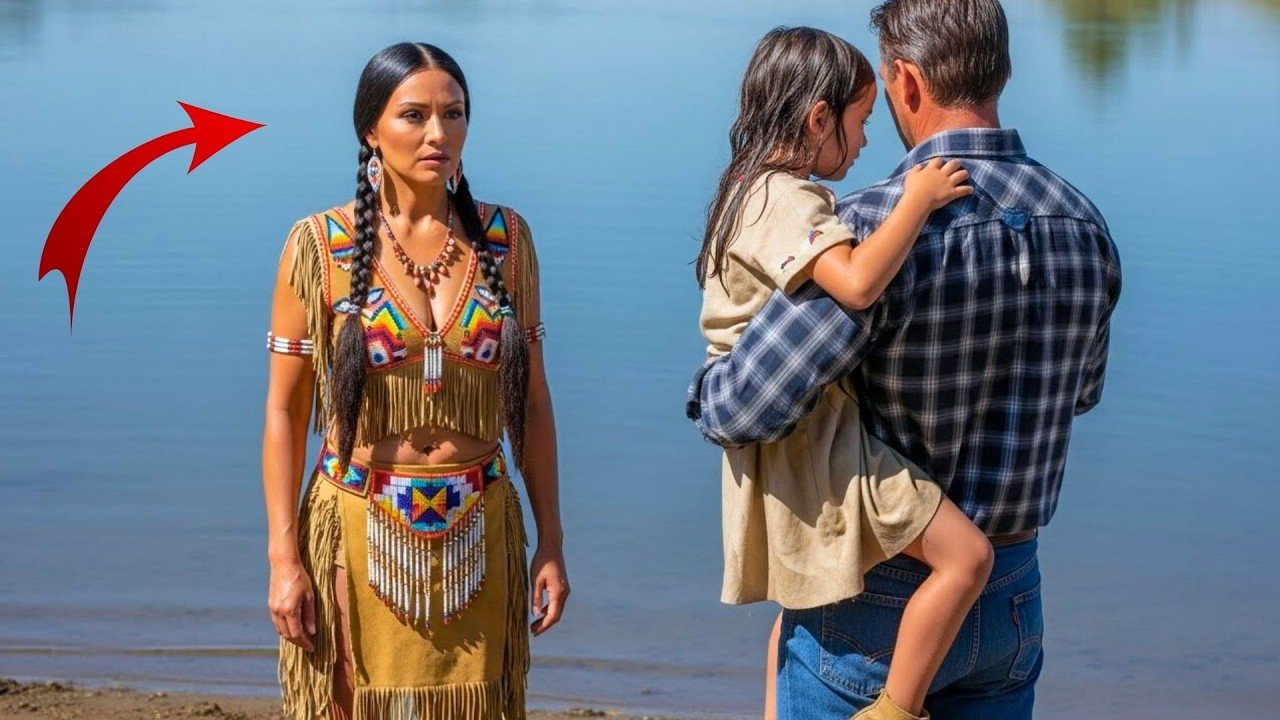
Cole Avery expected dawn to taste like coffee and dust—nothing more. Instead it tasted like river-water and shouting. He was halfway to the stock-tank when the screaming started, thin as willow-whistle but sharp enough to cut the morning open. He ran, boots slapping hardpan, and found the Pecos dragging a child through its teeth—a small Apache boy, arms flailing like broken kite-sticks.
Cole dove, hit the current shoulder-first, and fought the river for possession of the kid. When they surfaced together, both coughing ice and light, the boy whispered one word: “Mother.”
Cole figured the story ended there—good deed done, dry clothes, hot coffee. But the desert doesn’t finish tales when you’re ready to walk away.
An hour later the earth trembled—thirty riders cresting the ridge, paint-horses and feathered lances, sunlight striking shields like flint. At their head rode a woman tall enough to steal sky—Avela, straight-spined, eyes black as volcanic glass. She dismounted before Cole could form a greeting and placed her palm over her heart.
“You pulled my son from death,” she said, voice steady as drum-skin. “By the law older than this river, you are now husband to me and protector to him.”
The words hit Cole like a hoof to the chest. He tried to laugh, to explain he was just a rancher who knew which end of a rope to grab, but the circle of warriors closed, quiet, waiting. Avela’s gaze held no mockery—only ancient certainty that made his denims feel too thin.
Inside his head ran the usual protests—he’d never married, never even managed a garden; he ate beans from the pot and talked to cattle. Outside, the boy clutched Cole’s coat, trusting as sleep. Cole looked at the child, then at the woman who had offered her name like a gift, and felt the world tilt toward something wider than solitude.
He swallowed once. “I don’t know how to be what you’re asking.”
Avela’s answer came soft. “You already were. You jumped. That is the beginning.”
They rode to her camp—fires blooming against dusk, drums echoing off canyon walls. Elders studied him, not unkind, measuring the weight of his courage against the weight of their law. He sat through songs that told of water returning to dry springs, of eagles nesting in unfamiliar cliffs, of hearts finding hearts after wandering. When the fire burned low Avela draped a blanket across his shoulders—woven stripes of sunrise and storm—and said, “This is not trap; this is trust. We can learn the shape of each other.”
Cole spent three nights in that lodge. He learned her son’s favorite game, her mother’s herb for fever, the way she laughed with her whole face when the coyotes yipped too close. On the fourth morning he rode back to his ranch, not to run but to reckon: to count cattle, to fix fence, to decide if solitude was still enough. The cabin felt smaller, the silence louder. Bear, his old dog, sniffed the blanket-edge still clinging to Cole’s shirt and wagged once—approval or prophecy, he couldn’t tell.
A week later he returned, saddlebags stuffed with coffee, salt, and a brand-new bridle bright as hope. Avela met him at the river, water curling around her horse’s knees. She didn’t ask if he’d come to stay; she simply turned her mount beside his and pointed upstream where cottonwoods lined the bank like quiet witnesses.
They built nothing grand—just a life side by side: cattle on his range, ponies on hers, vegetables in shared rows, stories traded across shared fire. Some nights raiders tested the boundary; some days drought tested the well. Always the answer was the same—two rifles, two voices, one dog pacing the perimeter like a small, determined general.
Years thinned. The boy grew tall, learning to rope from Cole and to track from his uncles. Avela’s braids silvered; Cole’s limp deepened. The river that once tried to steal a child kept their fields green and their reflections side by side.
Cole never claimed to understand every line of the law that bound him, but he knew this: the current that almost took a life had carried him—reluctant, stumbling—into a future larger than any he could have plotted alone. And whenever the water ran high he touched the blanket still hanging by the door, felt the weave of sunrise and storm, and remembered the morning he jumped because jumping was the only right thing to do.
Sometimes destiny arrives wearing river-ice and someone else’s child. All a man has to do is decide the water is worth entering.