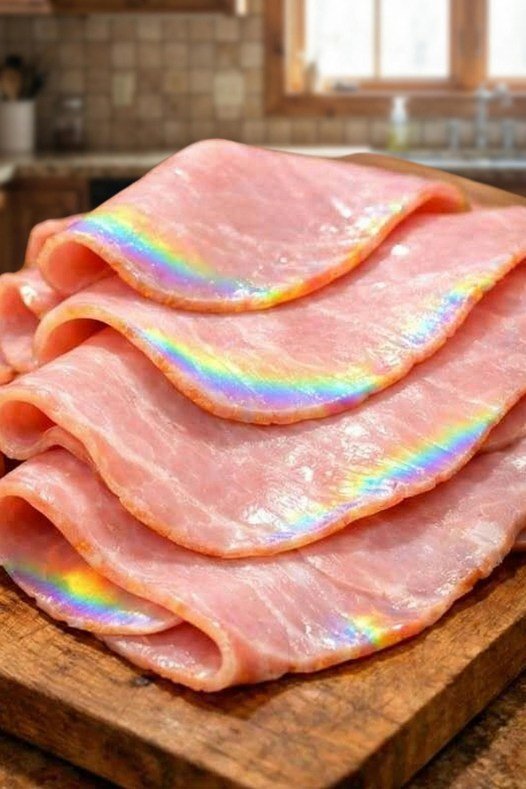
The first time you notice it, the effect can be startling. You peel open a fresh pack of deli ham, expecting the usual pink slices, and instead you catch a flash of shimmering color—greens, purples, even hints of blue dancing across the surface. It can look metallic or artificial, and it’s natural to wonder if something has gone wrong. Has the ham spoiled? Was something added to it? In most cases, the answer is far less alarming than it appears, and the explanation lies in simple science rather than food safety concerns.
That rainbow-like shine is caused by the way light reflects off the ham’s muscle fibers. Ham is made up of tightly arranged strands of protein, and when the meat is sliced very thin, those fibers can bend and scatter light in different directions. As light hits the smooth, moist surface, it separates into multiple colors, much like light reflecting off a soap bubble or a thin film of oil on water. The curing process and natural moisture in the meat can make this effect more noticeable, especially in pre-sliced deli products where the surface is uniform and polished by the cutting process.
While the colors may look unusual, they are not a reliable indicator of whether the meat is safe to eat. Actual spoilage comes with clearer warning signs. Fresh deli ham should smell mild and clean, feel slightly moist but not sticky, and maintain a consistent pink tone without dull gray or green patches. If the meat develops a sour odor, a slimy texture, or an off-putting appearance beyond light reflections, it’s best to throw it away. These sensory cues are far more important than a harmless shimmer when judging freshness.
Storage habits also matter when it comes to deli meats. Once opened, ham should be tightly wrapped or sealed and kept refrigerated at a steady, cold temperature. Most food safety guidelines suggest using opened deli ham within three to five days. Even under refrigeration, bacteria can slowly grow, so proper handling is key. By understanding the science behind the rainbow shine and knowing what real spoilage looks like, shoppers can avoid unnecessary worry—and unnecessary waste—while enjoying their food with confidence.