The wind howled down from the peaks and carried another sob story with it. A hired buggy rattled away, its passenger—nurse number seventeen—crying into her handkerchief. Martha McKinnon shut the heavy gate, counted on her fingers, and muttered, “Eight months, seventeen nurses, not one lasted a fortnight.” Inside the sprawling log house Ezra “Bear” McKinnon lay dying by inches, pain gnawing his bones and rage gnawing his soul. Doctors had come from Denver with shiny instruments and long names for his sickness, yet none could tame the beast that lived in his spine and screamed through his nights.
Clara Hutchison stepped off the supply wagon in a too-thin coat, boots cracked, purse nearly empty. The ad promised four times the usual wage; the clerk in Denver warned she would earn every cent. Her father was dead in an Ohio mine, her mother and three little brothers waited for money orders that bought bread and kept the bank from their door. She had no certificate in nursing, only the stubborn calm of a girl who had stitched miners’ limbs and hushed soldiers’ nightmares. Martha looked her up and down, saw another lamb headed for slaughter, and shrugged. “Suit yourself, miss. Room’s at the top of the stairs. Don’t say I didn’t warn you.”
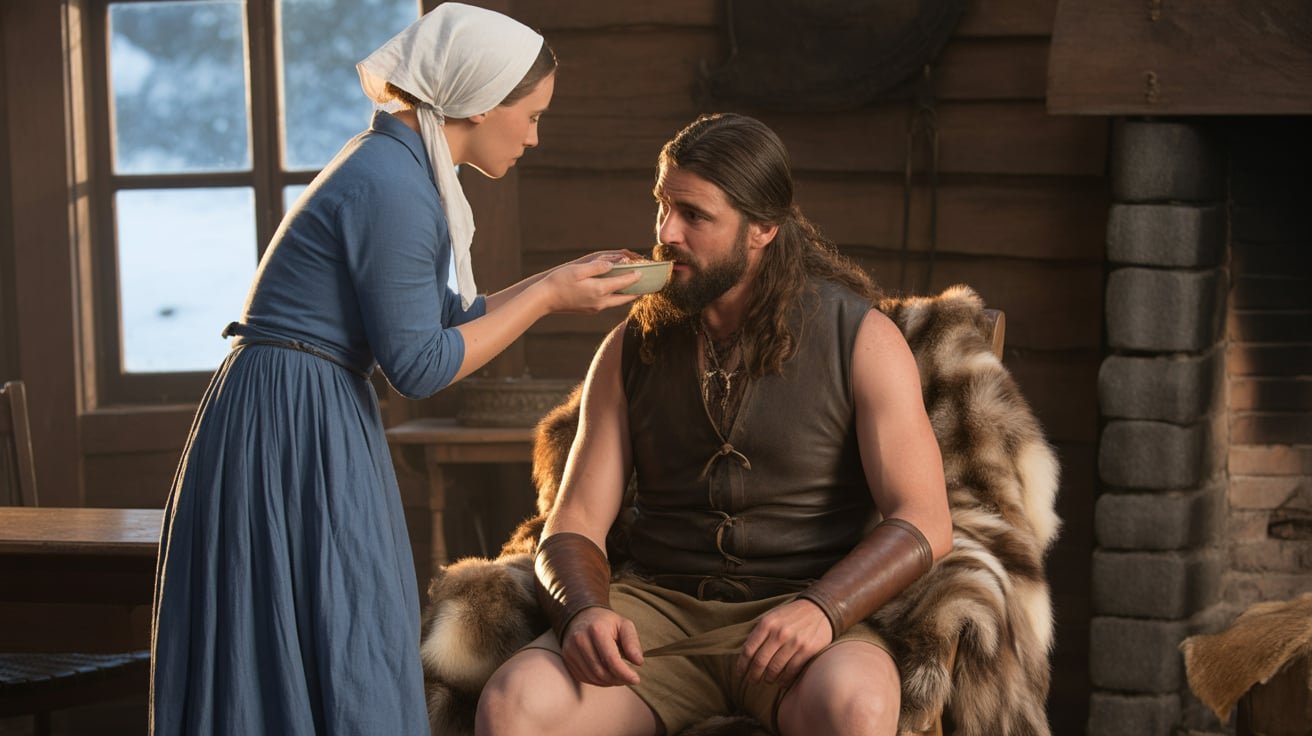
Bear greeted her with a voice like gravel rolling downhill. “Welcome to the graveyard, girl. How long—three days or four—before you run?” Clara set her bundle on a chair, rolled up her sleeves, and answered, “I’ll leave when your brother hands me my pay or when you stand on your own two feet, whichever comes first.” She spoke so plainly that Bear’s insults jammed in his throat. She asked about the pain, about the shaking, about the nights he woke screaming Sarah’s name. The questions stung more than the disease, and for the first time in months he was quiet.
Days turned into a duel. He spilled coffee to ruin her mornings; she laughed at the muddy grounds and asked him to teach her mountain ways. He refused food; she cooked anyway and ate it herself while he watched. She found a dusty bottle of laudanum hidden behind books, noted the level, and said nothing. Then came the night his body contorted so violently the bedposts rattled. She held him through it, wiped the sweat, sang the old hymns her mother sang to colicky babies. When the storm passed he whispered, “Stay,” the single word costing more pride than he knew he owned.
The thaw began slowly. A walk to the barn, a breath of pine, a story about Sarah Whitmore who never became his bride because snow swallowed her stagecoach. The more he spoke, the looser the knots in his muscles grew. Ranch hands who once tiptoed past his door now stopped to hear him laugh at Clara’s terrible jokes. His brother Jacob rode in with a sleek fiancée picked from the city, expecting gratitude and fresh signatures on business papers. Bear introduced Clara as the woman who pulled him from the grave and announced the wedding would be his own. Stunned silence answered; then the household erupted like a struck beehive.
They married in December while evergreens sparkled with frost. Clara wore gray wool, Bear wore a clean shirt and a grin wide enough to shame the sunrise. Vows were short: promise to let love change you, promise to stand when the world calls you foolish. Five years later the ranch housed a small clinic where Clara trained other women to treat body and spirit alike. Two children tumbled through the yard, a girl named for the first lost Sarah, a boy named for Clara’s father. On quiet evenings Bear still asked how a broke Ohio girl saved a broken mountain man. Clara only smiled, tucked her hand in his, and said, “I didn’t leave. That’s all. I simply didn’t leave.”