Winter came early to the Silverbuds in 1882, sliding down the pines like a thief and curling around Reed Callahan’s cabin before the calendar agreed. Reed noticed the cold the way he noticed everything now—quietly, without surprise, as if the frost were simply another guest arriving late to a party he had stopped attending years ago. He had built the place with his own hands and a heart full of exit wounds, six miles from the nearest grave and two dozen from the nearest lie. The world had shouted itself hoarse at him; he had answered by walking away and nailing the door shut behind his anger.
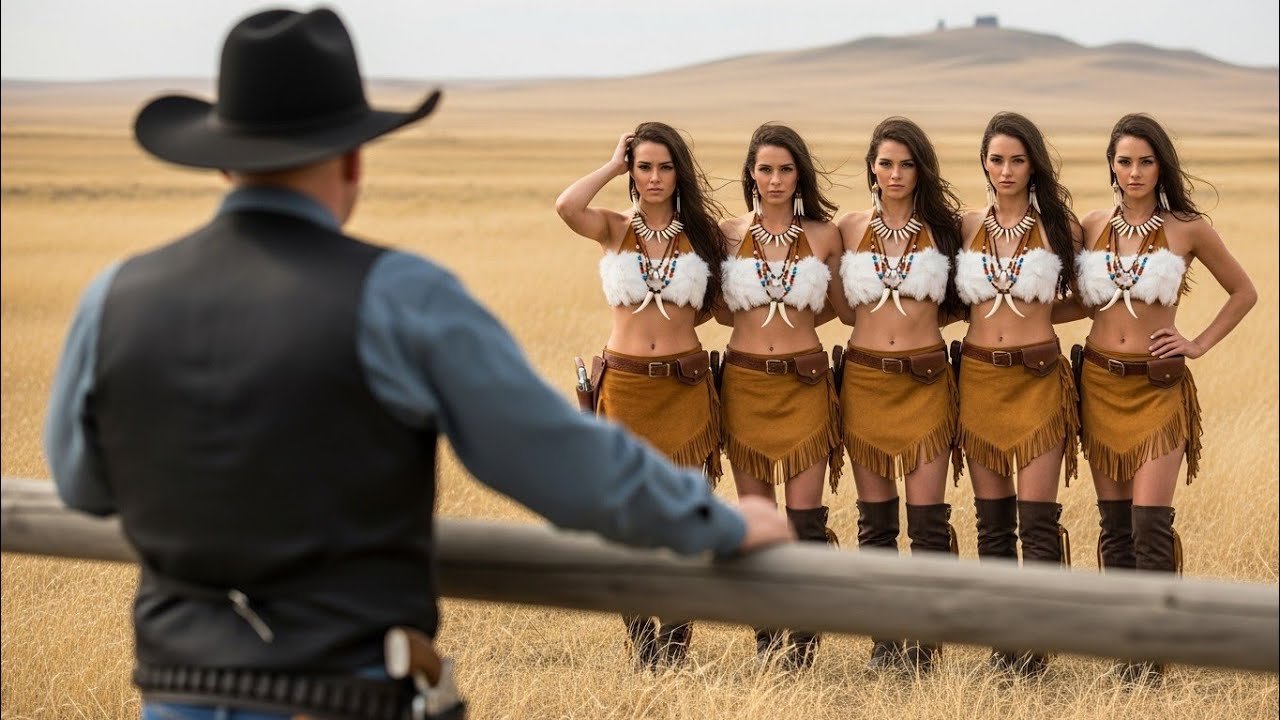
On the afternoon the footsteps came he was splitting fir, the ax ringing like a dull bell. The wind carried the sound of boots crunching crusted snow—more than one pair, light and careful. Reed set the ax down, wiped resin from his gloves, and moved toward the clearing the way a man moves when he has already seen every kind of bad surprise. Five women stood at the tree line, dresses stiff with ice, feet wrapped in rags darker than blood. They did not beg. They simply breathed, and the steam of their breathing looked like the last prayers of a dying campfire.
The one in front lifted her chin. “We need shelter. One night.” Her voice carried the dry crack of a woman who had swallowed her own screams to keep them from attracting wolves. Reed’s eyes counted injuries the way other men count coins: the youngest with blood dried down her thigh, another holding her elbow too close to her ribs, a third clutching a bundle the size of a loaf of bread—everything she still owned in the world. They were Apache widows, he guessed, though names and tribes had started to feel like small words in a land that spoke only in rifle reports.
He opened the gate without asking questions. Inside, the cabin smelled of coffee gone cold and pine pitch. The women formed a half-circle around the hearth, not sitting until he pointed to the floor. They ate yesterday’s stew without looking up, hands shaking so hard the tin spoons rattled against the bowls. Reed added wood to the fire and took the window seat, rifle across his knees the way another man might hold a child. When the youngest—Tala—whimpered in her sleep, the tall one—Sayin—placed a hand over the girl’s mouth, gentle as snowfall, warning her to keep dreams silent.
Morning arrived the color of old pewter. Reed woke to the smell of fresh bread and the sound of kneading. The women had taken inventory: one blunt knife, three nails, a sack of flour, the last of the salt. They worked like people who knew how to build tomorrow from yesterday’s scraps. Sayin split kindling with the same calm Reed had once used to interpret surrender terms he knew would be broken by sunset. When she missed a swing and the hatchet bit her knuckle, she did not curse. She simply wrapped the cut in her skirt and kept swinging, and Reed felt something inside him—something he had thought amputated—twitch back toward life.
Days folded into one another like pages in a book no one had bothered to title. The women patched the roof, boiled snow for washing, stretched rabbit skins on a frame Reed had never found time to finish. They spoke to one another in short sentences that sounded like flint striking steel. At night they slept close enough to share breath, and Reed kept watch, no longer sure whether he was guarding them or being guarded. One evening he found Sayin mending his coat by lamplight, her split lip caught between her teeth the way some women hold pins. She did not look up when he sat across from her, but her shoulders eased, as if his presence were simply another tool she had learned to use.
Snow melted into mud, and mud into tentative grass. Reed brought out the county forms he had bought years earlier, meaning to file for more land he would never need. Instead he wrote five names in careful script: Sayin, Kaya, Paya, Tala, Noli. He pressed their thumbs in ink and set the paper by the lamp to dry, feeling like a man forging a treaty with his own loneliness. Sayin found him there, ink on his fingers, and asked what the words meant. He told her they meant no marshal, no rancher, no passing stranger could take them without first taking him. She studied the page, then studied him, and for the first time her mouth softened into something close to a smile.
Spring arrived the day Tala walked without limping. Reed was behind the cabin splitting wood when Sayin appeared, coat open to the wind, hair loose like black water. She stopped his ax with one hand on the handle and said, “Marry me.” The words came out backward, but he understood. He answered by dropping the ax and kissing her palm, callused and split and perfect. They stood there while clouds slid across the sun, two people who had forgotten how to be anything except survivors learning the shape of the word home.
They wed beneath the tallest fir, rings cut from a single branch, vows spoken soft enough that only the bark and the breeze could hear. Afterward the cabin rang with laughter too bright to be called quiet, yet still careful of breaking like ice too thin to hold memory. Reed looked around at faces once carved by hunger now rounded by bread and belonging, and realized the world had not changed—he had simply stopped running from it.
That night Sayin pressed his hand to her stomach and whispered, “In a few moons.” Reed felt the future kick against his palm like a promise trying to hatch. Outside, snowmelt ran in silver threads down the slope, carrying away the last of the winter that had brought them. Inside, five women and one man sat close enough to share warmth, close enough to share tomorrow, close enough to believe that silence, when chosen together, becomes another word for family.