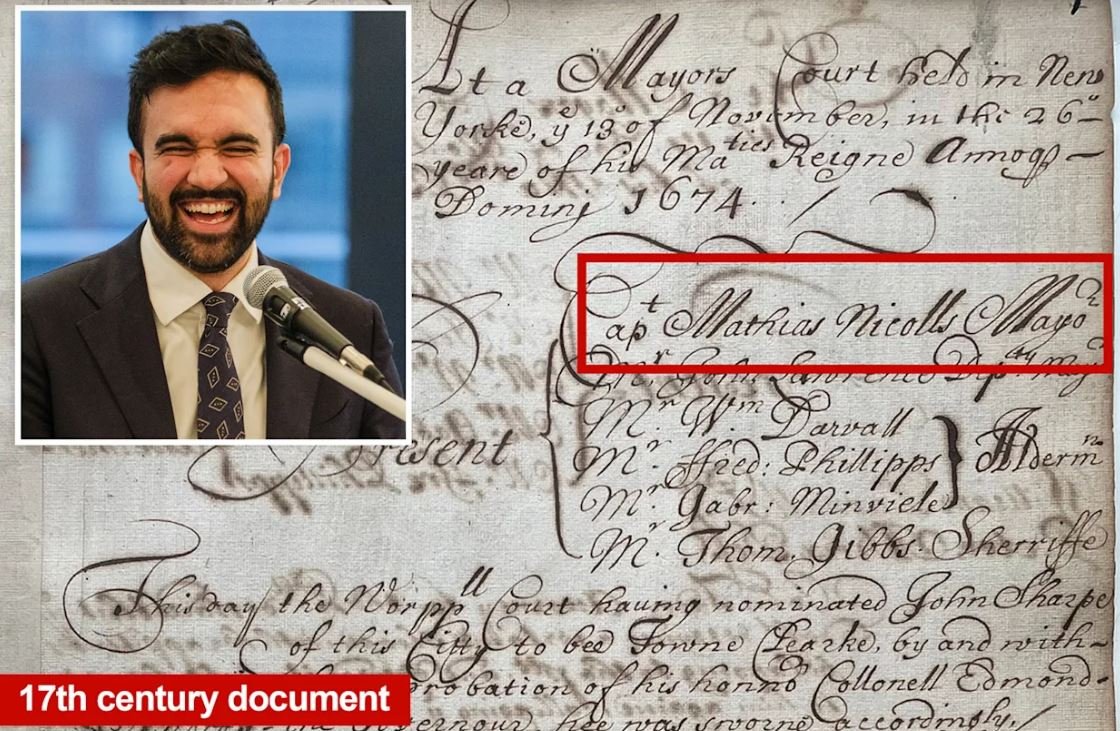
New York City loves big numbers—skyscraper floors, subway cars, slices sold per minute—so it felt right when headlines called Zohran Mamdani the 111th mayor. The trouble is, the city has been skipping a mayor since the 1600s, and no one noticed until a few dusty pages coughed up the truth. A quiet researcher, Michael Lorenzini, opened a leather-bound ledger and found Matthias Nicolls hiding between the lines, serving a second, forgotten term in 1674. That extra turn at the top nudges every later mayor up by one, handing Mamdani the crown he never asked for: lucky number 112.
The story starts when the Dutch briefly snatched the colony back from the English. During that shuffle, records show Nicolls stepping in again after his successor, John Lawrence, had already warmed the chair. For centuries, city clerks listed Nicolls once, as if his comeback never happened, and the mistake snowballed through handwritten rolls, printed guides, and finally Wikipedia entries. Archivists flagged the glitch as early as 1989, but the warning stayed in footnotes until historian Paul Hortenstine dug up proof and Gothamist shone a spotlight. Lorenzini’s fresh review sealed the deal, confirming the gap like a missing puzzle piece found under the couch.
City officials now admit the official “Green Book” count is only an Anglo-style shorthand. It leaves out Dutch Burgomasters, acting mayors, and Brooklyn’s old bosses before the five boroughs married in 1898. If you count every person who ever filled the role, Mamdani could be somewhere around the 133rd leader, give or take a Burgomaster. Ken Cobb from the Records Department says the lesson is clear: numbers feel neat until history reminds us cities are messy, borders shift, and titles evolve. Still, for parade banners and newspaper graphics, the simple Anglo list is the ruler everyone uses, and that list now says 112.
Mamdani’s campaign team stayed silent when asked if they felt cooler starting at 112 instead of 111, perhaps sensing the superstition that shadows the digits. New Yorkers, however, filled the silence with jokes about “mayor inflation,” T-shirts reading “I survived the recount from 1674,” and memes of Nicolls ghost-peeking over Mamdani’s shoulder. Taxi drivers argue the new count will mess with trivia night, while tour guides promise updated scripts by New Year’s Day, when the oath officially passes the gavel forward.
In the end, the revelation changes nothing about subway delays or rent prices, yet it nudges the city to respect every shadow in its past. A single missed name, hidden for three and a half centuries, reminds us that history is a living document, open to correction. When Mamdani raises his right hand on January 1, he will stand for the future while carrying an extra ghost from the past, the quiet mayor who waited centuries to be counted.