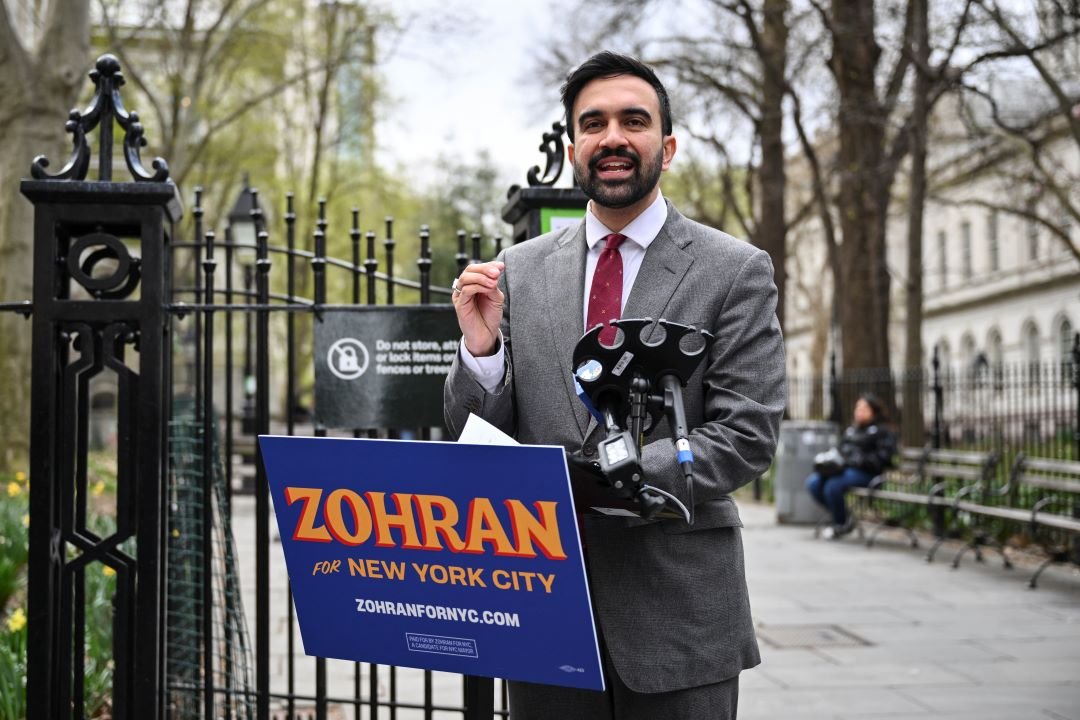
The studio lights were soft and friendly when the segment started, almost too gentle for what was coming. Zohran Mamdani sat upright, papers in a neat stack, voice steady as a heartbeat. He began walking the audience through dates, quotes, and documents that had never shared the same sentence on television before. Melania T.r.u.m.p. listened with the still smile the world has memorized, her hands folded like calm lake water. Hosts chatted, cameras panned, and viewers at home reached for snacks, unaware the next six minutes would own the internet for a week.
Mamdani never raised his volume; he simply placed fact beside fact the way a card player lays down a winning hand. Each sheet he slid across the desk carried a line once spoken in private, now stamped with time codes and archive links. The audience inhaled as one when he reached the final page, a short sentence underlined in red. Melania’s chin lifted a millimeter, the only warning before her polite mask cracked. “This is a joke,” she said, voice sharp enough to make the front-row guests flinch. She stood halfway, sat back down, then stood again, the way people do when anger and training collide.
Producers signaled for a commercial, but the director shook her head; the red tally light stayed lit. Mamdani never moved, letting the silence speak for him while Melania’s words ricocheted around the set. Within seconds, phones in living rooms were already recording. TikTok split the moment into fifteen-second loops, YouTube editors added dramatic music, and Twitter turned her single glare into a thousand memes before the segment even ended. Cable panels broke into emergency mode, replaying the glare and the calm again and again until the two images felt like symbols in an old fairy tale.
By midnight, the clip had more views than the show’s average monthly audience. Supporters called the confrontation brave, critics called it staged, and teenagers remixed it into dance challenges set to the sound of her chair scraping back. Psychologists explained micro-expressions, body-language coaches rated posture scores, and marketing teams bragged about “organic reach” over morning coffee. The facts on the paper mattered less than the split-screen contrast: one face on fire, one face made of stone. In that simple picture, people saw whatever they already believed about power, gender, privilege, and pride.
The storm never really ended; it just grew new heads. Days later, classrooms used the footage to teach persuasion, strategists studied it like a sports replay, and late-night hosts kept finding fresh punchlines in the same three seconds of eyebrow motion. No lawsuit was filed, no apology issued, no follow-up scheduled, because the moment had become public property, too large for any press release to stuff back inside history’s pocket. And so it lives on, an imaginary fire that still feels warm, reminding every screen-lit face how quickly calm can meet thunder when the cameras refuse to blink.