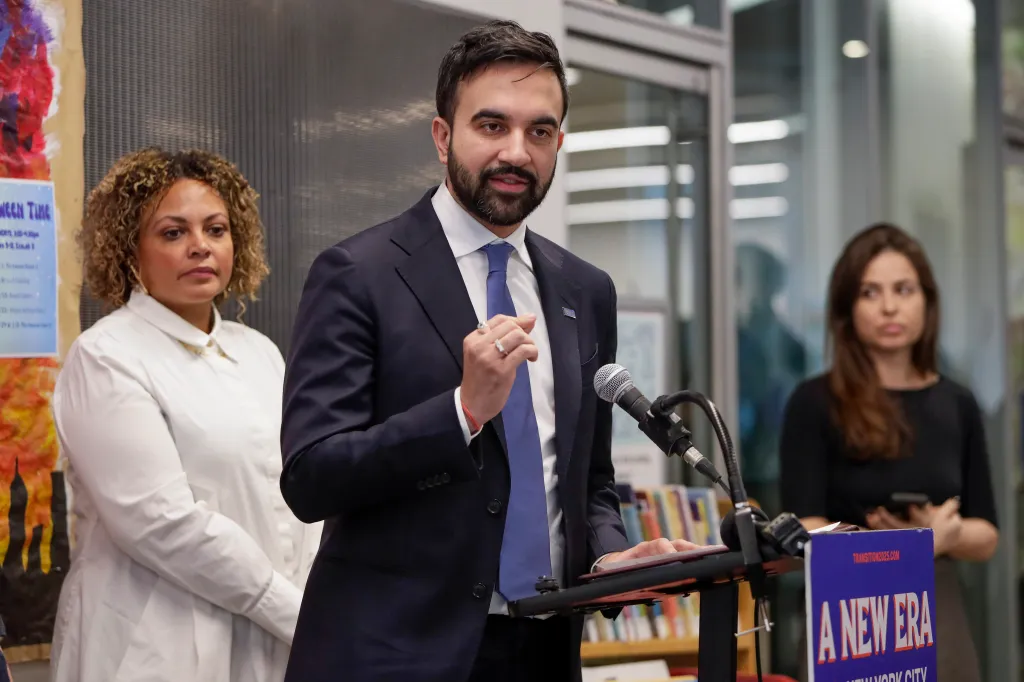
The confetti from Election Night is long swept away, but the numbers now landing on Zohran Mamdani’s desk feel more like bricks than confetti.
The city’s Independent Budget Office says New York will face a $6.5 billion budget gap by next summer, and the hole could swell to $8.4 billion by 2028 if federal aid shrinks under a Trump administration that loves to feud with blue cities.
On top of that shortfall, the mayor-elect’s campaign wish list—free transit fares for low-income riders, four-year rent freezes, expanded libraries, new social-worker teams, beefed-up public-housing repairs—carries a price tag close to $10 billion over four years.
Add the two columns together and the math looks like a cliff instead of a spreadsheet.
Mamdani admits the red ink is real.
“We have to take these estimates very seriously,” he told reporters, promising a budget process “honest” instead of “make-believe.”

Still, in the same breath he pledged to boost library budgets by half a percent, a small slice that signals he is not ready to shelve his marquee promises.
The message to city agencies is clear: every program must prove it serves working New Yorkers, but favorites like literacy, transit equity, and tenant protections will not be thrown overboard without a fight.
Veteran watchers warn that campaign poetry crashes head-first into governing arithmetic.
Hank Sheinkopf, a Democratic strategist who has guided mayors through past downturns, puts it bluntly: “He can’t do everything he wants. He has no money to do anything he’s talked about. He’s going to have to cut—he can’t add.”
Bond ratings remain stable for now, giving City Hall breathing room to borrow at reasonable rates, but Wall Street’s patience fades fast once recurring expenses outpace recurring revenue.
One downgrade could add millions in interest costs alone, eating the very dollars Mamdani hopes to spend on new ideas.
The mayor-elect’s team is already gaming out options:
A pied-à-terre tax on luxury second homes
A higher mansion-tax on multimillion-dollar sales
Restoration of the stock-transfer tax that Albany has rebated for decades
Clawing back property-tax breaks that critics call corporate giveaways
Each sounds simple on paper, yet every levy or loophole closure needs approval from a state capital that has often treated the city like an ATM in reverse.
Federal help is even less reliable; President Trump has mused about punishing “lawless” cities by yanking homeland-security or transit grants that now total $8.6 billion.
Inside City Hall, department heads have been told to draw up two budgets:
A “current services” plan that shows what it costs to keep the lights on
A “transformation” plan that imagines the new programs voters demanded
The gap between the two will decide which sacred cows—police overtime, summer jobs, trash pickup schedules—endure the knife.
Mamdani’s allies say progressive doesn’t mean prodigal; they point to savings from shrinking the jail population, ending costly federal monitors, and bulk-buying renewable energy.
Critics counter that wish-list savings rarely arrive on time, while contractual raises for teachers, cops, and firefighters are locked in by labor deals the city must honor.
For now, the outgoing Adams team touts strong bond ratings as proof they are bequeathing “a strong foundation,” but foundation is not the same as furniture.
Mamdani must furnish the house while the basement is flooding, and every decorator’s choice will be watched by 8.5 million tenants, riders, teachers, cops, and investors who all have something to lose.
The first test of the new mayor’s revolution will come not on inauguration day, but in July, when the balanced-budget deadline looms and the spreadsheets start speaking louder than slogans.