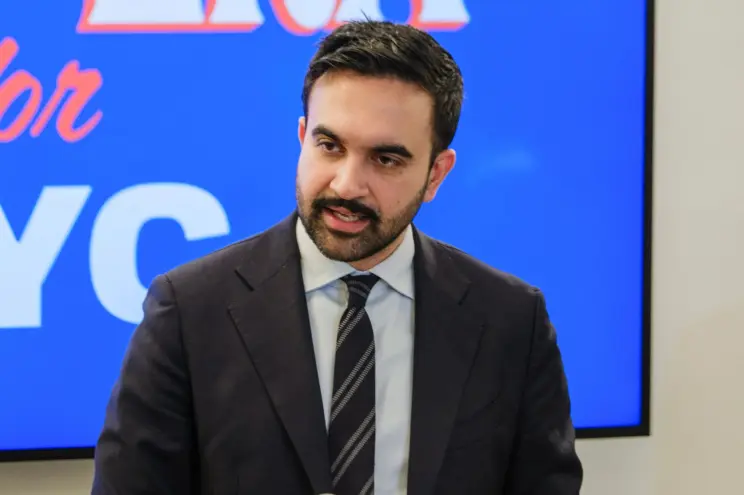
Zohran Mamdani will take the oath of office twice on New Year’s Day, once at midnight and again in the sunlit afternoon, so that night-shift nurses, early-rising bakers, and late-night music makers can all say they saw the moment the city turned a page.
Attorney General Letitia James will hold the bible in the hush of midnight inside City Hall, while the new mayor’s mother and father watch with tears that have waited years to fall.
A few hours later Senator Bernie Sanders will stand on the same steps, coat flapping, voice hoarse from cheering, and repeat the oath to a crowd that will stretch up Broadway like a living scarf.
Between the two ceremonies the city will throw its biggest block party: no tickets, no velvet ropes, just music trucks, hot-cocoa stands, and screens so large that even people on the Brooklyn waterfront can see the swear-in smile.
The planners say the party is the point; mayors come and go, but only the people stay, so the people should own the first hour.
Yet even parties have shadows.
The Anti-Defamation League released a thick file naming nearly eighty members of Mamdani’s four-hundred-person transition team and claiming each one has “concerning behavior or associations.”
The list mixes people who once tweeted harsh words about Israeli policies with others who marched alongside banners most Jews would call hate speech, and the ADL says the mayor-elect is using too fine a sieve to separate the two.
Mamdani answered fast: one appointee who had posted ugly jokes about Jews a decade ago was out the door within hours, and over the weekend he lit a menorah with actor Mandy Patinkin, singing the blessings while cameras rolled.
Still, he insists that criticizing a government is not the same as attacking a people, and he will not exile voices that speak for Palestinian kids any more than he would silence those who speak for Israeli families.
Inside the transition office the argument feels personal, not abstract.
Sam Levine, the newly named consumer-affairs commissioner and a proud Jewish New Yorker, says he read every page of the ADL report and still walks past security every morning to help craft policy that will protect deli workers and delivery riders alike.
He jokes that his Yiddish-speaking grandmother already likes the new mayor because “he yells about rent prices the way she yells about the price of pickles,” then turns serious: “If I thought for a second he tolerated Jew-hatred, I’d be gone before you could spell Hanukkah.”
The team keeps a giant whiteboard where they track promises: lower transit fares, winter coats for every public-school kid, and a giant Star of David drawn in green marker beside the note “Keep our Jewish neighbors safe—funding for synagogues, yeshivas, cultural centers.”
No one has erased it, and every morning someone adds a new idea: security cameras, after-school Hebrew lessons, free menorah bulbs.
Outside, the city is already rehearsing for party day.
Sound crews test drums that will echo off stone buildings, and grandmothers on folding chairs practice waving homemade flags that say “Subway home in ten minutes” and “Raise my wage, not my rent.”
A boy from the Bronx asks if he can stand right up front because he wants to tell the mayor that the charter school debate is splitting his block into shouting teams, and he hopes the new guy can make both sides sit at the same lunch table again.
His mother laughs, but her eyes are hopeful; she knows inaugurations are just promises spoken out loud, yet she still dragged her son downtown at dawn because she wants him to see that promises can at least begin with honesty.
When the music starts and Letitia James raises her right hand at midnight, the only thing louder than the drums will be the hush of four hundred New Yorkers holding their breath together, ready to find out what kind of mayor dares to swear himself in twice just so no one is left outside.