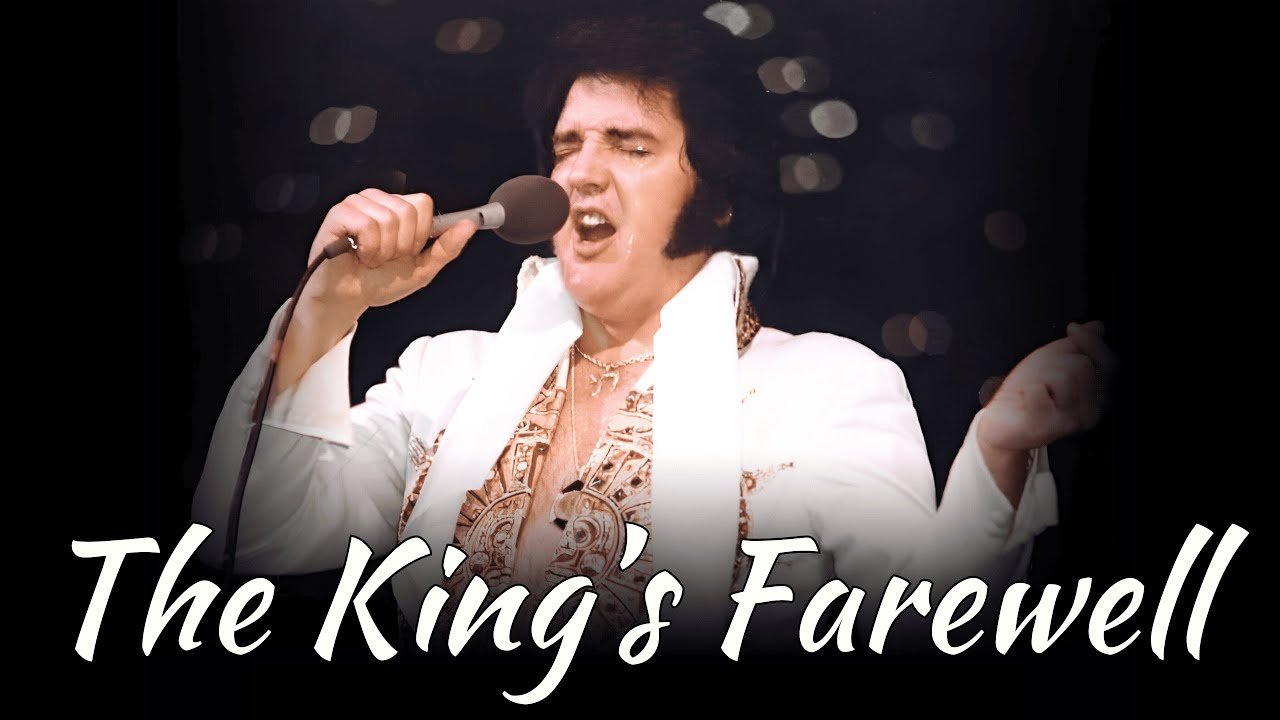
On June 19 1977 Elvis Presley walked onto the stage in Omaha for what would become one of the most emotionally charged performances of his life. Preserved in the best surviving footage available today the concert stands not merely as entertainment but as a stark historical document. It captures a legend in real time confronting the limits of his body while refusing to surrender his voice or his bond with the audience.
By the summer of 1977 the image of Elvis as an untouchable force belonged firmly to the past. The explosive cultural shock of the 1950s and the triumphant television return of 1968 had already entered mythology. What remained was a man visibly worn down by years of relentless touring physical decline and dependence on prescription medication. Yet when the lights came up in Omaha something remarkable still occurred. The voice though strained at moments carried power authority and an unmistakable ache that no impersonation could replicate.
Audience members that night did not see illusion or polish. They witnessed a human being struggling openly in front of thousands. His movements were slower his breathing heavier but his eyes retained focus and intent. Songs such as Hurt How Great Thou Art and Unchained Melody felt less like routine numbers and more like confessions. Each lyric carried the accumulated weight of fame faith loss and regret shaped by decades under an unforgiving spotlight.
What makes the Omaha concert compelling is not technical perfection. There are missed cues strained notes and visible fatigue. Its power lies in emotional truth. Elvis did not disguise his condition or hide behind spectacle. Instead he met the audience directly with vulnerability and dignity. That openness deepened rather than diminished his stature. The crowd was not simply attending a show. They were witnessing the final resolve of a man who had given everything he had to music and to the people who followed him.
The surviving footage has resurfaced repeatedly over the years precisely because it strips away myth and glamour. It reveals Elvis Presley as a flawed exhausted human being still reaching for greatness. When he closed his eyes and leaned into the microphone time seemed to collapse. In those moments the years fell away and the King briefly reclaimed his throne through sheer emotional force.
The knowledge of what followed casts an unavoidable shadow over every frame. Less than two months later Elvis Presley would be gone. That awareness does not weaken the performance. It intensifies it. The Omaha concert becomes evidence of an artist who refused to withdraw even as his strength faded. It is the sound of persistence in the face of physical collapse and public scrutiny.
For historians and fans alike the concert occupies a crucial place in the narrative of Rock and Roll. It challenges simplified stories of decline by showing resolve alongside deterioration. Elvis was not coasting on reputation. He was working struggling and still striving to communicate something essential. The emotional gravity of his delivery especially in the gospel moments reflects a man grappling with belief and mortality in real time.
This performance also underscores the cost of fame at its highest level. Decades of adoration relentless schedules and expectations had taken their toll. Yet the Omaha concert shows that even under that weight Elvis retained a sense of duty to his audience. He showed up. He sang. He confronted the moment rather than retreating from it.
Ultimately the June 19 1977 concert in Omaha is not a story of collapse. It is a story of courage. It documents a legend standing firm in his final days reminding the world why his voice mattered and why it still matters today. In its rawness and honesty the performance endures not as nostalgia but as testimony to an artist who refused to stop reaching for meaning until the very end.