After my wife died, I drove her daughter out of my life because I believed she wasn’t my blood. Ten years later, the truth surfaced—and it shattered what was left of my heart.
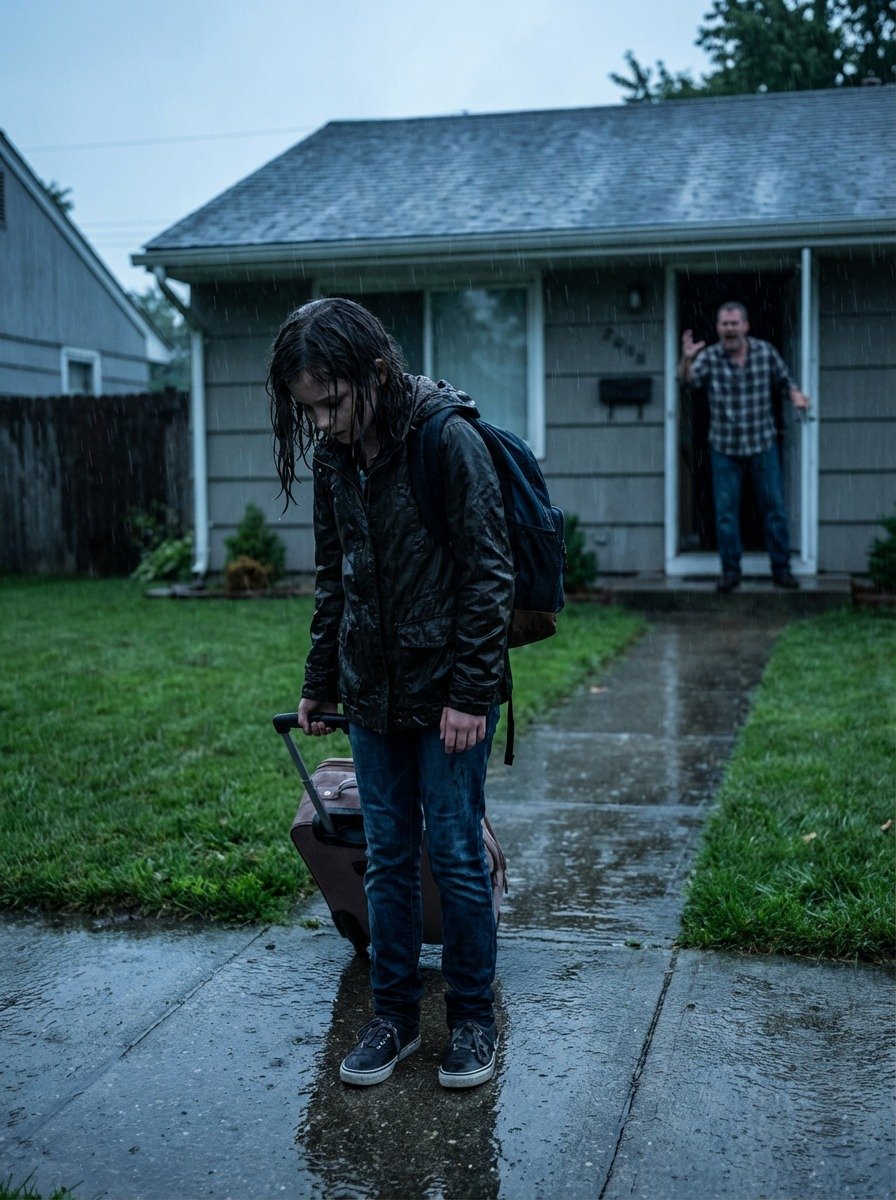
“Get out! You’re not my daughter! Don’t ever come back!”
Those words still haunt me. A decade has passed, yet they echo in my mind as if I shouted them yesterday.
She was only fourteen—small, soaked from the rain, clutching a worn backpack—standing on the front steps of my house in Tacoma, Washington. She didn’t argue. She didn’t beg. She just looked at me, eyes wide and broken, then turned away and disappeared into the storm.
My name is Rafael Monroe. I was forty-two then, working as a wholesale construction supplier, convinced my life was stable: a solid income, a warm home, and a wife I loved deeply.
Then Elena died in a car crash one cold November night, and everything began to unravel.
Weeks later, while sorting through her things, I found a stack of old letters hidden in a drawer. They were addressed to a man named Thomas. Love letters. My hands shook as I read them, until one sentence stopped my breath entirely:
“For our daughter, Grace—may she always know she was cherished.”
Our daughter.
Grace—the girl I had raised, taught to ride a bike, helped with homework, and tucked into bed—wasn’t mine. Or so I believed.
Something inside me broke. Love curdled into fury. I drowned myself in alcohol, destroyed photographs, erased memories. And when Grace timidly asked why I hadn’t eaten dinner, my anger exploded.
“Pack your things and leave!” I screamed. “You’re not my daughter—you’re her betrayal!”
She didn’t scream back. She didn’t plead. Tears slipped down her face as she quietly walked out the door.
I never saw her again.
The house became hollow. When people asked, I told them coldly, “She ran away.” I convinced myself I’d done the right thing, but every night I dreamed of rain and footsteps fading into the dark.
Ten years passed.
At fifty-two, I was tired, bitter, and alone—living among regrets. My body ached, my hands shook, and my heart felt empty.
Then one afternoon, someone knocked.
A young woman in a white lab coat stood outside, holding a tablet. She had Elena’s eyes.
“Mr. Monroe,” she said softly, “I need to talk to you about your daughter… Grace.”
My chest tightened.
“My… daughter?”
“I’m Dr. Natalie Harris from Cascade Genetics. We’ve identified a DNA match between you and Grace.”
I could barely breathe. “She’s… alive?”
“Yes. But she’s critically ill. End-stage kidney failure. She needs a transplant—and you’re a compatible donor.”
The truth hit me like a blow.
She had been my biological daughter all along.
I rushed to the hospital. Through the glass, I saw her—thin, pale, connected to machines. Still her.
A nurse explained they’d found her years ago living on the streets. A couple eventually adopted her, helped her study. She became a literature teacher. But her illness worsened. Before slipping into a coma, she’d said one thing: “If I don’t make it, find my father.”
When I entered her room, her eyes opened.
She smiled faintly. “Dad… I knew you’d come.”
I collapsed beside her bed. “I’m so sorry. I failed you.”
“Don’t cry,” she whispered. “I just wanted to see you again.”
I signed the donor forms without hesitation. “Do whatever it takes.”
The surgery lasted seven hours.
“They both survived,” the doctor said with a smile.
For a moment, hope returned. But it didn’t last. Her body began rejecting the kidney. Infection set in. She slipped back into a coma.
I stayed by her side, talking, apologizing, begging.
Then one morning, I heard her whisper, “Dad…”
She woke up.
“You’ll never be alone again,” I promised.
She smiled gently. “Just live… that’s all I wanted.”
We had a few quiet weeks—sharing meals, watching the sunrise. Then one morning, her hand was cold in mine.
Grace passed peacefully.
I buried her ashes beside Elena and engraved these words:
“To my beloved daughter—the one who taught me what love truly means.”
Now I live alone in the same house. I plant white roses in her memory. When sunlight touches them, I imagine her smile.
I help homeless children—not from guilt, but because it’s how she would have lived.
Another decade has passed. My hair is white, my heart quieter. Sometimes, when the wind moves through the roses, I hear her voice:
“It’s okay, Dad. I forgave you.”
And I look up at the open sky, letting the warmth settle on my face, finally feeling peace.