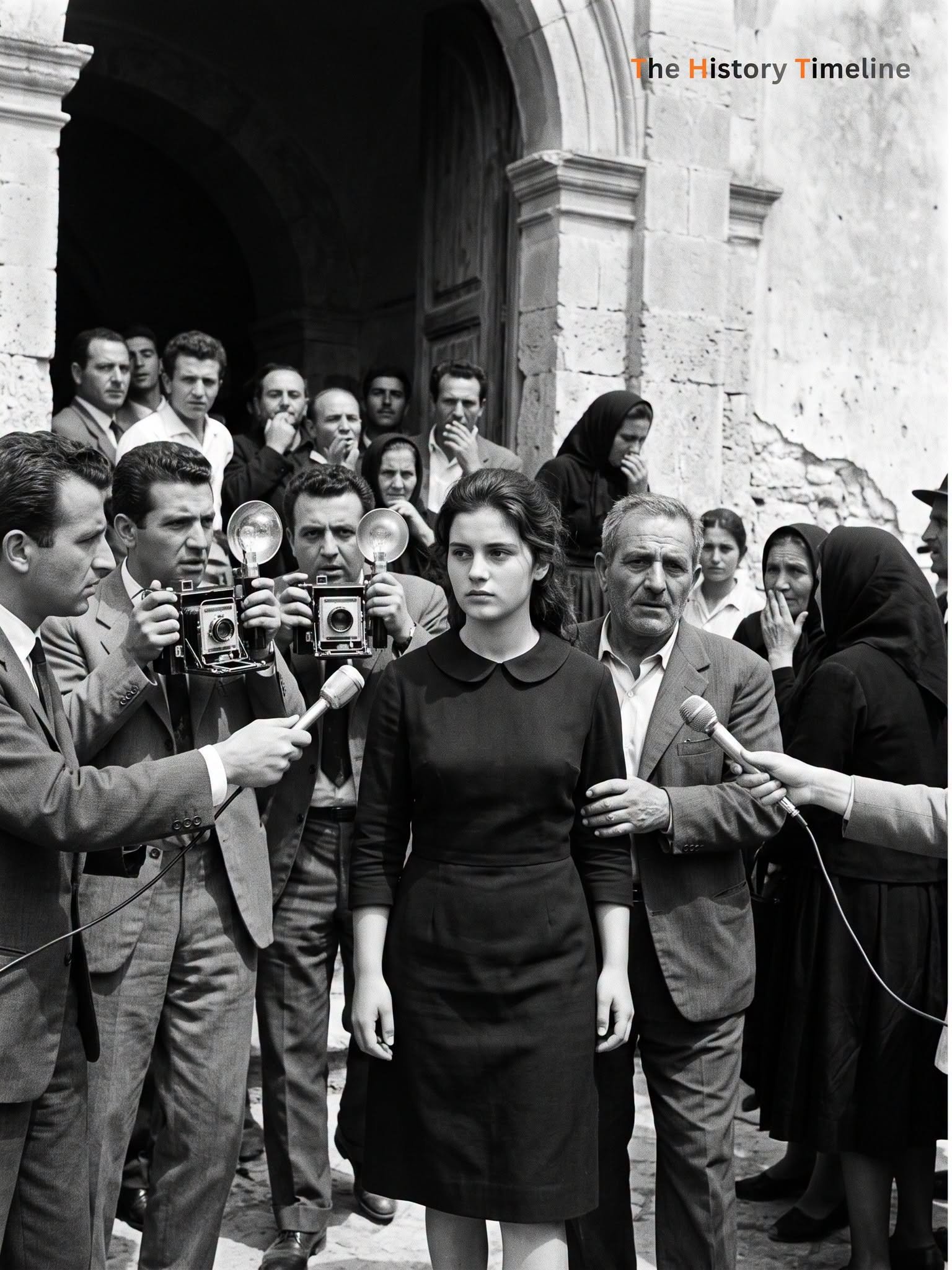
The Courageous Refusal That Broke a Centuries-Old Culture of Silence
In 1965, in a small town in Sicily, Italy, a seventeen-year-old girl made a decision that many people around her believed was impossible.
She had been told what society expected from her.
She had been told what her family’s “honor” required.
She had been told that the only way to erase the shame brought upon her was to marry the man who had destroyed her life.
But Franca Viola refused.
She said no.
That single word became one of the most powerful acts of resistance in modern Italian history.
Because Franca was not only rejecting one man.
She was challenging an entire system.
A system that protected perpetrators.
A system that blamed victims.
A system that treated a woman’s dignity as something that could be repaired only through marriage.
Her decision would eventually help change Italian law and inspire generations of women to fight for justice.
A Society Where Victims Were Expected to Stay Silent
To understand the importance of Franca Viola’s choice, it is necessary to understand the world she lived in.
Italy in the 1960s was a country deeply influenced by traditional ideas about family, reputation, and social expectations.
In many communities, especially in rural areas, a woman’s reputation was considered connected not only to herself but to her entire family.
The concept of “honor” carried enormous weight.
A woman who experienced sexual violence was often treated unfairly—not as a victim, but as someone whose social standing had been damaged.
The law itself reflected this mentality.
Under Article 544 of the Italian Penal Code, a man accused of sexual violence could avoid punishment by marrying his victim.
The practice was known as “matrimonio riparatore”, meaning “reparatory marriage.”
The idea behind it was deeply flawed:
If a woman married the man who attacked her, society considered the “shame” resolved.
The crime disappeared.
The man avoided prison.
The woman was expected to accept the situation and remain silent.
For countless women, refusing such a marriage could mean social rejection, isolation, and humiliation.
The system placed the burden not on the person who committed the crime, but on the person who suffered from it.
The Attack That Changed Franca Viola’s Life
Franca Viola was born in Alcamo, Sicily, in 1948.
She grew up in a traditional family environment.
Like many young women of her generation, she lived within the expectations of her community.
Then, in December 1965, her life changed forever.
A man named Filippo Melodia, who had connections to a criminal family, abducted Franca.
He and several accomplices held her captive for eight days.
During that time, she suffered horrific abuse.
The purpose was not only violence.
It was control.
Melodia believed that after what happened, Franca would have no choice but to marry him.
Because under the social customs of the time, he believed marriage could erase the consequences of his actions.
He believed society would force her to accept him.
He believed her family would protect their reputation rather than seek justice.
He was wrong.
The Moment Everyone Expected Never Happened
When Franca was rescued, many people assumed the next step was obvious.
They expected her family to negotiate.
They expected her to accept the marriage.
They expected silence.
For generations, women had been pressured into exactly that.
The reasoning was cruel:
A woman who had been attacked was told she could regain respectability by becoming the wife of her attacker.
But Franca Viola refused.
She did not see herself as dishonored.
She did not believe she needed to repair something that was never her fault.
She understood something revolutionary:
The shame belonged to the person who committed the crime—not the person who survived it.
Her answer was simple.
No.
A Family That Chose Justice Over Tradition
Franca’s decision was not easy.
In many cases, families pressured victims to accept reparatory marriage because they feared social consequences.
They feared gossip.
They feared rejection.
They feared losing their place in the community.
But Franca’s father, Bernardo Viola, made a different choice.
He supported his daughter.
Instead of forcing her into a marriage with the man who harmed her, he stood beside her as she pursued justice.
That decision required enormous courage.
Because the family knew they would face consequences.
And they did.
Neighbors turned away.
People criticized them.
Their family suffered social pressure.
Their agricultural property was attacked.
Their lives became much more difficult.
But Bernardo and Franca refused to surrender.
The Trial That Shocked Italy
In 1966, Franca Viola became the center of a national trial.
For the first time in Italian history, a young woman publicly rejected the expectation that she should marry her attacker.
She entered the courtroom and told her story.
This alone was extraordinary.
Because victims of sexual violence were often expected to remain invisible.
They were expected to protect family reputation.
They were expected not to speak.
Franca did the opposite.
She spoke.
She demanded accountability.
She forced Italy to confront a painful reality:
A law existed that allowed perpetrators to escape punishment by marrying the people they had harmed.
The trial became a national conversation.
Newspapers covered the proceedings.
People debated morality, justice, and women’s rights.
The country could no longer ignore the problem.
The Verdict That Sent a Message
Filippo Melodia was convicted.
He received a prison sentence.
Although the punishment was later reduced on appeal, the meaning of the verdict went far beyond the courtroom.
For the first time, Italian society saw a woman refuse the role that had been assigned to her.
Franca was not willing to accept the idea that her future depended on forgiving the person who hurt her.
She showed that justice mattered more than reputation.
Her courage gained international attention.
Many people around the world recognized that her case represented something much larger than one individual trial.
It represented the struggle of women everywhere who had been denied the right to choose their own futures.
A Personal Victory That Became a National Symbol
Franca never wanted to become famous.
She did not seek attention.
She did not want to be remembered as a symbol.
She wanted something much simpler:
Justice.
A chance to live without being defined by what happened to her.
Years later, she married Giuseppe Ruisi, a man who supported her and respected her strength.
Their relationship represented the opposite of the forced marriage society had expected from her.
She was not someone whose life had been ruined.
She was a woman who had survived.
A woman who had chosen her own path.
The Law Finally Changed
Although Franca’s case shocked Italy, the legal system did not change immediately.
The “marry your rapist” provision remained in place for years.
It took decades of activism and social change before Italy finally abolished Article 544 in 1981.
Sixteen years had passed since Franca first stood against the system.
But the movement had begun.
Her refusal became one of the moments that helped push Italy toward a different understanding of women’s rights and justice.
The law eventually recognized what Franca had understood from the beginning:
A victim’s dignity cannot be restored by forcing them to marry the person who harmed them.
Justice does not come from silence.
Justice comes from accountability.
The Meaning of Franca Viola’s “No”
Franca Viola’s story remains powerful because it represents something universal.
The courage to reject an unjust expectation.
The courage to speak when silence is easier.
The courage to stand alone when society says you should surrender.
At seventeen years old, Franca faced enormous pressure.
She faced a man who believed he could control her.
She faced a culture that expected her to accept injustice.
She faced a community that questioned her choice.
But she still said no.
And that no became louder than any law.
A Legacy That Continues Today
Today, Franca Viola is remembered as a symbol of dignity and resistance.
Her name represents the power of one person challenging a system that seems impossible to change.
Her story reminds the world that laws are not always justice.
Traditions are not always morality.
And social expectations are not always right.
Sometimes progress begins when one person refuses to accept what everyone else considers normal.
Franca was seventeen years old.
She was afraid.
She was hurt.
She was surrounded by people telling her what she should do.
But she chose herself.
She chose justice.
She chose freedom.
And because she did, thousands of women who came after her found it easier to say:
“No.”