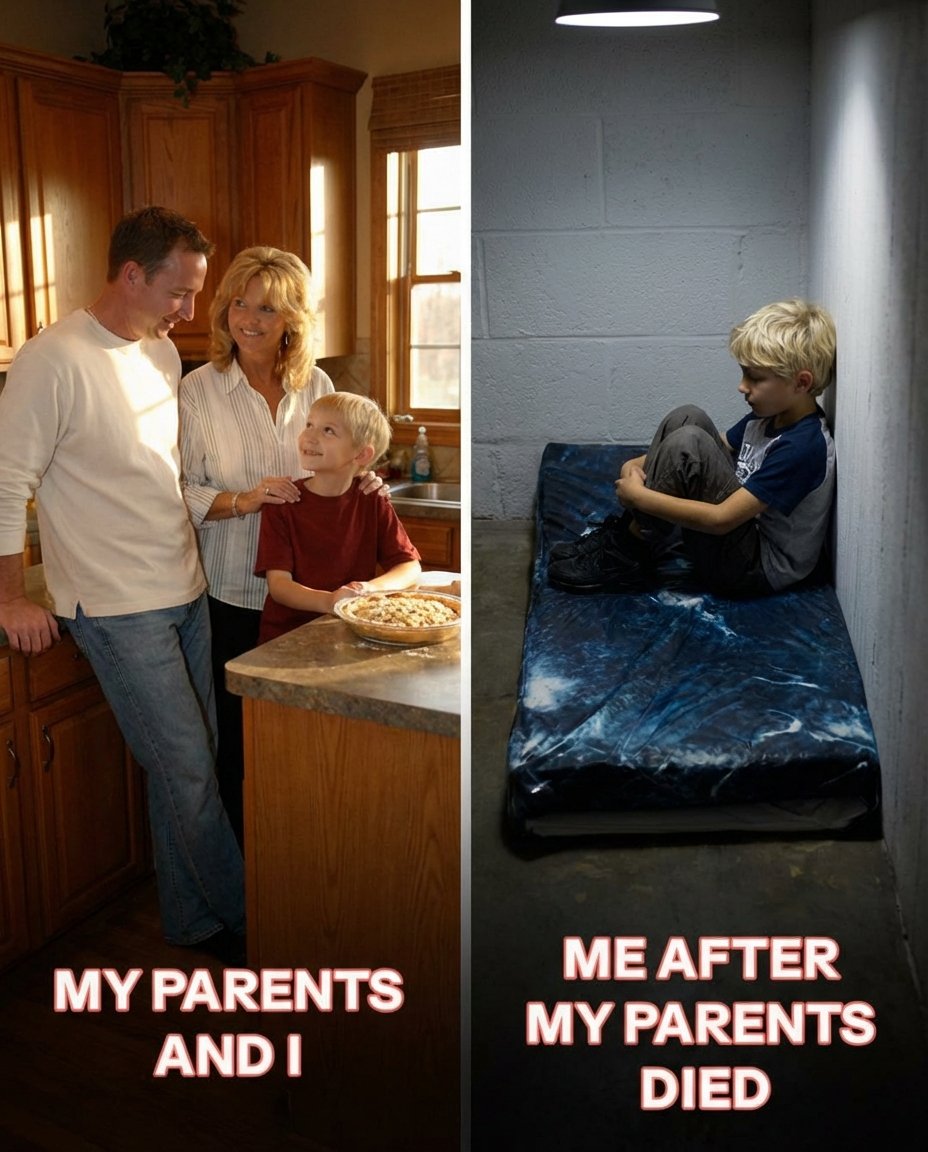
I was ten years old when my parents died, and the world stopped making sense overnight. It was winter, the kind where the streets disappear under snow and adults talk about “bad road conditions” like those words can soften the truth. My mom, Claire, and my dad, Michael, left the house that evening… and never came back. After the funeral, my dad’s sister, Linda, arrived like a savior in front of everyone—hugging me loudly, promising she would “take me in,” making sure every person watching believed I was lucky to have her. I believed it too, because when you’re a child and you’ve lost everything, you cling to whoever is left.
But Linda’s house didn’t feel like rescue—it felt like a reminder that I didn’t belong. She put me in a small back room with no bed, just a thin mattress on the floor and a dusty blanket that smelled like storage boxes. Her kids had bunk beds, toys, desks, and space to be loud. I had a corner and a rule I learned quickly: don’t ask for too much. When I asked about my things from home, she waved me off and said, “Later.” Later never came. And when I started noticing changes—new kitchen counters, a nicer car, and expensive activities for my cousins—I slowly understood that the money my parents had left behind wasn’t being saved for me at all.
As I got older, I stopped asking questions because every answer came with the same message: be grateful. Then one day, Linda decided I was going away to boarding school “for my own good,” and just like that, I was out of sight and easier to ignore. The phone calls faded from weekly, to monthly, to nothing. When I became an adult and tried to return to the home I grew up in, a stranger opened the door and told me they had bought it years ago. Linda had sold it and vanished. I spent years living quietly, working whatever jobs I could, sleeping on couches, saving every dollar—not because life was comfortable, but because I refused to fall apart. Eventually, I found my path through culinary school and hard work, becoming a pastry chef and building a small business that finally felt like something stable and truly mine.
Then one evening, after a long day at my bakery, I heard three sharp knocks at my front door. Not friendly. Not unsure. Confident—like whoever stood outside expected to be let in. When I looked through the peephole, my chest tightened. It was Linda. Older now, smaller, dressed like someone trying to look fine while falling apart. The moment I opened the door, she didn’t ask how I was or apologize—she looked past me into my home and told me it was cold and I needed to let her in. She claimed she was sick and had nowhere else to go, and when I told her to call her own children, she admitted they didn’t speak to her anymore. For a second, I saw a lonely woman. But then her voice sharpened, and the truth showed itself: she still believed I owed her. That night, I let her in temporarily—but deep down, I knew I hadn’t just opened my door. I had invited my past back into my life, and this time… I wasn’t going to let it take everything again.