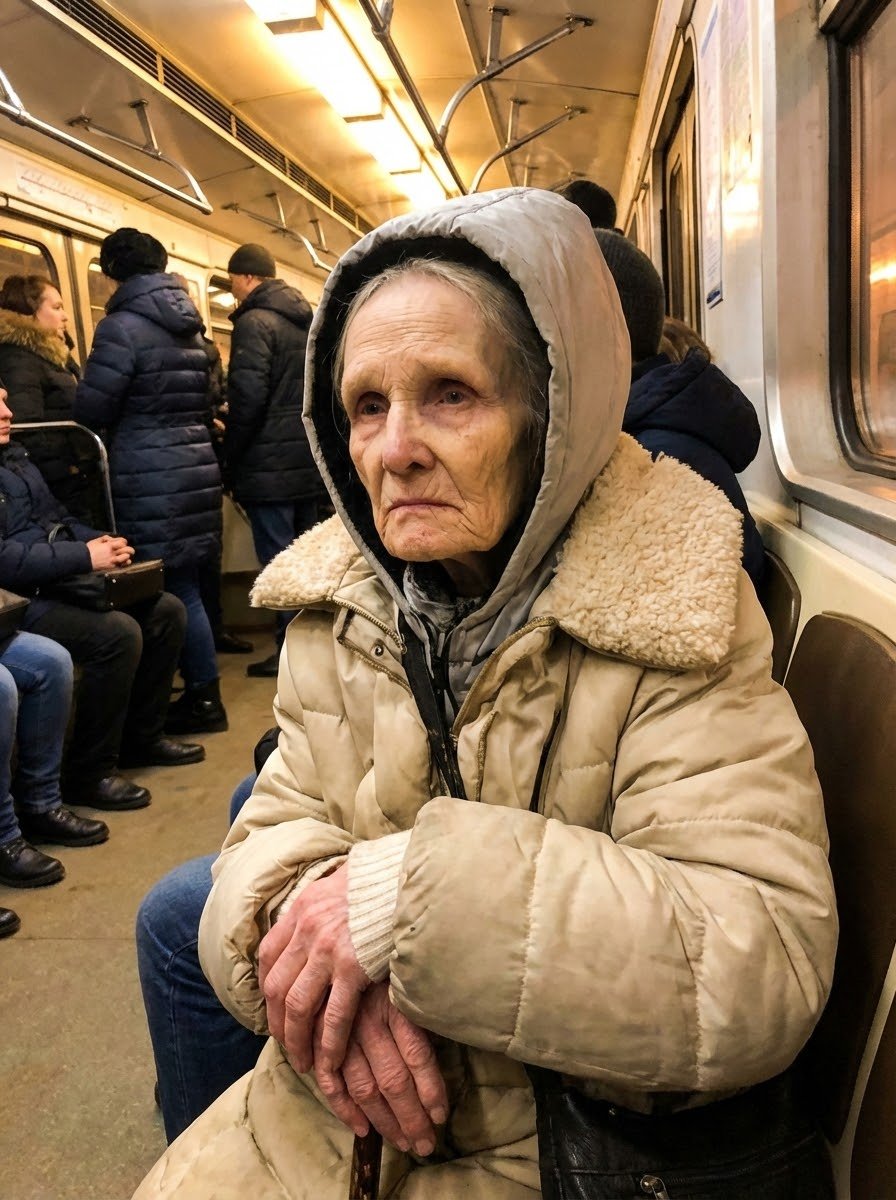
I didn’t expect anything extraordinary that morning—just the usual routine of dragging myself home after another long overnight shift, praying my tiredness didn’t show when my teenage son looked at me. I’m a single mom in my fifties, and most of my life runs on quiet discipline: bills paid, fridge stocked, heat on, no complaints. But as I passed the metro station in the early cold, I noticed an elderly woman in a wheelchair near the entrance, wrapped in thin layers and barely moving. People streamed past her like she wasn’t even there. When she lifted her trembling hands and softly asked if I could help her get something warm to eat, I felt that familiar pull in my chest—the one you get when you know you’re about to do something you can’t really afford… but also can’t ignore.
I bought her a simple meal and sat beside her under the weak warmth of a café heater. We didn’t talk much, just enough for me to learn she had been having a hard winter and didn’t have anyone nearby. Her voice carried that tired politeness people use when they don’t want to feel like a burden. Before I left, I reached into my wallet and placed my last hundred dollars into her hand. That money was supposed to cover groceries, and I’d been saving a little for a small holiday gift for my son—but standing there, looking at her eyes, I couldn’t bring myself to walk away and keep it. She gripped my fingers like she couldn’t believe what was happening, and I walked home feeling both lighter and scared, knowing the coming week would be tight.
The next morning, I took the same route, expecting to see the same station, the same rush, and maybe—if I’m honest—the same woman. But instead, I saw a sleek black car parked nearby, and my stomach dropped when I recognized her. She wasn’t shivering now. She was sitting inside the vehicle, wearing a warm coat, posture straight, looking like someone completely different. She asked me to come closer and invited me to sit. In a calm voice, she explained that she had been watching how people treat strangers who appear vulnerable. She said my kindness “stood out,” and she wanted to reward it—with financial help and even a job offer that could change my life. For a moment, I didn’t know whether to feel shocked, grateful, or uncomfortable. My compassion hadn’t been received as a simple human moment—it had been part of something I never agreed to be part of.
I stepped out of the car politely, but I told her the truth: I didn’t help her to earn anything back. I helped because I thought she truly needed it, and because that’s what I would hope someone would do for me if I ever ended up in her position. Two days later, an envelope appeared in my mailbox. Inside was a letter apologizing for crossing a line—and tucked behind it was enough money to replace what I gave, plus more. I sat at my kitchen table for a long time, not thinking about the money, but about what the moment had taught me. I bought my son a thoughtful gift, paid the grocery bill without panic, and quietly donated the rest to a local shelter. Because kindness shouldn’t be a performance or a test—it’s a choice you make in real life, when no one is watching. And even now, knowing the cost, I’d still choose it again.