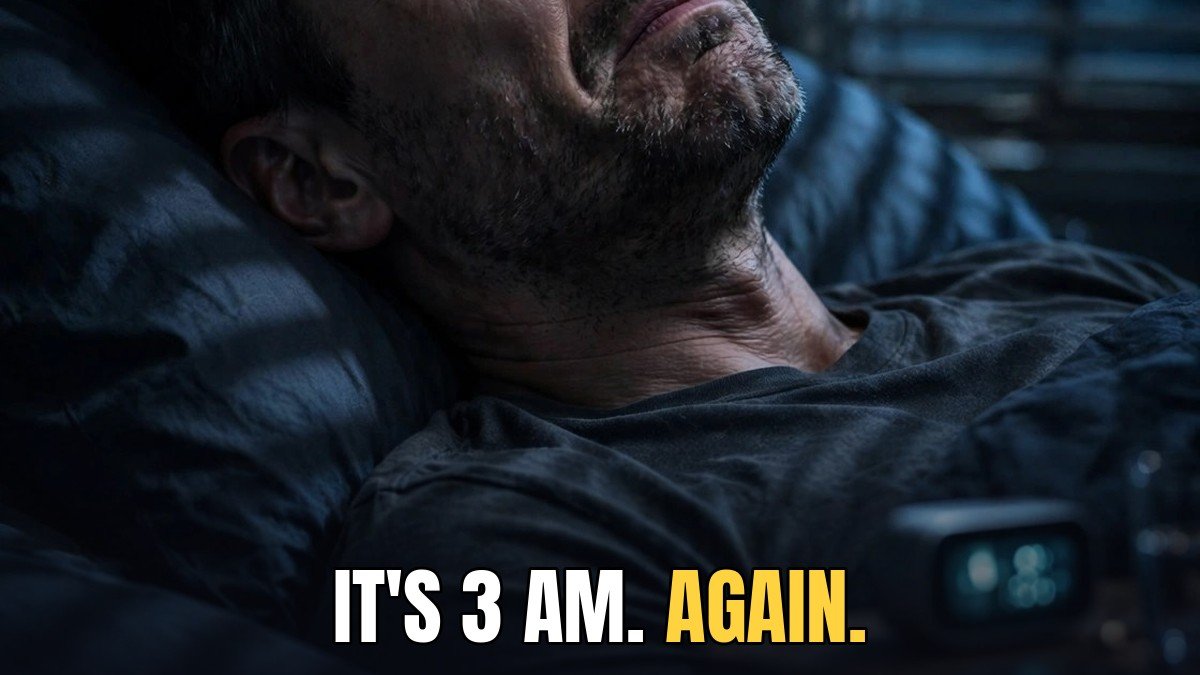
It’s 3 AM. You’re wide awake, staring at the ceiling, replaying something embarrassing you said in 2014. A joke that died. A wave at someone who wasn’t waving at you. A name you got wrong at a party a decade ago.
Why does your brain do this? Psychology actually has an answer — and it’s genuinely comforting.
The Spotlight Effect: Nobody Noticed as Much as You Think
In 2000, psychologists Thomas Gilovich, Victoria Medvec and Kenneth Savitsky at Cornell University published a landmark study in the Journal of Personality and Social Psychology on what they called the spotlight effect: our tendency to massively overestimate how much other people notice us.
In their most famous experiment, participants wore a T-shirt with Barry Manilow’s face on it — pre-rated as deeply embarrassing by students — and walked into a room of people filling out questionnaires. Afterwards, the wearers guessed that about 46% of the room would remember the shirt. The real number? About 23%.
People overestimated the attention on them by roughly double. And the effect held across five experiments — for embarrassing moments, flattering ones, even how much of a group discussion others remembered.
Negativity Bias: Bad Is Stronger Than Good
So why does your brain replay the bad moments and not the good ones? Because of negativity bias — the well-documented tendency for negative experiences to weigh more heavily than positive ones. Psychologist Roy Baumeister and colleagues summed it up in a famous 2001 paper titled, simply, “Bad is stronger than good.”
From an evolutionary view, it makes sense: remembering the embarrassing social mistake helped our ancestors avoid repeating it. Your brain isn’t torturing you — it’s running ancient software designed to keep you accepted by the group.
And why 3 AM specifically? At night there are no distractions competing for your attention, and a tired brain is worse at regulating emotion and filing thoughts away. The replay feels louder because everything else is quiet.
The Part Worth Remembering
Here’s the genuinely comforting finding: while you’ve been replaying that moment for years, the other people in the room almost certainly forgot it within the week — because they were busy replaying their own embarrassing moments. Everyone in that room was the star of their own spotlight, which means nobody was watching yours.
Researchers even found that simply knowing about the spotlight effect reduces anxiety: people told about the bias before a stressful moment reported feeling calmer and were rated as performing better (Savitsky & Gilovich, 2003).
So next time the 3 AM replay starts, try the researchers’ correction: whatever you think they noticed, cut it in half. Then cut it in half again. The embarrassing thing you can’t forget occupies a huge space in your head — and almost none in anyone else’s.
Sources: Gilovich, Medvec & Savitsky (2000), Journal of Personality and Social Psychology, 78(2), 211–222; Baumeister et al. (2001), “Bad is stronger than good,” Review of General Psychology; Savitsky & Gilovich (2003), Journal of Experimental Social Psychology; Simply Psychology, “The Spotlight Effect.”