My Father Broke My Jaw for Questioning Him—Then One Hidden Account Exposed What My Family Had Done
My dad smashed my jaw for talking back. Mom laughed, “That’s what you get for being useless.” Dad said, “Maybe now you’ll learn to keep that gutter mouth shut.”I smiled. They had no idea what was coming.
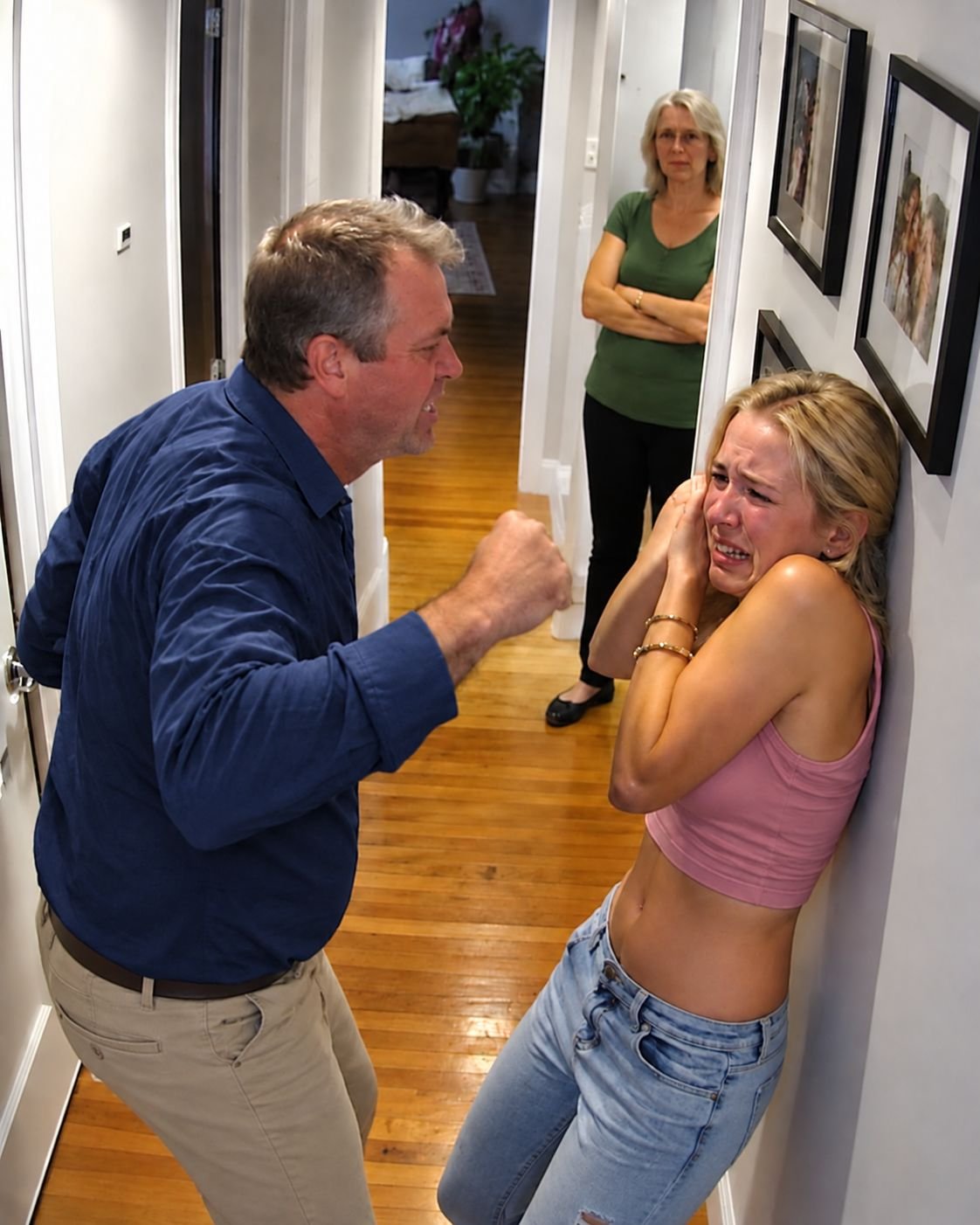
In the opulent kitchen of Blackwood Manor, the sound of the impact wasn’t a clean snap. It was a heavy, dull thud that vibrated through my skull like a funeral bell. When my father’s fist—a weapon forged by years of self-righteousness—connected with my jaw, the world didn’t just spin. It tilted on its axis, spilling me onto the cold, unforgiving porcelain floor.
The iron tang of blo0d bloomed across my tongue, hot and visceral. But the true agony wasn’t the physical blow; it was the reaction of those watching. There was no gasp of horror. No frantic rush of a mother checking her daughter’s pulse. Instead, there was a laugh.
A sharp, brittle sound, like ice cracking under a winter boot. My mother, Lydia Thorne, stood by the marble island, her silk robe fluttering as she casually sipped her tea. She didn’t even look down at my trembling form.
“That is precisely what you deserve for being utterly worthless, Elara,” she said, her voice devoid of heat, as if she were commenting on the weather. “Perhaps now you’ll finally learn your place in this house.”
My only “sin” was a simple question: “Why am I the only one cleaning the yard? Why can’t Kyle do anything?”
In the Thorne household, “why” was a declaration of war. My father loomed over me like a thundercloud, his voice a low growl: “Get up! Or do you require a second lesson in humility? Worthless people don’t get the luxury of a grievance. You are here to serve the bloodline that feeds you.”
As I dragged myself toward the back door, I passed my brother, Kyle, who offered a slow, jagged smirk. They thought they had me caged by draining my savings and sabotaging my every move. But as I looked at my reflection in the glass door—a woman with hollow eyes and a bruised face—a new sensation replaced the pain.
It was a cold, clinical clarity. I wasn’t going to just leave. I was going to dismantle the cage while they were still inside it.
I looked up at my father’s study window, and for the first time in my life, I wasn’t afraid.
I was calculating.
My hand stayed on the brass door handle.
Behind me, Kyle gave a quiet laugh.
“Don’t forget the hedge trimmings.”
I turned my head slowly.
Pain burned along my jaw.
I smiled anyway.
Kyle’s amusement faded.
There must have been something different in my face because he stopped leaning against the doorway.
My father noticed too.
“What are you looking at?”
“Nothing.”
The word came out thick.
Careful.
Controlled.
I stepped outside.
Cold morning air touched my swollen cheek.
For three seconds, I simply stood beneath the stone portico and listened.
Birds in the elm trees.
A lawn sprinkler clicking near the east garden.
The distant hum of traffic beyond Blackwood Manor’s iron gates.
Ordinary sounds.
That was what stunned me.
The world had not changed because my father hit me.
The neighbors had not rushed outside.
Lightning had not split the roof.
Blackwood Manor still stood beneath a pale blue sky like a photograph in a real-estate magazine.
For years, that had been the family’s greatest weapon.
Everything looked respectable from the outside.
I walked toward the garden shed.
Then past it.
Then around the corner where no one in the kitchen could see me.
My hands began shaking.
Not from fear.
From adrenaline.
I took my phone from my pocket.
The screen had a hairline fracture across one corner.
Kyle had thrown it against the stairs six months earlier after I refused to give him my banking password.
I opened the camera.
Turned it toward myself.
And took photographs.
Front.
Left profile.
Right profile.
The swelling had already started.
My lower lip was split.
There was redness spreading beneath my cheekbone.
I photographed everything.
Then I opened the folder hidden behind a calculator app.
Thirty-eight screenshots.
Eleven bank statements.
Seven emails.
Two recordings.
And one photograph of a page from my father’s study.
That page was the reason I had smiled.
Three weeks earlier, Lydia had ordered me to clean his office while my parents attended one of their charity dinners.
My father’s desk drawer had been unlocked.
Inside was a blue folder.
I almost ignored it.
Then I saw my name.
ELARA THORNE.
Below it was an account number I recognized.
My college savings account.
The account my grandmother Evelyn had opened when I was twelve.
The one my parents told me had been “mostly wiped out” by tuition and household expenses.
Except I had received scholarships.
And I had worked.
And I had paid most of my own fees.
The ledger inside the folder showed something else.
Transfers.
Dozens of them.
Money moved from my account into a Thorne family holding company.
Then into another account.
Then toward something labeled only K.T. DEVELOPMENT.
Kyle Thorne.
I had photographed every page I could before headlights appeared in the driveway.
That night, I started digging.
Quietly.
I learned something important about controlling families.
They become careless around the person they consider powerless.
They speak in front of you.
Leave paperwork exposed.
Discuss plans as though you are furniture.
They do not notice when furniture listens.
My phone vibrated.
A message appeared from a number I had memorized instead of saving.
I’m outside the south gate.
I exhaled.
Then walked toward the old greenhouse.
A black sedan was parked beyond the hedge where the security cameras could not see the service road.
The rear window lowered.
A woman in a charcoal suit looked at me.
Her expression changed instantly.
“Elara.”
“I’m fine.”
“No, you’re not.”
“Not yet.”
She opened the rear door.
Her name was Mara Voss.
She had been my grandmother Evelyn’s estate attorney for twenty-seven years.
Until three days ago, I thought she was dead.
Not literally.
In my family, people simply vanished from conversation when my father no longer found them useful.
My grandmother died when I was nineteen.
I remembered Mara at the funeral.
She had tried to speak to me.
My father intercepted her.
He told me she had been confused about estate paperwork.
Then he drove her away.
Three days ago, I found her business card taped inside the back cover of one of my grandmother’s old gardening journals.
Three words had been written beneath the phone number.
For Elara only.
I called.
Mara asked me one question.
“Are you somewhere your father can hear you?”
That was when I knew.
Now she stared at my face through the open car door.
“Did he do that?”
I nodded.
Her jaw tightened.
“Get in.”
“I can’t yet.”
“Elara.”
“If I disappear now, he knows.”
“He already assaulted you.”
“And if I leave without the original documents, he buries everything.”
Mara looked toward the manor.
“What original documents?”
“The blue folder.”
Her face changed.
“That folder still exists?”
“I saw it.”
“Where?”
“Study safe.”
“You’re certain?”
“I watched him put it there yesterday.”
Mara closed her eyes briefly.
When she opened them, all softness was gone.
“Then listen carefully. You do not confront him. You do not threaten him. You do not tell him what you know.”
“I wasn’t planning to.”
“What were you planning?”
I looked back at Blackwood Manor.
“Dinner.”
Mara stared at me.
“Our family foundation trustees are coming tonight.”
Understanding came slowly across her face.
“Your father’s annual donor dinner.”
“Twenty-three people. Two trustees. His accountant. Kyle’s business partners.”
“Elara—”
“If the paperwork says what you told me it might say, tonight is the only time everyone who matters will be in one room.”
Mara studied me for several seconds.
Then she reached into her briefcase.
She handed me a slim black object.
A portable battery pack.
“Your phone does not leave your body.”
“It won’t.”
“And if he raises a hand again, you leave.”
I nodded.
Mara did not.
“Elara.”
“I leave.”
She held my gaze.
“Good.”
Then she passed me a sealed envelope.
I looked down.
“What is this?”
“Something your grandmother instructed me to give you if your father ever tried to use your inheritance against you.”
The paper suddenly felt heavier.
“I thought there wasn’t an inheritance.”
“That,” Mara said quietly, “is the first lie we’re going to correct.”
Footsteps crunched behind the hedge.
I slipped the envelope beneath my shirt and stepped away from the car.
Kyle rounded the greenhouse.
“There you are.”
Mara’s sedan rolled away before he could see inside.
Kyle narrowed his eyes.
“Who was that?”
“Delivery driver.”
“No package?”
“Wrong address.”
He looked at my face.
For once, the smirk did not return.
“You should put ice on that before tonight.”
I stared at him.
His eyes shifted.
“Dad doesn’t need people asking questions.”
There it was.
Not concern.
Damage control.
I walked past him.
Kyle caught my arm.
“Seriously, Elara.”
I looked at his hand.
Then at him.
“Take your hand off me.”
He hesitated.
Something in my voice made him obey.
I went inside.
For the next seven hours, Blackwood Manor prepared itself for admiration.
Florists arrived.
Caterers polished glasses.
Silverware appeared beside china my mother never let anyone touch on ordinary days.
By six o’clock, the house smelled of rosemary, expensive perfume, beeswax candles, and roasted beef.
My mother wore midnight-blue silk.
My father wore a tuxedo.
Kyle wore confidence.
I wore a black high-necked dress.
It hid the envelope taped beneath the lining.
It did not hide my face.
Lydia noticed when I came downstairs.
Her mouth tightened.
“You could have used more concealer.”
“I tried.”
“You didn’t try very hard.”
My father glanced over.
“Tell people you slipped.”
I adjusted one pearl earring.
“Of course.”
His shoulders relaxed.
That was the second mistake he made that day.
He believed obedience and surrender were the same thing.
Guests started arriving.
The Carlisle Foundation trustees.
Two bankers.
Kyle’s development investors.
Family friends.
My aunt Celeste.
My father’s accountant, Bernard Cole.
Every person entered smiling.
Every person looked at my face.
Every person tried not to.
My mother repeated the story for me.
“Elara had a terrible accident in the garden.”
Aunt Celeste frowned.
“What happened?”
I looked at my father.
He looked back.
“Slipped.”
My aunt kept staring.
“You slipped onto what?”
Silence.
My father laughed.
“A rake handle, apparently.”
Nobody laughed with him.
Dinner began.
Crystal glasses caught the candlelight.
My mother sat at one end.
My father at the other.
Kyle beside his investors.
I sat halfway down the table.
Exactly where my parents always placed me.
Visible enough to appear included.
Far enough away to be irrelevant.
My father stood to give his annual speech.
He talked about family stewardship.
Legacy.
Integrity.
Responsibility.
The irony was almost beautiful.
Then he raised his glass.
“To family.”
Twenty-two glasses lifted.
Mine stayed on the table.
My father saw.
“Elara?”
The room turned toward me.
My pulse slowed.
Not accelerated.
Slowed.
I realized I had been waiting years for that exact question.
“Yes?”
“Your glass.”
“I’m not drinking to that.”
The air disappeared from the room.
Kyle whispered, “Oh, God.”
My father lowered his champagne.
“What did you say?”
My mother’s smile froze.
“Elara.”
I reached beneath the table.
My father’s expression sharpened.
Then I placed the sealed envelope Mara had given me beside my plate.
“What is that?” Lydia asked.
“I don’t know yet.”
My father’s face changed.
Just slightly.
But Bernard Cole saw it.
So did I.
I broke the seal.
Inside were three documents.
The first was my grandmother’s trust declaration.
The second was a letter.
The third was a notarized amendment.
My eyes moved across the page.
My hands stopped trembling.
Everything around me became distant.
The candle flame.
A fork touching china.
Someone breathing through their nose.
My father said, “Give me that.”
I looked up.
“No.”
“Now.”
Aunt Celeste leaned forward.
“What is it?”
I read one line silently.
Then another.
My grandmother had established the Evelyn Blackwood Educational and Independence Trust.
Not for the family.
For me.
The original principal had been $640,000.
I heard myself inhale.
My father stood.
“That document is obsolete.”
Bernard Cole turned sharply.
“Obsolete?”
My father ignored him.
“Elara, we can discuss private family matters after dinner.”
“No.”
His voice dropped.
“This is neither the time nor the place.”
I looked around the table.
“That’s interesting.”
My mother went pale.
“Don’t.”
“You made my humiliation public this morning.”
Kyle pushed back from the table.
“What does that mean?”
I looked at him.
“You really don’t know?”
For the first time that evening, his confidence cracked.
“Know what?”
I slid the trust document toward Bernard.
My father moved fast.
Not toward me.
Toward the paper.
Bernard took it first.
He adjusted his glasses.
His eyes moved down the page.
Then stopped.
“What the hell?”
Every head turned.
My father said, “Bernard.”
Bernard looked up.
“This trust was never dissolved.”
Silence.
Kyle frowned.
“What trust?”
Bernard flipped the page.
“Evelyn’s.”
My father’s hand tightened against the back of his chair.
My mother whispered, “Richard.”
Bernard continued reading.
“The beneficiary is Elara.”
Kyle laughed once.
Nervously.
“So?”
Bernard looked at him.
“So the trust should still exist.”
My father said, “There were expenses.”
“How many expenses total six hundred and forty thousand dollars?”
Nobody moved.
Then Bernard’s face became strange.
He looked at another page.
“No.”
My father stepped forward.
“Give me that.”
Bernard stood.
“No.”
That single word changed the room.
My father was accustomed to obedience.
Especially from Bernard.
For thirty years, Bernard had handled family books, tax filings, charitable accounts.
Now he was staring at the document like it had opened a hole beneath his feet.
“What?” Kyle demanded.
Bernard looked at him.
“K.T. Development.”
Kyle blinked.
“What about it?”
Bernard’s gaze moved to my father.
Then to me.
Then back to Kyle.
“Where did your initial capital come from?”
Kyle’s mouth opened.
Closed.
“Dad arranged financing.”
The room went silent.
My father did not blink.
Bernard’s face lost all color.
“Kyle.”
“What?”
“How much?”
“I don’t know.”
“Approximately.”
Kyle looked toward our father.
No answer came.
“Four hundred thousand? Maybe more?”
Bernard slowly sat down.
Aunt Celeste whispered, “Oh, my God.”
That was the moment.
The midpoint where the room stopped being my father’s.
Bernard held the trust statement in one hand.
With the other, he reached for his phone.
“Richard.”
My father’s voice became dangerous.
“Do not.”
Bernard stared at him.
“Were Elara’s trust funds transferred into Thorne Holdings?”
Nobody breathed.
My mother covered her mouth.
Kyle looked between them.
“What is he talking about?”
My father said nothing.
Bernard’s voice sharpened.
“Were they?”
Kyle stood.
“Dad?”
Still nothing.
And suddenly Kyle understood.
Not all of it.
Enough.
His chair scraped backward.
“You used her money?”
My father snapped, “Sit down.”
Kyle stared.
“To fund me?”
“It was family capital.”
“It was hers.”
My father slammed his palm against the table.
Glasses jumped.
“She is family.”
The words echoed.
I almost laughed.
Aunt Celeste spoke first.
“Then why did you tell everyone Evelyn left Elara nothing?”
My mother’s eyes closed.
There.
The hidden truth.
At the worst possible moment.
I turned toward her.
“You knew.”
Lydia’s eyes opened.
“No.”
One word.
Weak.
Automatic.
I pulled out my phone.
My mother stared at it.
I tapped the screen.
Her own voice filled the dining room.
Quiet.
Clear.
Recorded six nights earlier from the hallway outside my father’s study.
“We should have moved the rest before she started asking about the old account.”
My father’s voice answered.
“She doesn’t understand financial records.”
Then Lydia again.
“She understands enough to be annoying.”
Kyle turned white.
My mother whispered, “Turn that off.”
I didn’t.
My father’s recorded voice continued.
“Kyle gets the development company. Elara gets nothing. That was always the point.”
The recording ended.
Nobody moved.
I watched my mother’s composure collapse in stages.
Her chin trembled.
Her shoulders lowered.
Her eyes searched the table for an ally.
None appeared.
She looked at my aunt.
Celeste looked away.
She looked at Bernard.
He was already typing something into his phone.
She looked at Kyle.
He stared at her as though she were a stranger.
Finally she looked at me.
“Elara.”
“No.”
My voice was quiet.
“That word belonged to you for thirty years.”
She flinched.
My father straightened.
He tried to recover the room.
“This family does not conduct private business like this.”
One of Kyle’s investors spoke.
“I think it stopped being private when our company capital may have come from misappropriated trust funds.”
Kyle looked at him.
“Martin—”
“We have obligations.”
“Don’t do this.”
Martin pushed his chair back.
“I’m not doing anything, Kyle. Your father did.”
The other investor stood too.
Kyle’s panic finally showed.
“You knew nothing about this. Neither did I.”
Martin nodded.
“I believe you.”
Kyle’s shoulders loosened slightly.
Then Martin added, “But all development draws are frozen until this is reviewed.”
Kyle stared at him.
“No.”
“I have no choice.”
“My entire project—”
“Was apparently built on money that did not belong to you.”
Kyle sank back into his chair.
My father’s face turned red.
“You spineless—”
“Richard.”
A new voice came from the dining-room entrance.
Mara stood there.
Black suit.
Gray hair pinned neatly behind her ears.
Leather briefcase in one hand.
My father froze.
I had never seen fear on his face before.
Not real fear.
It made him look older.
“Mara.”
She stepped inside.
“Good evening.”
Lydia whispered, “Who let you in?”
“I did,” Aunt Celeste said.
Everyone looked at her.
Celeste’s eyes were wet.
“I called her after I saw Elara’s face.”
I stared at my aunt.
She looked ashamed.
“I should have called someone years ago.”
My throat tightened.
Mara came to my side.
My father regained his voice.
“You have no authority here.”
Mara placed her briefcase on the table.
“Actually, I have several kinds.”
She opened it.
No speech.
No drama.
Just papers.
Copies of my grandmother’s original trust.
Correspondence.
Bank instructions.
Notarized restrictions.
Bernard read the first page.
Then the second.
His hand covered his mouth.
Mara looked at him.
“You recognize the signature?”
“Yes.”
“Yours?”
Bernard swallowed.
“Yes.”
My father stared at him.
Bernard looked devastated.
“I signed the acknowledgment when Evelyn established the trust.”
Kyle whispered, “You knew?”
“I knew the trust existed.”
Bernard looked toward me.
“I was told it had been lawfully transferred after Evelyn’s death.”
“By whom?” Mara asked.
Bernard did not look at my father.
He didn’t need to.
My mother started crying.
Softly at first.
Then harder.
For once, no one rushed to comfort her.
My father pointed at me.
“She lives under my roof. She has been supported by this family for years.”
Mara looked at my swollen face.
“Supported?”
The room went still.
My father followed her gaze.
His mouth closed.
Mara did not accuse him.
She did not need to.
Aunt Celeste stood.
“What happened to your face, Elara?”
My parents stared at me.
This was the choice.
The one I had imagined differently a hundred times.
I thought I would feel powerful.
Instead, I felt seventeen.
Small.
Ashamed.
Afraid of ruining the family.
That old training came back like muscle memory.
Protect them.
Make it easier.
Say you fell.
I looked at my mother.
She whispered, “Elara, please.”
Not Please tell the truth.
Please protect us.
I looked at my father.
His eyes contained a warning.
Even now.
Even surrounded.
My hand rose to my jaw.
“He hit me.”
Three words.
Aunt Celeste inhaled sharply.
Kyle stood so fast his chair fell over.
“What?”
My father snarled, “She was hysterical.”
I turned to him.
“I asked why Kyle didn’t have to clean the yard.”
Kyle stared.
“That was it?”
“Yes.”
My mother broke in.
“She was being disrespectful.”
Kyle looked at her.
“You laughed?”
Lydia stopped crying.
“What?”
“She said you laughed.”
My mother’s lips parted.
Kyle looked at me.
“Did she?”
I nodded.
His face crumpled.
Not dramatically.
Just one small collapse around the mouth.
He turned away.
My father reached for my phone.
Mara stepped between us.
“Don’t.”
He stopped.
For thirty years, I had watched people move aside when Richard Thorne entered a room.
That night, he was the one who stopped.
Bernard closed the folder.
“I’m resigning as foundation accountant effective immediately.”
My father stared at him.
“You cannot be serious.”
“I am.”
One trustee rose next.
“So am I.”
Then the other.
“Our board will review all transactions connected to the family foundation and Thorne Holdings.”
My father looked around the table.
His guests were no longer guests.
They were witnesses.
People avoided his eyes.
People collected papers.
People whispered.
The mythology of Richard and Lydia Thorne was collapsing between dessert forks and half-empty wineglasses.
My father pointed at Mara.
“You engineered this.”
“No,” she said.
Then she looked at me.
“Elara survived long enough to document it.”
My father turned toward me.
Something in his expression frightened me.
Then I realized what it was.
Helplessness.
He had lost the only power he truly understood.
Control.
Kyle bent down and picked up his chair.
His hands were shaking.
“Dad.”
My father did not answer.
Kyle stepped closer.
“You knew the money was hers?”
“I built you a future.”
“With stolen money?”
“With family money.”
Kyle stared at him.
Then he laughed.
One broken sound.
“You spent my whole life telling me I earned everything.”
My father’s face hardened.
“You did.”
“No.”
Kyle shook his head.
“You told me she was lazy. You told me she was jealous. You told me she couldn’t keep a job. You told me we had to cover her expenses.”
He looked at me.
The shame on his face hurt more than anger would have.
“How much of that was true?”
I said nothing.
He nodded slowly.
“Right.”
My mother reached for him.
“Kyle—”
He stepped away.
That movement destroyed her.
More than the trustees.
More than the frozen accounts.
More than Mara’s documents.
Her son moved away from her hand.
Lydia stared at the empty air between them.
“Kyle.”
“No.”
His voice cracked.
“You don’t get to do that.”
She whispered, “We did everything for you.”
“You used her to do it.”
Silence.
Kyle looked at me again.
“I didn’t know.”
“I know.”
His eyes filled.
That surprised him.
He wiped them angrily.
“I should have.”
“Yes.”
He nodded.
No excuse.
That mattered.
Mara touched my elbow.
“We should go.”
My father barked, “She is not leaving.”
Everyone turned.
He heard himself too late.
Mara’s expression became almost sad.
“Elara is thirty-one years old.”
My father’s jaw worked.
“This is her home.”
I looked around Blackwood Manor.
At the carved wood.
The portraits.
The chandelier.
The enormous dining table where I had learned how silently one person could disappear inside a family.
“No,” I said.
“It never was.”
I went upstairs.
Nobody stopped me.
I packed one suitcase.
Not three.
Not twenty boxes.
One.
Clothes.
Grandmother’s gardening journal.
My laptop.
A framed photograph of Evelyn holding me beneath the old magnolia tree.
When I came downstairs, the dining room was almost empty.
Kyle stood near the staircase.
He looked at my suitcase.
“You’re really going.”
“Yes.”
He swallowed.
“Where?”
“Mara arranged somewhere safe.”
He nodded.
Then reached into his pocket.
He pulled out a key.
My car key.
The one that had disappeared four months earlier.
“I took it.”
I stared at him.
“Dad told me you were going to leave and embarrass Mom.”
His face tightened.
“I thought I was protecting them.”
He placed the key in my palm.
“I was protecting the cage.”
I closed my fingers around it.
“I’m sorry.”
I looked at him.
“You don’t get forgiveness because you’re sorry tonight.”
“I know.”
“But apology is a start.”
His eyes dropped.
“I can work with that.”
Outside, cold air filled my lungs.
Blackwood Manor glowed behind me.
Warm windows.
Golden chandeliers.
Perfect from the road.
Mara put my suitcase in her trunk.
Before I got into the car, Aunt Celeste hurried down the steps.
“Elara.”
I turned.
She hugged me.
I stiffened.
Then slowly let my arms rise.
Her cheek pressed against my hair.
“I saw more than I admitted,” she whispered.
I pulled away.
“So did everyone.”
She nodded through tears.
“I know.”
There was nothing easy to say after that.
So I said the only true thing.
“Do better now.”
“I will.”
Mara drove.
The iron gates opened.
For the first time in my life, I passed through them without wondering when I was allowed to come back.
I didn’t look behind me.
Not until the manor disappeared.
Then I cried.
Not delicately.
Not silently.
I cried so hard my jaw hurt.
Mara handed me tissues without speaking.
At a red light, she said, “Your grandmother would have been furious.”
I laughed through the tears.
It hurt.
“She usually was.”
“No.”
Mara smiled faintly.
“At herself.”
I turned toward her.
“What?”
“She knew your father resented the trust.”
Streetlights moved across Mara’s face.
“She underestimated how far he would go.”
I looked down at Evelyn’s gardening journal in my lap.
“She left you the card.”
“Yes.”
“Why?”
“Because she did not trust herself to win a direct fight with Richard without putting you in the middle.”
I ran my thumb along the worn cloth cover.
Mara continued.
“She tried another way.”
I looked at her.
“What way?”
Mara smiled.
“Open the back pocket.”
“I already did.”
“No.”
She glanced at me.
“The fabric pocket.”
I frowned.
There was no pocket.
Then I felt it.
A narrow seam beneath the inside cover.
My finger slipped under it.
Something crackled.
I pulled out a folded piece of paper.
Old.
Soft at the edges.
My name was written on the front.
Elara.
Grandmother’s handwriting.
I unfolded it.
There were only four lines.
I read them once.
Then again.
My eyes blurred.
Mara looked ahead.
“What does it say?”
I could barely speak.
“She knew.”
“Knew what?”
I pressed the paper against my chest.
“That I would think leaving meant I failed.”
Mara said nothing.
The note was not about money.
Not the trust.
Not my father.
It was about the old magnolia tree.
When I was nine, I had tried to save a bird’s nest during a storm.
I climbed too high.
Grandmother stood below, terrified.
Afterward she made me promise that if a branch ever started breaking beneath me, I would let go before the whole tree came down.
I had forgotten.
She hadn’t.
Her note ended with the sentence:
Leaving the breaking branch is not abandoning the tree.
I closed my eyes.
For years, I thought staying proved love.
Enduring proved loyalty.
Silence proved strength.
Grandmother had been waiting inside that journal to tell me otherwise.
I cried again.
This time quietly.
Mara drove on.
The place she arranged was a small furnished apartment above a brick bookstore owned by one of her friends.
It had creaky floors.
A narrow kitchen.
One bedroom.
A window overlooking a street lined with maple trees.
No marble.
No staff.
No iron gates.
It was the most beautiful place I had ever seen.
Mara set my suitcase beside the couch.
“There’s soup in the refrigerator.”
“Thank you.”
She hesitated at the door.
“Elara.”
“Yes?”
“Tomorrow will be complicated.”
“I know.”
“Tonight doesn’t have to be.”
That sentence stayed with me.
She left.
I locked the door.
Then checked it twice.
Then three times.
Old habits.
I stood in the kitchen beneath a yellow light.
No one shouted my name.
No one asked why dinner was late.
No one told me to clean something.
The refrigerator hummed.
A pipe clicked in the wall.
Someone laughed on the sidewalk below.
I sat on the floor.
Not because I had been knocked there.
Because I chose to.
That distinction made me smile.
My phone buzzed.
Kyle.
I almost ignored it.
Then I read the message.
I told the trustees everything I knew.
A second message arrived.
I also told them about the car key. The passwords. The times Dad made me report where you went.
Then:
I’m sorry.
I stared at the screen.
I did not type I forgive you.
I typed:
Tell the truth even when it costs you.
Three dots appeared.
Then disappeared.
Then returned.
I will.
A week of consequences could not fit inside one night.
But that night was where they began.
My father’s control of the family foundation ended.
The trustees froze every discretionary transfer attached to him.
Kyle’s development financing was suspended pending review.
Bernard turned over years of records.
Aunt Celeste gave a statement about things she had witnessed and minimized.
My mother called me seventeen times.
I answered once.
“Elara,” she whispered.
I stood by the apartment window.
“What?”
“I don’t know how this became our family.”
“You laughed.”
Silence.
“I know.”
“You laughed when he hurt me.”
Her breathing shook.
“I know.”
There was no excuse after that.
No childhood story.
No explanation.
Just knowledge.
“I keep hearing it,” she whispered.
“So do I.”
She cried.
I did not rescue her from the sound.
“Are you ever coming home?”
I looked around the small apartment.
A mug beside the sink.
Grandmother’s journal on the table.
My coat over a chair.
“I am home.”
She stopped crying.
That was the consequence she understood.
Not money.
Not reputation.
She had lost the right to define home for me.
“I love you,” she said.
I closed my eyes.
“Then learn what that word requires.”
I ended the call.
Kyle came by three weeks later.
He stood outside the bookstore holding two coffees.
I almost laughed.
He had never bought me coffee in his life.
“You hate hazelnut,” I said.
His face fell.
“I thought you liked it.”
“I’ve hated it since middle school.”
He looked at the cup.
“Wow.”
“Yeah.”
“Mom always ordered it for you.”
“I know.”
He threw it away.
Then went back downstairs.
Five minutes later, he returned with plain coffee.
He handed it to me.
No speech.
That was our first honest conversation.
We sat at my tiny kitchen table.
He told me he had moved out of Blackwood Manor.
Not because anyone forced him.
Because he could no longer sleep there.
“I keep thinking about all the times you said no.”
He stared into his cup.
“And how we all treated it like a personality defect.”
I said nothing.
“I’m seeing a therapist.”
That surprised me.
“Good.”
“I don’t know what happens with us.”
“Neither do I.”
He nodded.
Then picked up both empty coffee cups and washed them.
Without being asked.
I watched him at the sink.
It was such a small thing.
Embarrassingly small.
But my throat tightened.
Kyle had spent his whole life being taught that invisible labor belonged to me.
Now he rinsed my cup, dried it, and placed it carefully beside the sink.
A small human victory.
No applause.
No money.
No witnesses.
Just my brother learning that care was something you did, not something you demanded.
Before he left, he paused at the door.
“Can I hug you?”
I appreciated the question more than the hug.
“Yes.”
He held me gently.
Then left.
Winter softened.
The swelling disappeared.
The bruises faded.
The medical appointments ended.
The financial investigation did not resolve cleanly or quickly, but the central truth became impossible to erase.
My grandmother’s trust had been mine.
My father had diverted it.
My mother had known enough to help conceal it.
Kyle had benefited without understanding the source, then chose to cooperate once he learned.
The family story changed.
Not because I convinced everyone.
Because documents did.
Recordings did.
Choices did.
Truth did.
Mara eventually asked what I wanted to do with whatever money was recovered.
I looked around my apartment.
“I don’t know yet.”
She smiled.
“Excellent.”
“Excellent?”
“You spent your entire life being told what your future was for.”
She closed the file.
“You’re allowed not to know.”
Spring came.
The bookstore owner let me use a patch of soil behind the building.
I planted herbs.
Then tomatoes.
Then one young magnolia tree.
Mara helped me dig the hole.
Kyle arrived late carrying mulch.
Aunt Celeste brought sandwiches nobody asked for.
No one from Blackwood Manor came.
That was all right.
Some healing required absence.
We stood around the little tree with dirt on our hands.
It looked fragile.
Barely taller than I was.
Kyle pressed the soil around its roots.
“Grandma would have said we planted it crooked.”
“She would have replanted it herself.”
“While criticizing us.”
“Constantly.”
We laughed.
The sound startled me.
Because it did not hurt.
That evening, after everyone left, I sat beneath the apartment window with Grandmother’s journal open in my lap.
The hidden note rested beside it.
For months, I had thought that was her final gift.
It wasn’t.
When I finally turned the last page of the journal, something caught the light.
A sentence had been written so faintly in pencil that I had missed it every other time.
Not legal instructions.
Not money.
Not a warning.
A gardening note.
Elara always thinks the smallest seedlings are the weakest.
She hasn’t learned yet that the ones forced to grow in bad soil often make the deepest roots.
I touched the words.
Outside, the young magnolia moved in the evening breeze.
Its thin branches bent.
Then returned upright.
I opened the window.
Warm spring air entered the room.
Somewhere below, Kyle called that he had forgotten his jacket.
I laughed and tossed it down to him.
He caught it badly.
Celeste shouted from the sidewalk that he had always been terrible at sports.
Mara laughed from beside her car.
And for one ordinary, miraculous moment, nobody was afraid of anybody.
I rested my hand on Grandmother’s journal.
The little magnolia shifted again beneath the fading light.
This time, when the branch bent, I didn’t reach out to hold it up.
I simply watched it move with the wind, knowing at last that bending was not the same thing as breaking.