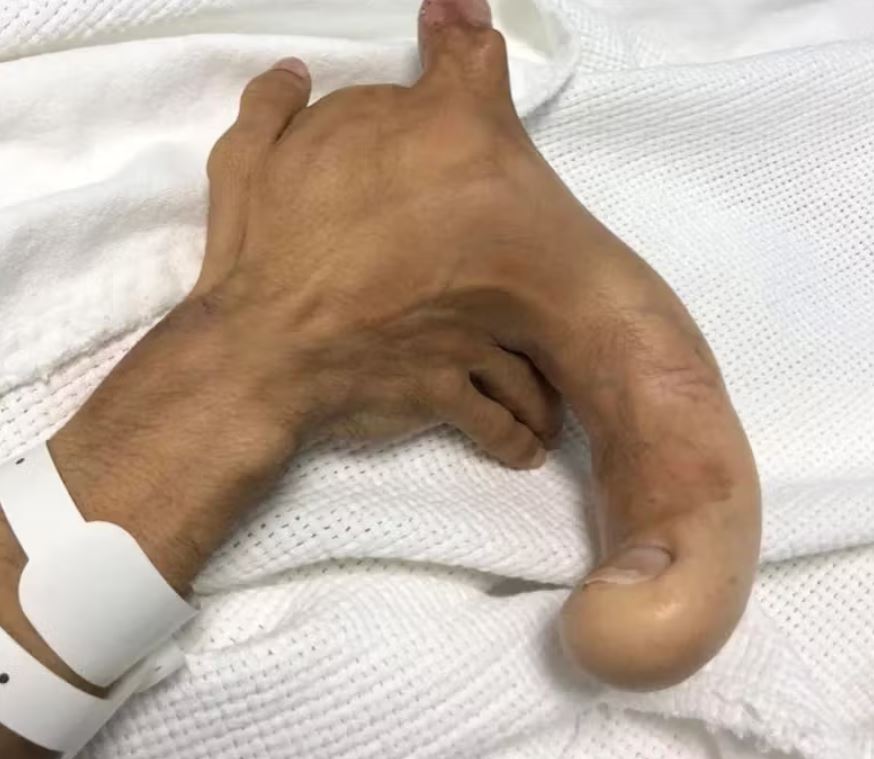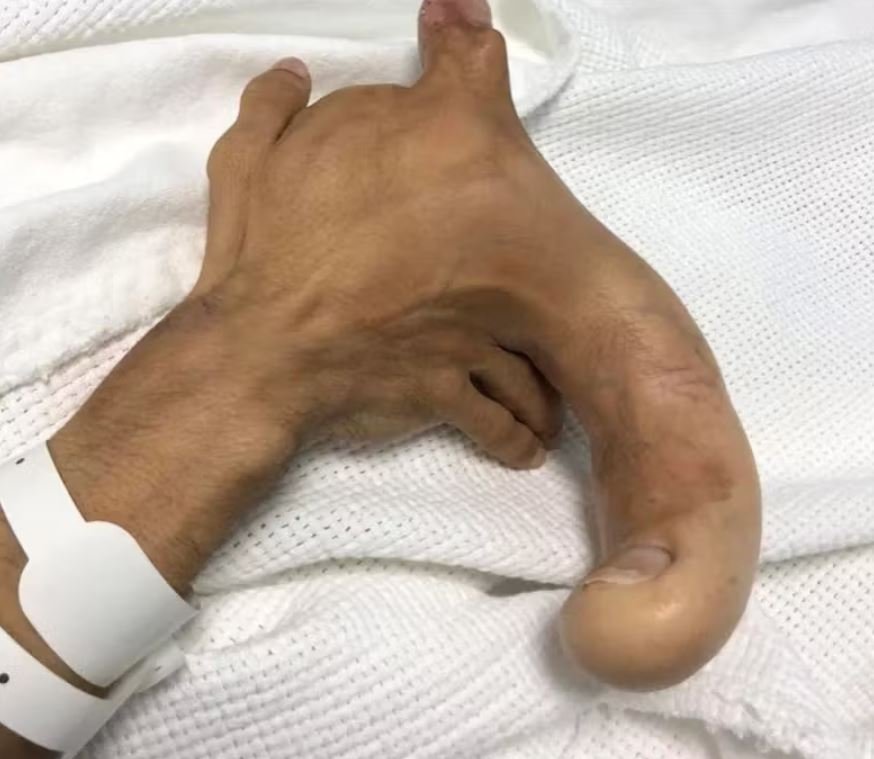
Proteus syndrome gives no warning. It acts in silence, forcing certain tissues in the body to keep growing when they should already have stopped. The result can be such extreme asymmetry that the affected part becomes almost unrecognizable as part of the human body.
In this case, the patient’s middle finger grew to proportions that defy any known anatomical reference. It is not an optical illusion or a digital edit: it is the real manifestation of one of the rarest diseases on the planet. Fewer than two hundred cases have been documented in the entire history of medicine, making each diagnosis almost unexplored clinical territory. The doctors who treat them, in many cases, have never seen another patient like it.
What makes Proteus syndrome especially disturbing is its unpredictability: it does not always affect the same areas or follow a fixed pattern. It can involve bones, skin, blood vessels, or fatty tissue, and it progresses over the course of life. Faced with a case like this, the medical question that inevitably arises is whether amputation represents a solution or an irreversible loss that only trades one form of limitation for another.