People say the richest women live the easiest lives. They’re wrong.
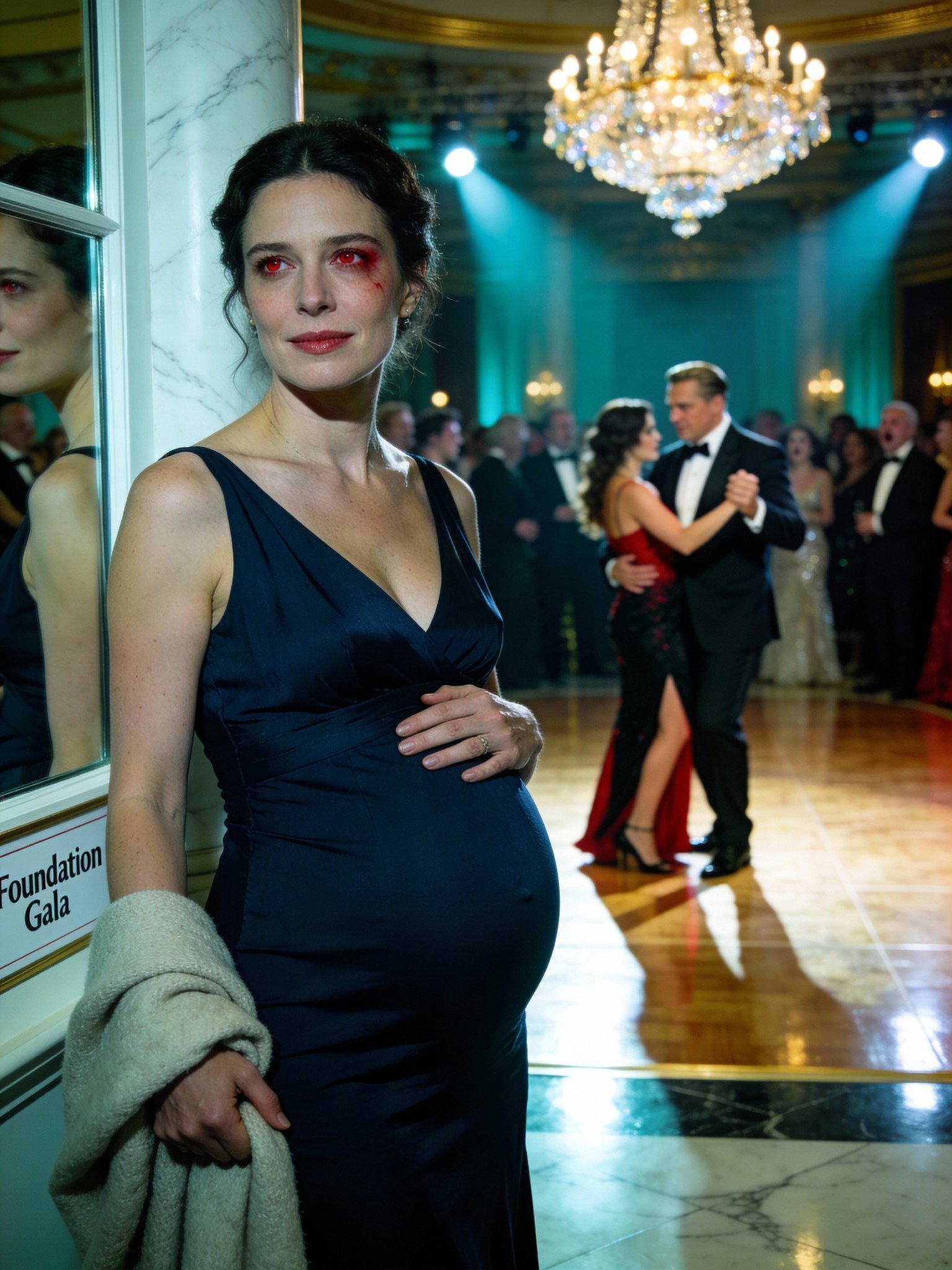
Picture this: you’re seven months pregnant, standing in a ballroom with a thousand guests, watching your billionaire husband dance with his mistress—slowly, confidently—to your wedding song.
Most women would cry, scream, or shatter the room.
Vivian Hart did something far more terrifying.
She smiled, took her coat, and disappeared.
No goodbye. No note. No explanation. No trace.
Within fourteen days, her husband’s world imploded. His $200 million deal collapsed. His company began to crumble. His reputation shattered—and his freedom slipped away.
All because a pregnant woman walked out of a gala without saying a single word.
How can silence destroy a billionaire overnight? What did Vivian know that gave her that much leverage?
Stay with me—because this story rewires how you think about power, marriage, and the most dangerous weapon a woman can use: her absence.
They say you can pinpoint the exact second a marriage dies.
Mine died at 9:47 PM, on a Saturday night, in a ballroom full of a thousand people—while my husband danced with another woman to our wedding song.
I stood alone by a marble column at the Lakeside Foundation Gala, one hand resting on my seven-month belly, watching Graham Hart move across the dance floor with Sienna Vale as if I didn’t exist.
The orchestra played “The Way You Look Tonight”—the same song we chose for our first dance eight years ago.
But Graham wasn’t looking at me.
He was looking at her.
Sienna Vale. Twenty-eight. Marketing Director at Hart Development.
My husband’s mistress.
Everyone knew.
I saw it in the pitying glances, the conversations that died when I approached, the careful way people avoided Graham’s name around me. The pregnant wife is always the last to know.
Except I’d known for months.
I’d documented everything.
And tonight, I wasn’t discovering the betrayal.
Tonight, I was executing the last phase of my exit.
My reflection in the ballroom glass showed a woman I barely recognized. A conservative navy maternity dress—expensive, forgettable. Graham’s choice, not mine.
Eight years ago, I wore red. Bold. Alive.
Back then, I was Vivian Ross—award-winning interior designer, owner of a thriving studio, daughter of an art teacher who believed homes should be full of light and color.
Now, I was Vivian Hart.
Neutral. Controlled. Carefully muted.
But not for much longer.
“You finally managed to stay pregnant.”
I turned and found Charles Hart, Graham’s father, beside me—sixty-eight, old Connecticut money, whiskey in hand, eyes like a spreadsheet.
“It’s about time you contributed more than decoration,” he added, voice coated in casual cruelty. “A Hart heir. That’s your value.”
Something inside me went very still. Very calm.
“Excuse me,” I said quietly.
“Oh, don’t get sensitive,” he scoffed. “You know what I mean. You’ve secured your position.”
I looked at him—really looked—and saw Graham’s future: cold, empty, untouchable.
I knew the family story. Hannah, Graham’s mother, disappeared twenty-six years ago when Lena Hart—Graham’s sister—was ten. Charles hired a nanny and moved on like a woman’s absence was just an inconvenience.
“My position,” I repeated softly. “Yes. I understand perfectly.”
I walked away without running, without tears—just removing myself from poison with silent dignity.
In the ladies’ room, I faced the mirror. For the first time in months, I truly looked at myself.
Who had I become?
When did Vivian become “Mrs. Hart”?
When did my bold reds turn into safe navy?
When did I learn to shrink so I could fit into Graham Hart’s perfectly controlled world?
I pulled out a phone—not the one Graham monitored, but an anonymous prepaid I’d bought three months earlier with cash.
Inside a hidden folder: my design awards, the opening night of my studio, my mother’s smile at my graduation, and a wedding photo that made my throat tighten.
I looked genuinely happy.
So did he.
Then I opened Graham’s recent Instagram post: him and Sienna at a “business dinner,” her hand on his arm, both beaming.
Caption: Building the future.
Our future—one he’d decided didn’t include me.
I opened my messages and typed: I’m ready.
The reply came instantly.
Maya Greene: Ready-ready, or “thinking about it” ready?
Maya was my college roommate, now a family attorney—and the friend who’d been telling me to leave for two years.
I typed: I’m leaving tonight. Execute the plan.
Dots appeared, vanished, reappeared.
Then: Oh my God. Finally. I’ll call Owen. Are you sure?
I stared at myself again.
Seven months pregnant. Thirty-eight years old. Standing in a gala bathroom, about to leave a billionaire and evaporate.
I’d never been more certain of anything.
Yes. I’m sure.
The plan began three months earlier in Maya’s office downtown.
I’d arrived shaking, finally saying it out loud: “This marriage is destroying me.”
“You have to leave,” Maya said, passing tissues across her desk. “He’s cheating. He’s isolating you. He’s controlling you through money.”
“I can’t,” I whispered. “I’m pregnant. This baby is a miracle. Maybe the baby will fix it.”
Maya grabbed my hands. “Babies don’t fix broken men. They just give them more people to break.”
I asked one thing: “If I need to go… will you help me disappear?”
Maya didn’t hesitate. “Yes. But we do it properly. With his money and his control, you can’t just walk out. He’ll use every resource to drag you back.”
She connected me to my younger brother—Owen Ross, a truck driver Graham had always treated like dirt.
We met in coffee shops like we were planning a military operation.
“We treat this as a domestic abuse case,” Maya told me. “Financial abuse. Emotional abuse. Coercive control. It’s real.”
“What do you need from me?” Owen asked.
“A safe place,” Maya said. “Somewhere he’d never think to look.”
Owen smiled, simple and sure. “Mom’s old house in Seaside.”
Our mother’s little cottage on the Oregon coast—kept under her maiden name. A place Graham didn’t even know existed because he’d never cared who I was before him.
So I documented everything.
Financial records. Messages. Expense reports. Hotel receipts billed to company accounts.
At 2:00 AM, while Graham slept, I photographed files in his home office: embezzlement trails, forged investor signatures, offshore accounts.
Then I found his personal journal.
One entry froze my blood:
Charles’s ultimatum: produce a male heir before forty-two or lose the trust. IVF worked—but it’s a girl. Useless. Sienna is younger, better genetic material. After Vivian gives birth, I’ll push her out. Keep the baby, discard the wife.
My hands shook as I photographed every page.
In the bathroom mirror, I touched my belly.
“You are not useless,” I whispered to my daughter. “You’re the reason I’m brave enough to leave.”
Back in the ballroom, Graham was laughing with investors, Sienna attached to his side—playing the role I’d played for eight years: softening him, warming him, making him look human enough to trust.
Near the coat check, I intercepted Lena Hart, Graham’s sister—the only one who’d ever shown me kindness.
“I’m sorry,” Lena said quietly. “For all of it. For how they treat you.”
“You knew?” I asked.
“Everyone knows,” she admitted, eyes wet. “I’m ashamed I didn’t stop it.”
I touched her arm. “Thank you.”
“Where are you going?” she asked.
I smiled. “Home.”
The attendant handed me my shawl with sympathetic eyes. “Leaving so soon, Mrs. Hart?”
“Yes,” I said softly. “I’m very tired.”
“Shall I call your driver?”
“No, thank you. I have other plans.”
Outside, a discreet rental sedan waited at the curb.
Owen was behind the wheel, engine running.
I slid into the passenger seat.
“Are you okay?” he asked.
“Drive.”
As we pulled away, I looked once at the glittering entrance.
Inside, Graham believed he was building the empire.
He was wrong.
I looked forward—and never looked back again.
Ninety minutes after I left, Graham walked into our Lincoln Park penthouse expecting to find me asleep.
Instead, he found silence.
“Viv?” he called, loosening his tie.
Nothing.
He searched room by room—the bedroom, the guest suite, the nursery we were preparing.
Dark. Empty.
On the kitchen island, perfectly arranged: my wedding ring, my phone, my cards, the penthouse keys, the car keys.
And a USB drive.
A note beside it read:
Watch me.
He plugged it in.
My face filled the screen—calm, serene, seven months pregnant.
“Hello, Graham. By the time you see this, I will be somewhere you will never find me…”
I explained everything: the fraud, the affair, the journal entry, the leverage.
Then I gave him the rule:
Leave me alone.
Don’t look for me. Don’t contact my family. Don’t touch my accounts. Don’t chase custody.
Because if he did, every authority and every investor would receive the files.
“You taught me leverage,” I said. “I’m just better at it.”
Goodbye.
The screen went black.
And in the days that followed, his world began to fold.
His bank access tightened. Legal holds appeared. Investors demanded answers. The press sniffed blood. The board panicked.
The $200 million London project—the crown jewel—started to wobble because the investors didn’t trust his numbers.
They trusted my vision.
Without me, he was just charm and spreadsheets.
And charm doesn’t hold up when regulators start asking questions.
While Chicago turned into a battlefield, I was driving toward the Pacific, toward a small cottage where the walls held my mother’s paintings—sunflowers, coastlines, color.
Freedom felt terrifying.
And holy.
And real.