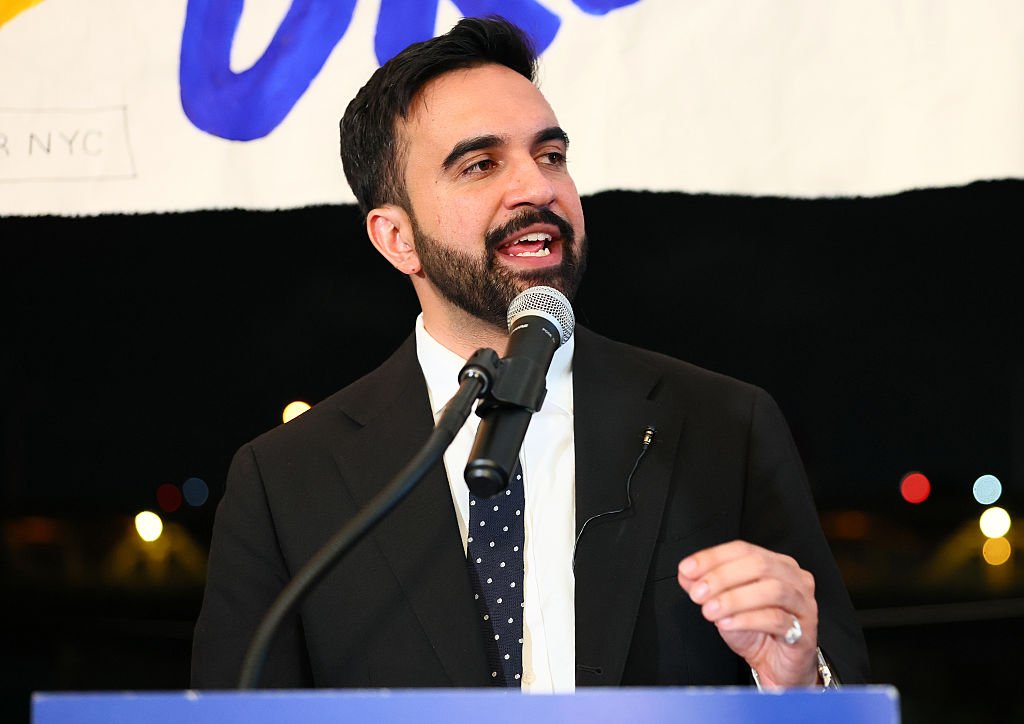
Zohran Mamdani came through the orphanage door carrying stuffed bears and a box of candy canes, just another politician doing a holiday photo-op. The kids tore into the sweets while staff propped up a phone to catch the usual handshake footage. No one expected the room to go still, the way classrooms do when the principal suddenly steps in. But the moment Mamdani reached the tiny microphone—no script, no podium—conversations dropped to a hush and even the youngest boy stopped kicking the table leg.
He started with thank-yous, then paused so long people thought the sound had cut out. When he spoke again his voice was soft, almost private, as if he were telling a bedtime story to one child instead of forty. “You are not leftovers,” he said. “You are not the second draft of someone else’s life.” A volunteer near the back pressed her palm to her mouth; tears slipped under her glasses. No one looked at her, because the same watery shine was spreading across every adult face.
The kids didn’t clap—they rarely do when adults cry—but they straightened their backs as if someone had tied strings to their spines. One girl, maybe eight, leaned forward so far her braids brushed the floor, eyes wide, waiting for the next sentence like it might be her name. Mamdani didn’t offer miracles. He simply promised that the building they slept in was not the border of their world, that love would come to them without an application form, that their stories were already worth telling even if the endings were still unwritten.
A staff member filmed the last minute on her phone, planning to send it to donors as proof the night was special. Instead the clip leapt onto Twitter, then TikTok, then late-night group chats where people admitted they cried in bathroom stalls. Supporters called it proof that politics can still feel human, while critics grumbled about cameras in a shelter and motives hiding behind misty eyes. Both sides kept watching, because the hush in the room felt rarer than any applause.
By morning the orphanage phone rang off the hook—strangers asking how to mail bikes, college students volunteering tutoring hours, a grandmother in Oregon shipping handmade quilts because “every child deserves one thing sewn just for them.” Staff answered in stunned voices, half laughing, half sobbing, realizing a handful of sentences had done more than any fundraising letter. Whether the moment was planned or pure no longer mattered; the kids were already opening giant boxes addressed to them by name, proof that words can travel faster than doubt.
The debate will fade, as all viral storms do, but the girl with the long braids will remember the night an adult looked straight at her and said “you are not an afterthought,” and she will carry the sentence like a flashlight into whatever hallway comes next. That is the quiet victory Mamdani never advertised: a whole room reminded that dignity needs no permission slip, and a country reminded that sometimes the softest voice is the one that finally gets heard.