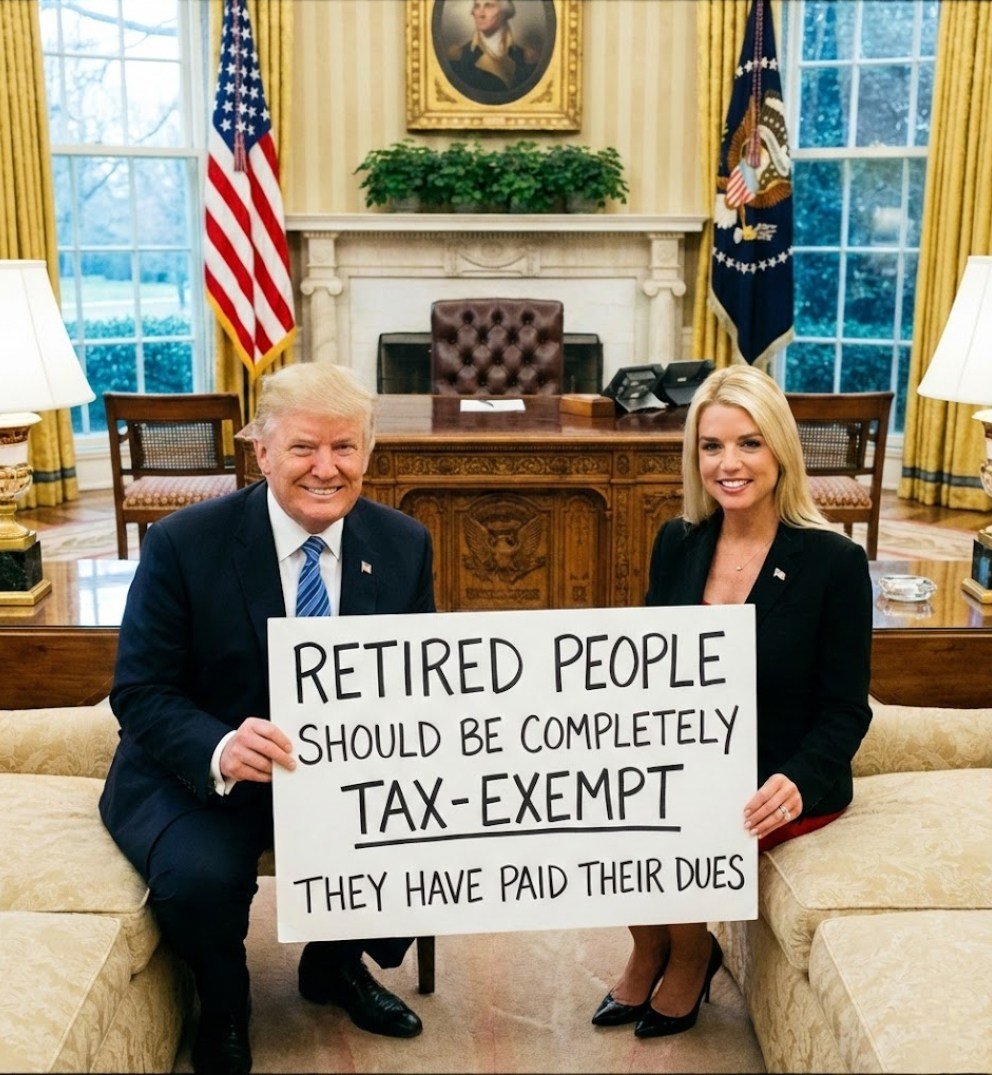
On a cold December night in 2025, President Donald Trump and Attorney General Pam Bondi stepped onto a flood-lit stage and told millions of seniors they would never again pay a penny in income, capital-gains, or estate taxes. The crowd in the packed stadium roared so loudly the metal rafters rang. “Complete tax liberation forever,” Trump thundered, waving a thick stack of papers that looked like a ready-to-sign law. Bondi followed with fiery words of her own, vowing to crush “IRS overlords” and free the people who, in her view, built America with their own hands.
The plan is simple on the surface: once you turn sixty-five, every tax that normally bites your pension, your stock sales, and the house you hope to leave your kids disappears. Trump says seniors have “paid enough” after decades of work, and it is time to let their savings flood the economy like rocket fuel. Bondi calls the idea “justice for the builders,” claiming the move will launch the biggest boom in U.S. history. Supporters waved bright signs reading “Zero Taxes, Zero Worries,” and chants of “USA, USA” echoed through the parking lots long after the rally ended.
Yet the next morning, calculators came out. Economists from both left and right warned that wiping out those taxes for everyone over sixty-five would punch a hole in the federal budget wide enough to swallow several major agencies. Income and capital-gains taxes from seniors add up to hundreds of billions each year; estate taxes, though smaller, help pay for things like hospitals and roads. If that money vanishes, the gap must be filled either by higher taxes on younger workers, more government borrowing, or deep cuts to programs many seniors rely on, including parts of Medicare and Social Security.
Critics also say the plan could widen the wealth gap. Retirees with large stock portfolios and vacation homes would see the biggest breaks, while younger families still juggling mortgages and child-care costs would pick up a heavier load. Some call it a gift to the rich dressed up as a reward for grandparents. Others fear a rush of well-off retirees cashing out investments tax-free, pushing prices up for everyone else. In short, the “cosmic boom” Trump promises might turn into a costly bust for the nation’s bottom line.
Still, the idea taps into real frustration. Many seniors feel punished for saving, watching chunks of their 401(k) withdrawals disappear each April. They like the thought of keeping every dime to spend on grandchildren, home repairs, or finally opening that small business dream. If millions of energized retirees start spending more, restaurants, hotels, and hardware stores could indeed see a jump in sales. The question is whether that extra business could grow fast enough to replace the missing tax dollars.
For now, the proposal is mostly rally talk, not written law. Congress would have to carve enormous holes in the tax code, and lawmakers from both parties have already voiced doubts. But Trump and Bondi have set the tone: any future debate on taxes will have to answer the seniors who packed that arena and cheered for zero. Whether the nation can afford such generosity, or whether the bill lands on the kitchen tables of their children and grandchildren, is the gamble hiding behind the applause.