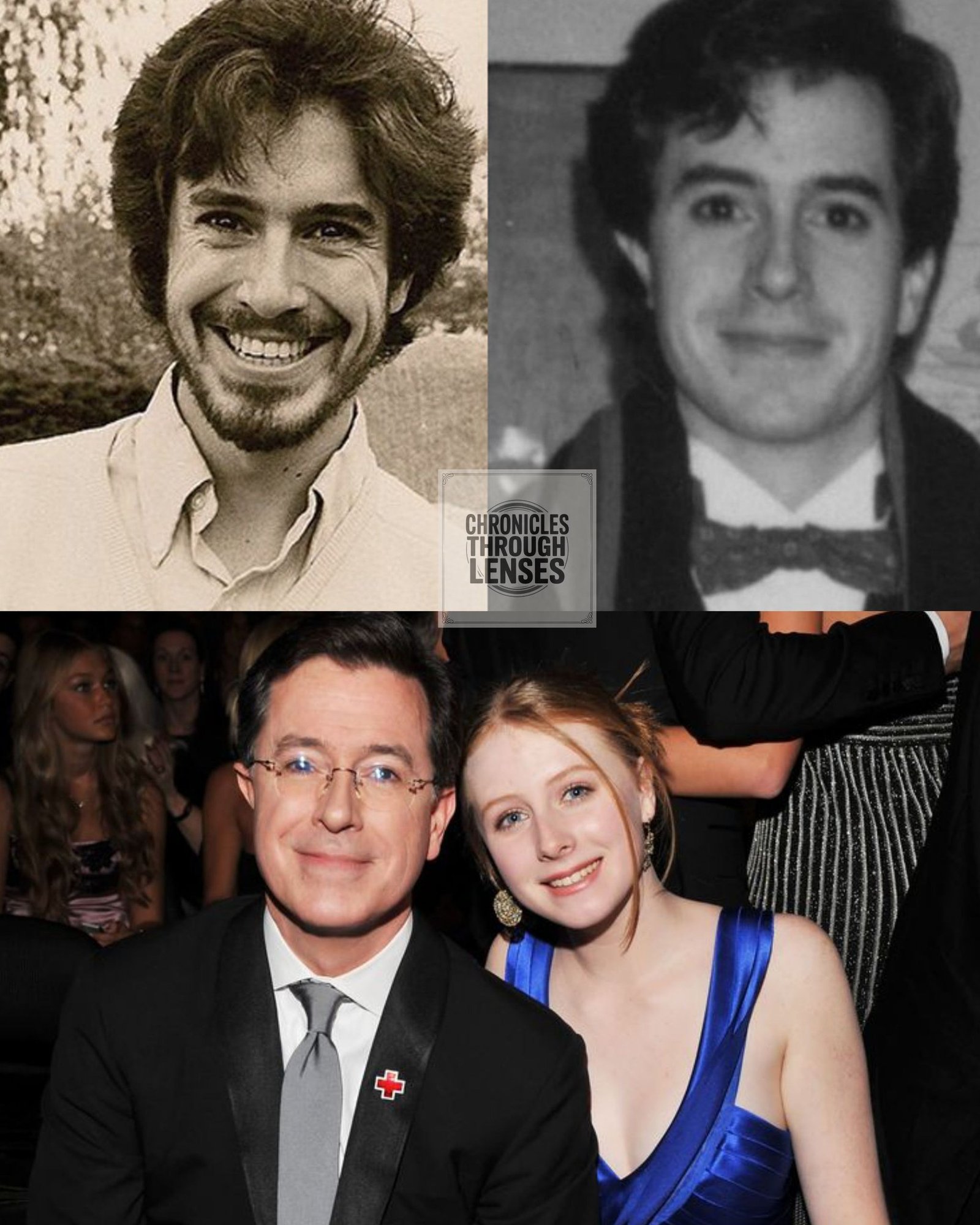
On September 11, 1974, a ten-year-old boy named Stephen Colbert experienced a tragedy so profound it would forever alter the course of his life. Living in Charleston, South Carolina, Stephen’s ordinary morning was filled with the kind of small routines familiar to any child—homework unfinished, breakfast eaten too quickly, and the distant hum of his bustling Catholic household. Yet, that day, the world shifted entirely. His father, James William Colbert Jr., a 53-year-old immunologist and vice president of academic affairs at the Medical University of South Carolina, boarded Eastern Air Lines Flight 212 with Stephen’s brothers Peter and Paul. Their destination was prep school in Massachusetts, a brief journey to Charlotte, North Carolina. What should have been routine turned catastrophic. Foggy weather conditions made visibility treacherous, and just miles from the runway, the plane crashed into a cornfield. All three passengers perished along with 69 others. In the span of minutes, Stephen’s life, and the world he knew, was irrevocably changed.
A Childhood Silenced by Loss
Stephen Colbert was the youngest of eleven children, and his household had once been a cacophony of voices, laughter, and the constant movement of family life. That morning, that noise disappeared. In its place came silence, heavy and unyielding. The ordinary concerns of childhood—the minor quarrels over toys, the joys of shared secrets, the exhilaration of sibling rivalry—vanished in a moment. Stephen and his mother, Lorna, leaned on each other in ways few parent and child ever must. Through her quiet, steadfast example, Stephen learned resilience not as a concept but as an inherited skill: to navigate grief without succumbing to bitterness, even when the sadness seemed limitless.
For years, the weight of the tragedy remained suspended in a liminal space. Stephen pushed through elementary and high school on autopilot, a child whose world had been irreparably altered but who had yet to fully grasp the magnitude of his loss. Emotional numbness became a shield, a way to survive in a home suddenly emptied of its anchors. Lorna Colbert, herself wrestling with profound grief, maintained a composed presence, giving Stephen a blueprint for how to endure without resentment—a lesson that would shape him profoundly in the decades to come.

The Weight That Could Not Be Named
It was not until Stephen left for Hampden-Sydney College in Virginia that the true emotional toll of September 11, 1974, descended upon him. The familiar routines of home were gone, and in their absence, he confronted grief in its raw, unfiltered form. He lost significant weight, struggled to concentrate on his studies, and fell into a prolonged sadness he could hardly name. Yet even in this darkness, Stephen discovered a strange kind of awakening.
As he confronted his own fragility, he stumbled upon improvisation and comedy. What might have seemed frivolous or even disrespectful became a conduit for processing pain. Making people laugh was not a betrayal of his grief; it became a product of it. The tragedy that had so thoroughly emptied his life paradoxically became a wellspring for connection, empathy, and the unique insight that would later define his career.
An Early Silence, a Lingering Absence
Stephen’s life before the crash was a blank canvas in his memory. At ten years old, he retained virtually no recollection of his father or brothers beyond fleeting impressions, and even those were fragile and incomplete. Yet the impact of their absence reverberated through every choice he would later make. The sudden loss of key figures in his life instilled a profound awareness of mortality and the fragility of ordinary existence. Every triumph, every joke, every performance carried with it a silent echo of that morning in 1974.
The trauma also manifested physically. Stephen had previously lost hearing in one ear after a tumor was surgically removed, a procedure that ended early aspirations of becoming a dramatic stage actor. The combined effect of this partial deafness and the emotional rupture of the plane crash redirected him toward the form of performance that would ultimately define him: sharp, reflective, improvisational comedy. It was here, in the unexpected intersection of personal limitation and profound loss, that Stephen began to craft his extraordinary voice.

The Making of a Comic Genius
In retrospect, every step of Stephen’s career can be traced back to that fateful day. His humor, often incisive, deeply personal, and empathetic, is rooted in a life lived alongside grief. Colbert’s comedy is not mere entertainment; it is a form of communication shaped by the absence of those he loved most. His work on The Colbert Report and later The Late Show with Stephen Colbert bears the imprint of a mind attuned to the ironies and tragedies of life. Millions have laughed because Stephen himself endured profound silence and darkness, translating it into insight and levity.
His ability to make others feel less alone comes not from training or technique alone but from lived experience. He knows the contours of grief and uses them to bridge emotional gaps for his audience. Every joke, every sardonic commentary, every tender anecdote draws from the depth of a boy who lost his family in an instant and learned to survive through connection and creativity.
A Conversation with Grief
Decades after the crash, Stephen spoke candidly with Anderson Cooper on a grief-focused podcast. He reflected on the lasting impact of the tragedy, explaining how it permanently altered his emotional landscape. The world, he said, is never quite the same after such loss. Relationships are more precious, laughter is more urgent, and silence carries an intensity few can imagine. He described a heightened awareness, a sensitivity that informed his work and his life choices. The boy who had faced an unimaginable void learned that empathy and humor were not mutually exclusive; they were intertwined tools for survival and for creating community.
Stephen’s reflections underscore a truth rarely acknowledged: the tragedies that befall us are not erased, even when we appear to move past them. They remain, shaping our worldview, guiding our choices, and quietly informing every act of compassion, creativity, and connection. In Stephen’s case, grief became both muse and mentor, teaching him lessons no classroom could ever impart.

Legacy of a Life Transformed
Today, Stephen Colbert’s life serves as a testament to resilience, creativity, and the human capacity to transform suffering into art. The youngest of eleven children who survived a childhood disaster carries forward a legacy that honors both what was lost and what was gained. His work reaches millions each night, and the laughter he elicits is infused with a rare authenticity born from experience. Stephen Colbert’s career reminds us that humor can coexist with tragedy, that joy can emerge from loss, and that the bonds we forge—even after devastation—can define the most meaningful aspects of our lives.
The story of Stephen Colbert is more than the biography of a comedian; it is a narrative of survival, of grief transformed into empathy, and of life redirected by forces beyond our control. The plane crash on September 11, 1974, did not just take a father and two brothers—it reshaped an entire worldview. And in that reshaping, it created a voice that has comforted, provoked thought, and entertained millions, proving that even in the aftermath of loss, the human spirit can find a way to reach out and touch the lives of others.
Stephen Colbert’s journey from the cornfields of tragedy to the stages of national acclaim is a story of extraordinary resilience. Every smile he draws, every laugh he inspires, is rooted in the silent understanding of loss, love, and the enduring power of connection. His life teaches us that even in the deepest grief, there is a path toward purpose—and sometimes, that path is paved with laughter.