Ethan Barringer scrubbed the cabin porch for the sixth time, chasing dust that had blown in from every direction of empty New Mexico. For ten months he had written to a woman named Sunna—letters that began stiff as bark and ended soft as shirt-flannel. She answered in careful script, speaking of books, of loneliness, of wanting “a life built shoulder to shoulder instead of one bent beneath expectation.” Ethan pictured someone small and pale who quoted poetry and feared horses. He mailed her train fare, waited, and listened to the wind lie about her arrival.
Weeks passed. No stage rattled up the trail. The storekeeper in San Carlos quit asking; the bartender started smirking. Ethan kept writing, kept waiting, kept sweeping the same boards. Then one August evening a single rider crested the ridge—straight-backed, feather-bright, Apache from crown to cowhide boots. Sunlight caught beadwork on the horse’s breast-collar and flashed it straight into Ethan’s heart like a signal he could not read.
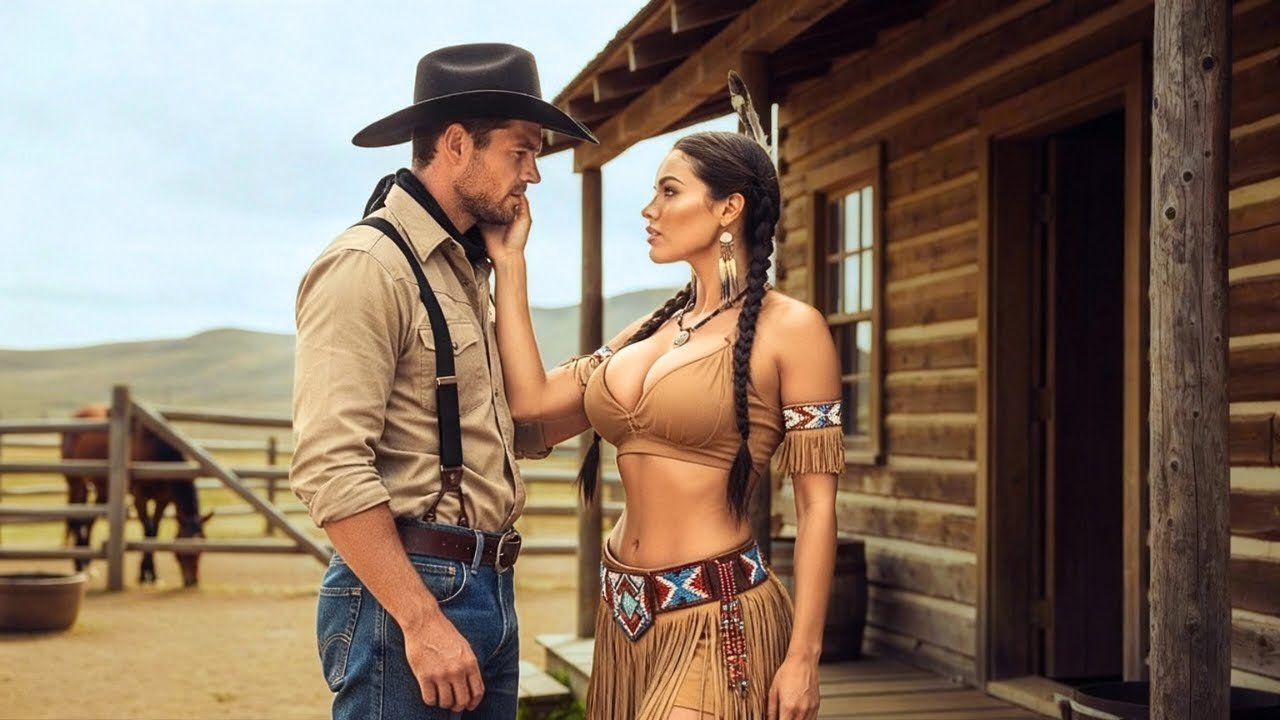
She dismounted before he found words, braids swinging like twin ropes of night. “I am Sunna,” she said. “Your letters rode ahead of me. I have come to stand beside you.” The porch boards suddenly felt too small for both his shame and her certainty.
“But you’re—” He stopped, afraid the next word might cut.
“Apache,” she finished. “And still the woman who wrote you about stars and irrigation ditches.” She waited, letting him decide whether to swallow the surprise or choke on it. Ethan chose to breathe.
“I never asked your road,” he said. “I only asked your yes.”
“That yes is here,” she answered, “if you still want it spoken.”
Before he could speak, dust rose again—twenty riders pouring off the mesa, shields painted, rifles across pommels. A young warrior shouted that Sunna had been promised to another band, that Ethan’s letters were theft dressed in ink. Ethan felt the old war rise in his throat, but Sunna stepped between him and the accusation.
“I promised myself,” she called into the wind. “No man owns that pledge but me.” Her father rode forward, face carved by sun and old battles. He studied Ethan the way a man studies sky before planting seed—looking for storm, looking for season.
Ethan met the chief’s eyes. “I want no claim except what she chooses to give. I wrote of partnership, not possession.” The chief listened, then turned to his daughter.
“Do you choose this land, this man, this life?”
“I choose the man who kept writing when the world told him to stop,” she said. “I choose the land wide enough for both my peoples. I choose a life we shape with our own hands.”
The chief raised his rifle—not toward Ethan, but toward the sky. The shot cracked open old agreements and let new light pour through. Warriors wheeled and rode away, some angry, some amused, all carrying a story that would travel faster than mail.
Dust settled. Sunna stood on the porch Ethan had scrubbed for a stranger. She traced a finger along the rail, collecting sawdust and promise. “You built this for a woman you had never seen,” she said. “Now build the rest with the woman who came farther than you imagined.”
Ethan took her hand—brown against brown, callus against callus. “I planned for a wife,” he said. “I gained a partner. Show me what that looks like.”
She smiled, and the cabin felt suddenly larger than boards and nails. “First,” she said, “we widen the doorway so both our pasts can walk through without ducking.”
They worked side by side—he learning her songs while splitting cedar, she learning his jokes while mending fence. The garden grew corn in straight rows and squash in wandering circles. Letters kept arriving, but now they came from both directions: his ink, her beadwork stitched into soft hide—each symbol a syllable of home.
Years later, when travelers ask how an Apache woman and a rancher built a life that outlasted drought and gossip, Ethan points to the porch rail where two sets of initials are carved deep into weathered wood. “She rode past every expectation I had,” he says. “I just kept the gate open long enough for her to choose the yes I’d been waiting for.”