Ethan Row liked his mornings quiet—coffee thick enough to float a bullet, sunrise spreading like spilled paint, and no sound but hawk wings overhead. His ranch sat in a fold of Arizona rock where even the wind felt lazy, and that suited him fine. He had ridden with the army once, had the scars and the memories, but out here the only orders came from cracked fence rails and a horse named Bastian who pretended he was wild.
The morning it all changed started like any other, then the sky cracked open. A roar rolled across the desert, louder than thunder, meaner than cannon fire. The ground jumped, and a black column of smoke rose beyond Whisper Crest. Ethan didn’t think—he saddled Bastian, checked his Winchester, and rode toward the noise. Whatever fell had ripped a hole fifty feet wide in the red earth, leaving glassy rock that steamed like fresh biscuits. In the middle of the mess lay chunks of metal so dark they swallowed sunlight.
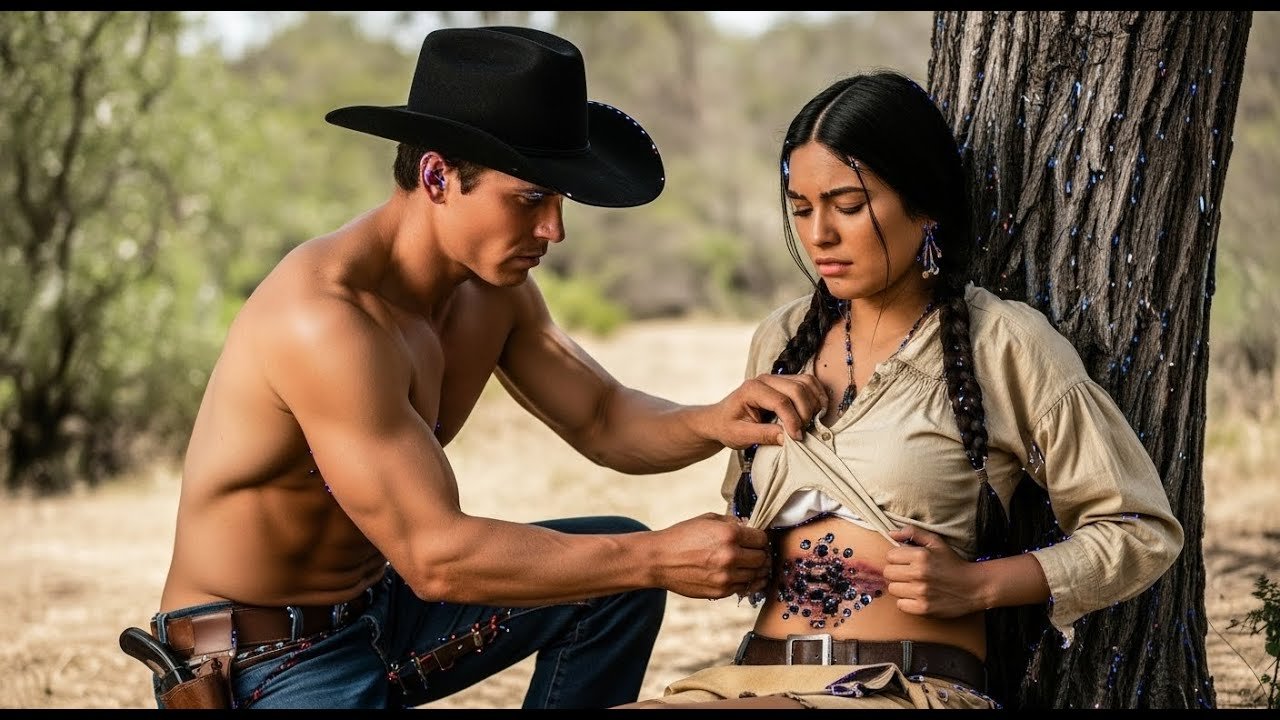
That was when he saw her—an Apache woman half buried under torn sage, hair matted with dirt and something slick that shimmered like oil. Her deerskin tunic was shredded, and at her side pulsed a patch of black that bubbled and hissed as if alive. Ethan’s hand stopped mid-reach. Army lessons screamed “strange metal, stay back,” but the woman’s eyes fluttered open and fixed on him, sharp as obsidian blades. “Do not touch it,” she whispered. “It is star.”
He lifted her anyway, careful to keep the black stuff off his skin, and settled her across Bastian’s withers. The horse snorted, unsure of the smell, but Ethan murmured steady nonsense and turned for home. Behind him the crater smoked, ahead of him the woman’s breath came in shallow slices. He named her Taliani in his head—something strong that rang like spurs on stone—because he didn’t know her real name and refused to call her “the Apache” like she was a thing.
Back at the cabin he laid her on his own bed, the only one he owned, and started a vigil he hadn’t planned. Fever burned her skin; the black patch spread tiny veins that glowed faint under lamplight. He fed her sips of water, wiped her face, and listened to her dreams spill out in Apache words too quick to catch. Each dawn he expected her to die. Each dusk the star-stuff stitched her back with threads of silver light.
On the third morning she sat up straight, eyes clear, and touched the cracked shell on her ribs. It flaked away like burnt paper, leaving skin whole but traced with pale scars that shimmered when she breathed. “You stayed,” she said, surprised, as if kindness were the stranger in the room. Ethan only shrugged. “Couldn’t leave a soul to coyotes. Not my way.” She studied him the way a person studies a map, trying to decide if the road ahead was safe. Then she told him her true name—Talulah—and he said it out loud once, tasting river and wind.
Word travels faster than mail out here. Prospectors saw the fall, saw Ethan’s tracks, and talked in saloons about living metal. The story reached Silas Croft, a man who collected odd powers the way others collected poker chips. Croft gathered ten hard cases and rode toward the ranch, eyes bright with dollar signs. Meanwhile, Talulah’s brother Doasan followed the same trail, heart burning with fear and fury. He pictured his sister stolen, maybe dead, and he brought warriors to right the wrong the only way he knew—blood for blood.
They all arrived the same night, moon high and silver. Doasan’s voice rang from the ridge: “White man, send her out!” Croft’s men answered with a rifle crack that split the quiet open. Ethan shoved Talulah behind a stone trough and fired back, Winchester working smooth as prayer. Bullets whined, horses screamed, and for a few minutes the desert smelled of gunpowder instead of sage. Then Talulah stepped into the open, palms raised, scars blazing like struck matches. A shield of unseen force turned the next bullet aside. Croft howled with greed and rushed her. She laid one hand on his chest and the star-stuff answered, drinking his hunger until it met bone. The mercenary leader crumpled, dry as winter grass, and his men scattered into darkness.
Doasan lowered his rifle, stared at the sister who glowed like dawn on water, and saw she was not kidnapped—she was changed. He touched his heart in silent apology, then led his warriors back into the night. The ridge went quiet except for the crackle of a knocked-over lantern Ethan kicked out.
In the weeks that followed they rebuilt side by side. Ethan split logs; Talulah lifted them as if they were kindling. He hunted; she healed the cut on his hand with a touch that tingled like cider. They planted peach trees along the spring and nailed a cedar plank above the door—no words, just two lines carved: one straight, one curved, like a star falling into canyon. Folks who passed asked what it meant; they only smiled and changed the subject.
Autumn painted the grass gold and the nights turned sharp. Ethan would find Talulah outside, head back, scars glowing soft against the Milky Way, listening to voices he said he couldn’t hear. He’d wrap a blanket around her shoulders and they’d stand until the sky felt small enough to fit inside their joined hands. She kept a single bead from her old tunic—charred from the crater—and threaded it onto his watch chain. “So you remember,” she said. “I stayed.” He never took it off.
Sometimes travelers still speak of the ranch where the ex-scout and the sky woman live—how fences mend themselves, how colts heal faster, how the peaches taste like starlight. Ethan only shrugs and claims good water. Talulah just smiles, scars dim under sunset, and keeps choosing the road that runs between worlds. Out on the porch, with Bastian grazing below and the cabin lamp warming the window, they listen to the desert breathe and know the sky already gave its verdict: some loves are forged from falling, and they shine brightest in the dark.