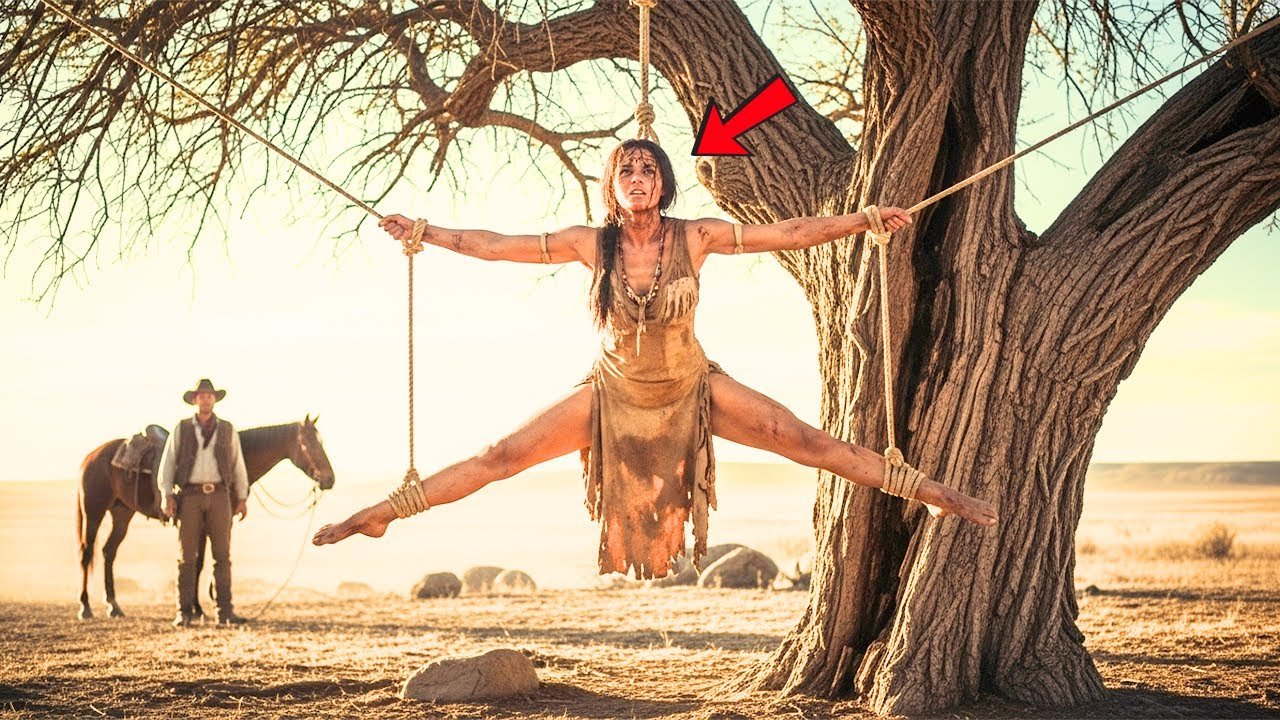
Black Mesa, 1879.
The wind carried iron filings that morning, scraping skin and fence rails alike. I swung the hammer because nails don’t ask questions and wood doesn’t answer back. Then came the laughter—three riders, one rope, and a woman tied to a hitching post like a stray calf.
They dropped her, said she was payment for a bay horse I wouldn’t sell last spring, and rode off before decency could catch them. Her dress hung in tatters, wrists raw, eyes down, not crying—just breathing like each gulp of air cost cash.
I told myself she wasn’t my trouble.
The land told me to look away.
Her eyes told me she’d already seen every man choose the easy road.
I cut the rope anyway.
Inside the cabin I cleaned cuts, set bones, and listened to her breathe while the stove popped like a second heart. When she woke she asked if I planned to trade her. I said no. She asked if the men would come back. I said probably. She asked what kind of man I was. I didn’t have an answer that felt clean.
Days slid by. She learned the creak of the third board, the way I test coffee grounds before pouring, how Daisy the mare hates anyone touching her left ear. I learned her name—Nayeli— and that she talks to the earth in a language older than fences. We spoke in chores: splitting wood, hauling water, mending wire. Every task was a sentence in a conversation neither of us had started on purpose.
Week five, the wind went still.
Three silhouettes rose on the western road, riding slow, sure the world still owed them. The leader wore a torn cavalry coat and the same mean grin he’d worn when he left her like trash. He called her “business.” He called me thief. He said price changes when the man with the gun says so.
I levered a round into the rifle, felt Nayeli behind me in the doorway, straight as cedar.
What kind of man are you, Elias Ward?
The one who turns away—
or the one who finally raises the barrel?
I raised it.
Not for glory.
Not for ownership.
For the quiet that comes after you decide who you are when no one’s watching.
The riders looked at the muzzle, looked at the woman, looked at the land that had stopped laughing with them. They turned their horses, dust swallowing their shadows like the mesa itself had closed its mouth.
Nayeli stepped onto the porch, wind tugging her hair, eyes bright as storm glass.
“They’ll tell the story wrong,” she said.
“Let them,” I answered. “We’ll be too busy living it right.”
We went inside, poured coffee for two, and listened to the stove settle into a rhythm that sounded almost like hope.