Wyoming, 1881.
Snow pressed the land flat and silent, the kind of quiet that makes a man hear his own heart arguing with itself. Mason Hail had come to the high ridge to disappear—no outfit, no partners, no one to bury when the weather turned mean. He measured his days in split logs and coffee grounds, and that suited the ghosts he dragged behind him just fine.
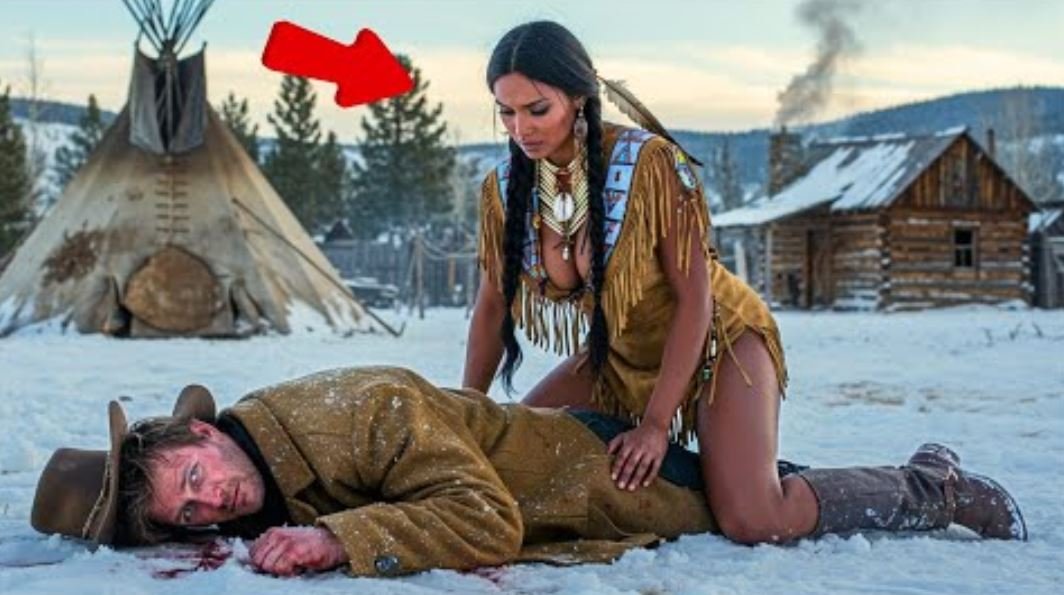
Then the wind brought tracks—small, stumbling, human. He followed them because a man who ignores cries in the wilderness soon ignores the ones inside his own chest. Beneath a snapped pine he found her: Teya, half-frozen, dress torn by hands not branches, breathing like each sip of air cost coin. He carried her to his one-room cabin the way he’d once carried wounded calves—gentle, determined, pretending not to feel the weight of another life in his arms.
Inside, the stove popped like a second heart. He warmed her, wrapped her, fed her broth laced with the last spoon of honey. When she could speak, she gave him the truth in three short bursts: camp burned, men drunk on rage and liquor, her feet bare because boots don’t matter when you’re running for your life. She had cut one of them when he grabbed her; she remembered the sound of his blood hitting snow more clearly than her own name.
Outside, the blizzard locked the world in white. Inside, Mason counted firewood and realized the math was simple: share the narrow bed or both wake up stiff and maybe dead. He laid it out plain—no hunger in his eyes, no offer but survival. She kept the knife at her boot and took the inside against the wall. They lay back-to-back, two silhouettes sharing warmth the way stranded travelers share the last match—careful, grateful, aware the wind wants to snuff it out.
Just before sleep pulled her under, Teya whispered, “When the storm ends, they’ll come looking.”
Mason answered into the dark, “Then we’ll be ready. Both of us.”
The storm heard him and howled louder, but the cabin held. In the morning, snow would show tracks, rifles would be checked, and the world would try to claim back what it thought it owned. But something had already changed: two people who had spent years guarding their solitude now guarded each other, and that, more than any gun, was a weapon the wind couldn’t pry loose.