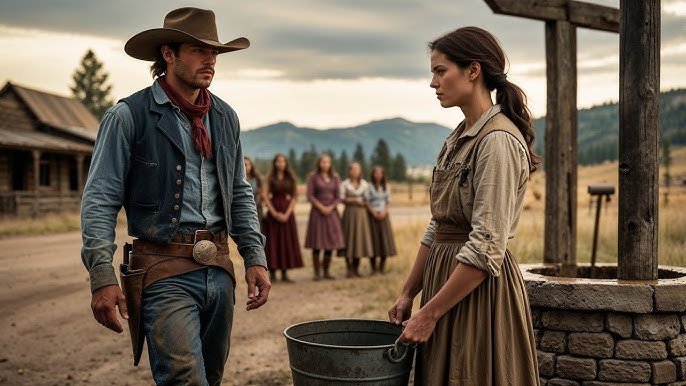
Caleb Morrison had spent ten years learning the shape of his own silence—how it fit between fence posts, how it settled on the porch at dusk like dust no wind could lift. The war had taken his wife, fever had taken his boy, and he had buried both under chores and quiet, telling himself that was enough.
Then the desert gave him Emma—nailed to a cross like scarecrow bait, skin sun-blistered, voice raw as wind through dead grass. She whispered one offer when he cut her down: “Save me and I’ll belong to you, three times a day, every day.” He told himself she was heat-drunk, delirious, half-dead. He carried her home anyway, because even a ghost knows the taste of desperation.
For three weeks he fed her broth, cooled her burns, and pretended her promise was only fever talking. On the fifteenth morning she stepped onto the porch at dawn, slipped into his room at noon, and led him back by firelight—no shame, no hesitation, only the fierce clarity of a woman spending herself on her own terms. He tried to refuse; she refused his refusal, and somewhere between the first kiss and the third sunrise the bargain became choice.
When Wade came with seven riders, guns out, claim loud as thunder, Emma stood on the porch wearing Caleb’s Colt and the kind of smile that makes men rethink their plans. The marshal rode in behind them, warrants in hand, and Wade’s empire cracked like sun-baked clay. The debt her father owed was declared worthless the moment it was signed under threat of death; the cross became evidence; the cross became freedom.
Later, in the small church with the worn Bible, they spoke vows no ballroom could have held. Folks whispered about age and scandal, but out on the ranch none of that reached the porch where they sat hip-to-hip, watching cattle move like slow clouds across the flats. The promise of three times a day turned into once when they felt like it, twice when they needed it, and always because they chose each other—not because anything was owed.
Love, they learned, isn’t the rescue; it’s what you build after the nails are pulled out. It’s the quiet decision to stay when the world says walk away, the daily choice to see the other person not as payment but as partner, the slow rebuilding of two broken souls into one life that feels like sunrise every time their eyes meet across the kitchen table.
If this story found you, maybe you’re still carrying a cross somebody else nailed you to. Maybe you’re the stranger riding toward a scream you could choose to ignore. Either way, remember: the best love stories don’t start with perfect people—they start with broken ones who decide the price of looking away is higher than the cost of stepping in.