Caleb Brick had spent six winters perfecting the art of emptiness—empty bed, empty table, empty mornings that started with coffee and ended with silence. He kept the cabin like a museum of loss: Mary’s shawl still on the peg, the boy’s carved horse on the mantel, two graves behind the fence that grew weeds instead of memories.
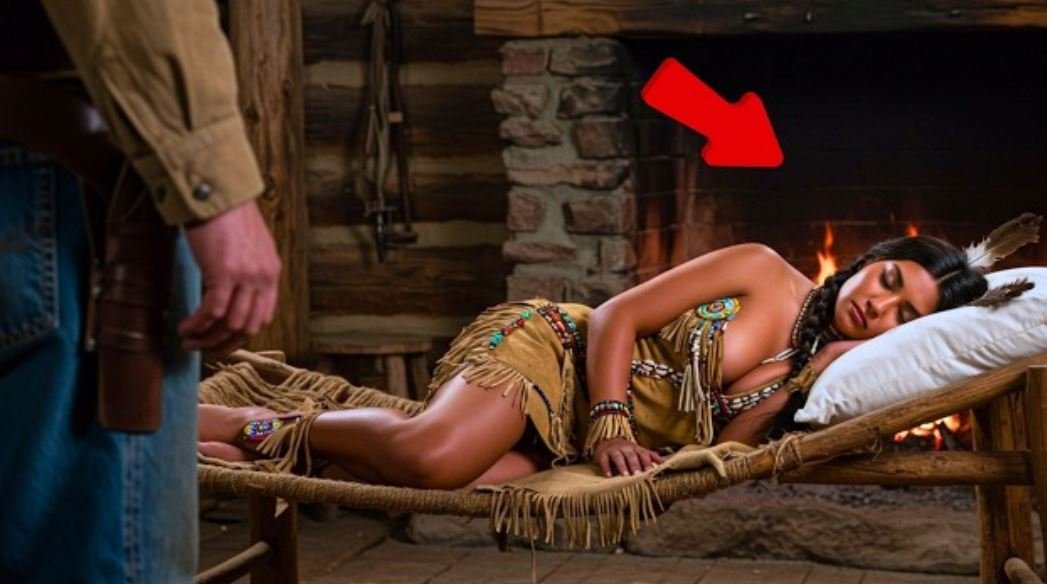
Then frost and fate shoved a stranger through his door—an Apache woman with rope bracelets on her wrists and bruises for jewelry. She sat on his cot like a question he didn’t want to answer, eating his bread as if it might be snatched away mid-bite. When she offered her only possession—a threadbare bracelet—he took it, not because he wanted payment, but because he remembered how it felt to have nothing left to give.
Night after night he told her “stay” the way another man might say “I’m sorry”—quiet, awkward, repeated until it sounded like promise. She swept floors, mended torn coats, and learned the creak of the third board so she wouldn’t wake the ghosts he kept fed with silence.
Town talk traveled faster than truth. When three riders came looking for “runaway property,” Caleb met them on the porch he had built for a family, not a firing squad. The scarred man laughed at one widow and one rifle. Caleb answered with the steady hand Mary had once held, firing not for glory but for the simple refusal to add a third mound behind the fence.
When the smoke cleared, the woman stood in the doorway wrapped in his coat, eyes wide with terror and something softer—hope learning its first words. He understood then that the cabin would never again echo with only one heartbeat; it had learned to beat for two, and some burdens, once shared, refuse to leave quietly ever again.