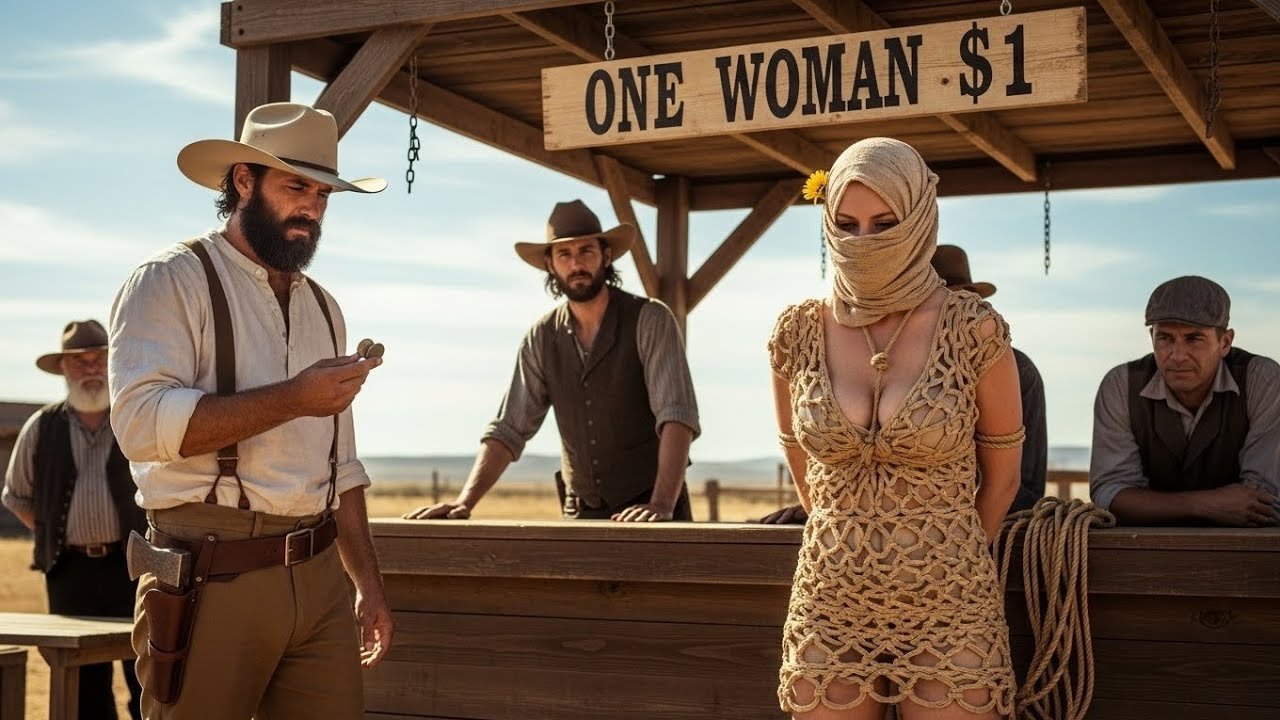
Elias Boon rode into Dry Creek expecting the usual cattle auction, but the crowd had circled something else. On a splintered platform stood a woman with tied hands and a sack over her head. A crude sign hung at her chest: “Debt paid by sale.” The men laughed the way boys do when they know the joke is cruel. Elias felt his stomach knot. He had buried his wife three years earlier and taught himself to stay out of other people’s storms, yet the sound of that laughter scraped something raw inside him.
“One dollar!” a drunk shouted, waving an empty bottle. The sheriff grinned and pretended to take bids. Elias stepped down from his horse, boots creaking on the dry boards. He pulled a single silver dollar from his coat and held it high. “One dollar,” he said, voice steady. “And I’m not joking.” The sheriff shrugged, snatched the coin, and cut the rope. Elias lifted the sack away. Dark eyes, older than the face that held them, blinked against the sudden light. He offered his canteen. “You’re free,” he whispered. “No one here owns you anymore.” A tear cut a clean line through the dust on her cheek. The crowd lost interest when no more sport remained. Elias helped her onto his horse and they rode west, the jeers fading into prairie wind.
Dusk wrapped the cabin in quiet when they arrived. He showed her the small guest room, then set bread, beans, and coffee on the table. She ate with her head bowed, shoulders braced as if the roof might fall. He did not ask her name; names carry weight and she had carried enough. The next morning he found her at the well, drawing water with shaking hands. “You don’t have to work,” he said. “Yes, I do,” she answered, the first words he had heard from her. Low, careful, but firm. Weeks passed. She mended fences, scattered grain for chickens, brushed the horses until their coats shone like polished pine. She flinched at loud noises and studied the horizon each dawn as though the sun might change its mind and rise somewhere else. Elias told himself patience was a crop that grew without rain.
The first storm of winter locked them inside for three days. Snow pressed against the door like a drunk demanding entry. Elias kept the fire high and told stories just to hear a voice. On the third night she stared into the flames a long while, then said, “My name is Ruth.” The syllables landed soft but heavy, the way cottonwood seeds drift down and still manage to plant themselves. Elias repeated it, tasting the sound. “Ruth,” he said, “fits you.” Her smile arrived slow, like spring on the high plains—late, but worth the wait. That night they sat long after the fire turned to embers, sharing silence that no longer felt empty.
Spring unpacked itself in blades of grass and foals that tested new legs. Ruth sang while she pinned laundry, notes drifting over the prairie like birds looking for a place to nest. Elias watched from the porch, hat in hand, surprised how one quiet name could redraw the world. When he rode to town for supplies, folks still chuckled about the rancher who bought a wife for a dollar. He let them talk; gossip dies faster than prairie flowers once the wind shifts. One golden afternoon he set two chairs outside and poured coffee. “I have nothing back east,” Ruth said before he asked. “Here, I can breathe.” He nodded, swallowed hard, and offered the rest of his life in one sentence: “Then start with me.” Her yes came wrapped in tears and sunlight, steadier than any ring.
They married beneath the open sky, the wind their only witness. No organ played, but meadowlarks carried the tune. Ruth spoke her name aloud again, this time as promise instead of secret. The ranch never became rich, yet each sunrise felt like interest paid on a single silver coin. Elias still kept that dollar, smooth now from pocket years, on the mantel next to Ruth’s coffee cup. Sometimes visitors ask why he displays a worn coin. He only smiles and says, “That dollar bought me the rest of my days.” Ruth hears, reaches for his hand, and finishes the story without words: mercy given, mercy returned, growing louder than any auctioneer’s joke.